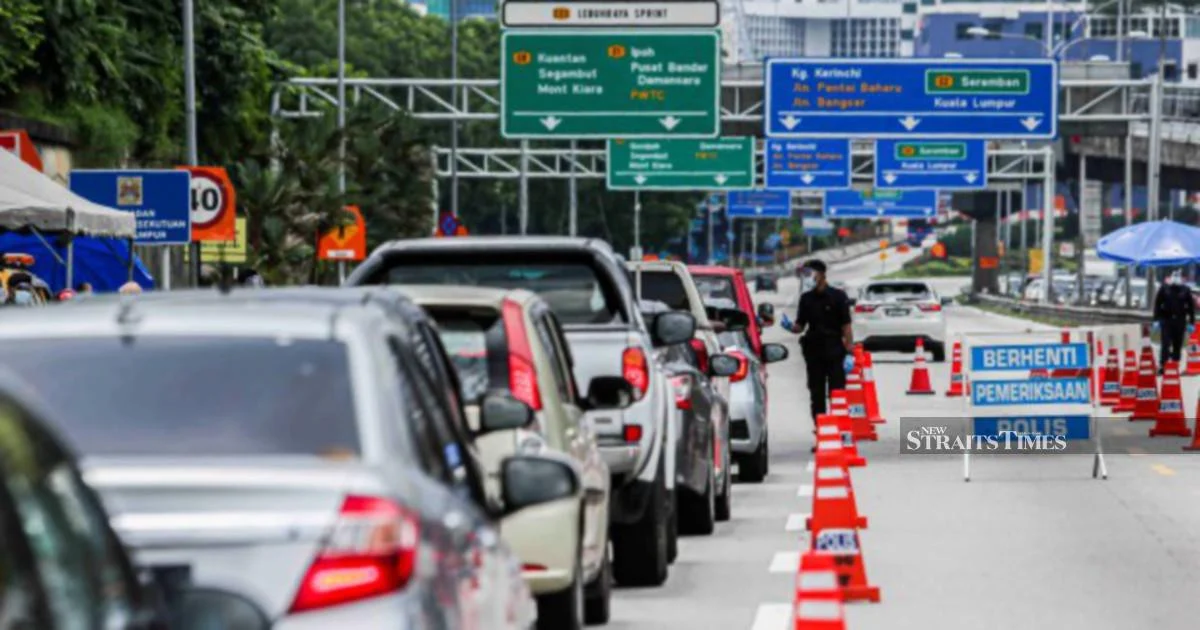
The Malaysian government is preparing to substantially increase traffic fine penalties, with lawmakers expected to vote on amendments that would raise the maximum compound rate to RM500 for over 700 categories of road traffic violations. The changes target Act 333 of the Road Transport Act 1987, a foundational piece of legislation governing vehicle operations and driver conduct across the country. If enacted, this represents one of the more substantial adjustments to the penalty structure in recent years, signalling the authorities' commitment to enforcing stricter road discipline.
The proposal encompasses a far broader spectrum of traffic infractions than initially suggested by earlier enforcement campaigns. Rather than targeting only the most dangerous or egregious violations, the amendment would apply heightened penalties across the vast majority of road offence categories documented in the existing legislation. This universal approach reflects a policy shift toward more consistent and stringent consequences for motorists, regardless of offence severity. The breadth of coverage indicates that even relatively minor breaches—such as parking violations or minor procedural non-compliance—could eventually face the elevated penalty threshold.
For Malaysian drivers and vehicle owners, the RM500 ceiling carries immediate practical implications. Many motorists currently accustomed to lower compound rates may face substantially higher bills when caught violating traffic regulations. The financial burden becomes particularly acute for commercial drivers and transport operators who encounter traffic enforcement regularly. Industry groups representing taxi operators, bus companies, and logistics firms have expressed concerns about cumulative penalty costs eating into already-thin operational margins, especially during economic downturns.
The rationale underlying this penalty escalation centres on public safety and road discipline improvement. Transport authorities argue that higher financial consequences create stronger deterrents against reckless driving, speeding, signal violations, and other dangerous behaviours that contribute to Malaysia's persistently high road accident statistics. The past decade has witnessed ongoing campaigns against specific violations such as using mobile phones while driving and failure to wear seatbelts, with mixed results. By amplifying financial penalties across the board, policymakers hope to shift driver behaviour more decisively.
Regional context adds another layer to understanding Malaysia's move. Neighbouring countries including Singapore and Thailand maintain traffic penalty structures that are internationally recognised as among the world's strictest. Singapore's strict enforcement culture, combined with substantial fines, has earned it status as one of the safest driving environments in Asia. Malaysia's proposed adjustment can be viewed partly as an attempt to align national enforcement severity with regional standards, potentially influencing vehicle movements across borders and commercial driving practices that span multiple countries.
The implementation pathway depends on parliamentary approval, which typically involves Committee stage scrutiny and full legislative deliberation. Opposition members may question the proportionality of applying uniform RM500 maximums across diverse violation categories, from minor infractions to serious safety breaches. Some legislators have traditionally advocated for graduated penalty structures that differentiate between minor administrative violations and dangerous conduct, arguing that proportionate justice principles should guide sentencing frameworks.
For the enforcement apparatus, particularly the Road Transport Department and traffic police divisions, higher penalties create both opportunities and challenges. Stronger financial consequences theoretically increase public compliance without requiring additional police personnel, as deterrence functions independently of enforcement capacity. However, the perception of revenue-focused enforcement could damage public trust if citizens view increased fines as fiscally motivated rather than safety-driven. Transparency regarding how penalty revenues support road safety initiatives becomes essential for maintaining legitimacy.
The digital dimension of modern traffic enforcement may amplify the impact of higher penalties. Automated enforcement systems capturing speed violations, traffic light breaches, and parking violations can generate citations far more consistently than manual enforcement. When linked with vehicle registration databases, these systems create friction points that make evasion increasingly difficult. Drivers may discover themselves facing RM500 compounds for violations they did not witness an officer documenting, potentially creating frustration around due process and the human element in enforcement decisions.
Small and medium enterprises operating fleets face particular vulnerability under this regime. A single commercial vehicle generating multiple daily violations could accumulate penalties reaching thousands of ringgit monthly. Some businesses may respond by investing in enhanced driver training and vehicle compliance systems, others might attempt to absorb costs, while marginal operators could face operational viability questions. The economic multiplier effects of higher transport costs could eventually influence consumer prices for goods delivered via road transport.
International best practices suggest that penalties alone rarely solve road safety challenges comprehensively. Countries combining substantial fines with comprehensive driver education, vehicle safety standards enforcement, and infrastructure improvements typically achieve superior outcomes to those relying primarily on financial deterrence. Malaysia's amendment focuses narrowly on raising penalties without indicating concurrent investments in these complementary areas, potentially limiting the intervention's overall effectiveness in reducing accident rates and severity.
The legislative process will reveal whether Malaysian lawmakers pursue this penalty increase as a standalone measure or as part of broader road safety reforms. Parliamentary committees may request impact assessments examining how RM500 maximums would affect different population segments and transportation sectors. Regional policy observers will watch closely, as Malaysia's choices could influence neighbouring countries contemplating similar adjustments, particularly if the Malaysian experiment demonstrates measurable safety improvements.