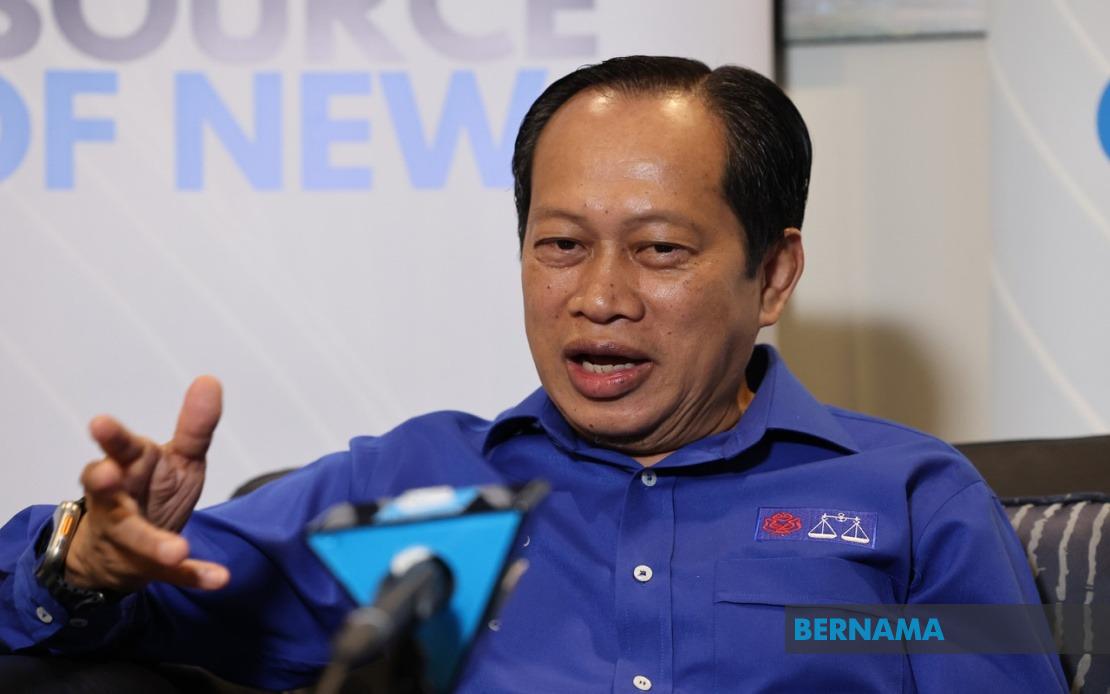
Effective road maintenance in Malaysia cannot be achieved by any single agency working in isolation, according to Deputy Works Minister Datuk Seri Dr Ahmad Maslan, who has called for a more collaborative approach involving elected representatives and relevant authorities to tackle deteriorating infrastructure promptly. Speaking in Johor Bahru on July 2, Ahmad emphasised that responsibility for maintaining the nation's road network must be shared across multiple stakeholders, each fulfilling their designated role in a coordinated manner. His remarks come as the government seeks to address mounting public complaints about potholed roads and deteriorating surfaces that compromise both vehicle safety and traffic flow across the country.
The deputy minister has instructed the Public Works Department, known locally as JKR, to accelerate its repair programmes and mobilise resources more efficiently to handle road damage reports. This directive reflects growing frustration among road users who have increasingly turned to social media platforms to document poor road conditions and demand government action. Ahmad's message was specifically directed at state assemblymen, Members of Parliament, and district-level authorities, urging them to treat road damage notifications as urgent matters requiring immediate intervention rather than routine administrative tasks. By fragmenting responsibility and establishing clear expectations, Ahmad appears to be attempting to create a system where local political leaders become accountable for infrastructure conditions in their constituencies.
In Johor alone, the state operates ten district JKR offices responsible for managing road maintenance across their respective areas. Ahmad revealed that he has personally visited all these offices and received detailed briefings on development priorities and maintenance schedules. During these visits, he has repeatedly urged department heads to respond swiftly to reports of damaged roads, establishing a sense of urgency around what is often treated as a bureaucratic exercise. The visit programme suggests an attempt to establish direct oversight and inject momentum into what many observers view as an underperforming maintenance system. By engaging directly with district-level officials, Ahmad has signalled that accountability will be expected from mid-level administrators, not just from elected representatives or top ministry officials.
Ahmad's comments were made in response to recent actions taken by Dr Maszlee Malik, a Pakatan Harapan candidate contesting the Puteri Wangsa state seat, who conducted a personal inspection of Jalan Tebrau to assess infrastructure conditions in the constituency. On June 29, Maszlee drove a Perodua Myvi from Kampung Melayu Majidi to Ulu Tiram, a journey undertaken after he received multiple social media complaints about road deterioration and severe traffic congestion plaguing the corridor. By conducting this high-profile inspection, Maszlee was effectively highlighting what he characterised as government negligence in road maintenance, using a contrarian approach that places pressure on the administration. His subsequent public account of the experience, describing how his vehicle jolted repeatedly across uneven surfaces and how he encountered gridlocked traffic during peak periods, provided concrete testimony to road deficiency that resonates with ordinary motorists.
The drive along Jalan Tebrau appeared calculated to position Maszlee as a candidate responsive to constituent grievances, in contrast to what opposition campaigners describe as bureaucratic inertia in government circles. This political theatre, while potentially opportunistic, nonetheless highlighted a genuine infrastructure problem that affects thousands of daily commuters. For the Deputy Works Minister, the incident forced a response and allowed him to articulate government policy on road maintenance, though his statement also implicitly acknowledged that problems exist and require more urgent action. The tension between opposition highlighting infrastructure deficits and government officials defending their maintenance efforts reflects a broader pattern in Malaysian politics where infrastructure quality becomes a campaign issue.
Ahmad provided clarity on the financial and administrative mechanisms governing road maintenance, explaining that funding for federal roads, highways, and bridges flows through the State Economic Planning Unit, locally known as UPEN, as well as through the state executive council. This dual-channel approach means that maintenance applications must navigate both state-level and federal-level approval processes before resources are allocated. While such oversight mechanisms theoretically ensure that spending is prioritised according to need, critics argue that the bureaucratic layers can create delays and prevent swift response to urgent infrastructure problems. The requirement for applications to be assessed and prioritised introduces a gatekeeping function that can slow response times, particularly in cases where road damage affects high-traffic corridors serving thousands of commuters daily.
The administrative architecture for road maintenance in Malaysia thus involves state-level planning units and executive councils making determinations about which roads receive attention and which receive delayed treatment. This creates potential for political considerations to influence which constituencies benefit from accelerated maintenance cycles and which face indefinite delays. Ahmad's emphasis on the approval process, while explaining current procedures, does not necessarily address whether these processes operate efficiently or whether they adequately prioritise roads affecting large numbers of Malaysians. For commuters in areas where roads deteriorate faster than repairs are approved and completed, the system appears fundamentally inadequate regardless of the cooperation level among stakeholders.
The concept of shared responsibility that Ahmad articulated reflects a recognition that government agencies cannot alone manage Malaysia's vast road network, which includes federal roads, state roads, and local council-maintained thoroughfares. Each tier of government and each category of elected representative potentially bears some responsibility for specific road segments. However, this fragmentation of responsibility can also lead to situations where no single party takes decisive action, with each stakeholder pointing to another as bearing primary responsibility. Without clear hierarchies of accountability and without enforcement mechanisms that penalise inaction, Ahmad's call for cooperation may result in continued finger-pointing rather than systematic improvement.
For Malaysian road users, particularly those in regions with aging infrastructure, the practical implications of Ahmad's statement remain uncertain. His emphasis on expedited repairs and closer coordination between agencies represents an acknowledgement that current systems are inadequate, yet his prescription essentially amounts to requesting that existing authorities work harder within existing frameworks rather than proposing systemic reform. The Deputy Works Minister's tour of district JKR offices and his direct instructions suggest personal commitment to improvement, but sustainable change likely requires longer-term investment, clearer performance metrics, and mechanisms that hold officials accountable for road conditions in their areas of responsibility.
Looking forward, Ahmad's intervention appears designed to demonstrate government responsiveness to infrastructure complaints whilst avoiding wholesale changes to maintenance systems or substantially increased budgetary allocations. By reframing road maintenance as a matter of cooperation and commitment, he shifts focus from resource constraints to administrative willingness. Whether this approach succeeds depends largely on whether the officials he has instructed actually prioritise road repairs and whether the multiple layers of bureaucracy can process maintenance applications and execute repairs more rapidly than historical patterns suggest.

