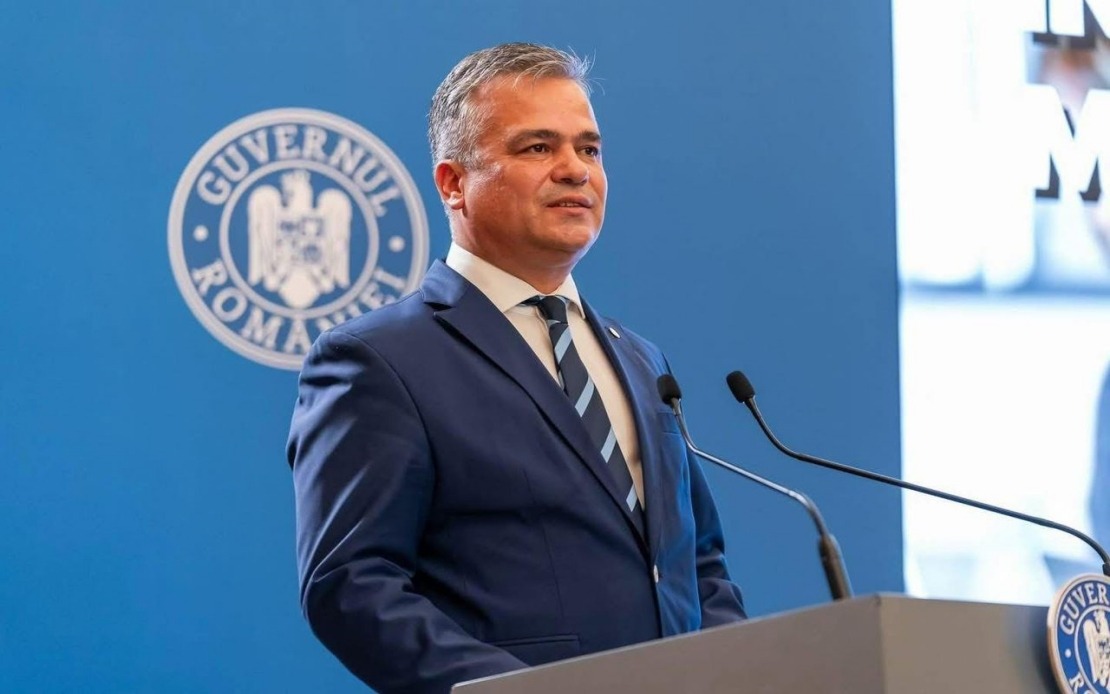
Adrian Vestea, Romania's prime minister-designate, formally submitted his government's policy agenda and ministerial roster to parliament on Monday, marking a decisive step toward establishing a new administration after weeks of political negotiations. The submission represents an effort to transition the country from a period of institutional uncertainty toward a more stable governing framework capable of addressing pressing national concerns. Vestea's move follows intensive behind-the-scenes discussions among Romania's political parties to forge a workable parliamentary coalition.
In his statement to lawmakers, Vestea underscored the urgency of his cabinet's formation, framing it as essential to concluding a destabilising interim period and restoring confidence in Romania's governmental machinery. The prime minister-designate emphasised that his administration would prioritise institutional normalcy and predictable governance after what he characterised as a prolonged phase of political gridlock. His rhetoric centred on reassurance to both domestic stakeholders and international partners concerned about Romania's institutional direction.
The backing of the Social Democratic Party, confirmed during a party meeting the previous day, provides Vestea with crucial parliamentary arithmetic. Despite the National Liberal Party's official position rejecting coalition arrangements with left-leaning forces, the cabinet composition reflects a more pragmatic accommodation of political realities. Vestea himself holds the position of first vice-chair within the National Liberal Party, lending him internal party credentials that may have eased negotiations across ideological lines. The coalition thus represents an unusual convergence, bringing together Social Democrats alongside National Liberal members who align with Vestea's leadership vision.
Vestea outlined five foundational pillars to guide his administration's work. Foremost among these is securing lasting political stability—a priority reflecting concerns about Romania's recent institutional turbulence and the need to restore public and investor confidence. Accelerating absorption of European Union funding streams constitutes the second objective, tapping into a significant resource pipeline that many Eastern European nations depend upon for development and modernisation initiatives. Economic equilibrium forms the third plank, suggesting the government intends to navigate inflationary pressures and fiscal challenges while maintaining macroeconomic prudence.
The fourth priority concentrates on infrastructure investment, a long-standing concern across Romania's regions where transport networks, utilities, and urban systems require substantial capital expenditure and modernisation. The fifth pillar addresses national security strategy, an increasingly prominent concern throughout Central and Eastern Europe given regional geopolitical volatility and the ongoing conflict in neighbouring Ukraine. Romania, as both a NATO and EU member state, faces particular imperatives to strengthen defence capabilities and security architecture.
The composition of Vestea's proposed cabinet mirrors this agenda, incorporating both ideological blocs within a unified executive framework. However, the precise ministerial assignments and policy coherence across a coalition spanning social democrats and national liberals remain subjects of parliamentary scrutiny. Romanian media outlets have noted that formal parliamentary endorsement of the cabinet's final structure has not yet crystallised, suggesting negotiations over specific portfolios and policy emphasis continue.
For Malaysia and other Southeast Asian nations monitoring European governance developments, Romania's cabinet formation illustrates broader challenges facing democracies managing political fragmentation and coalition-building in an era of rising populism and institutional strain. The Romanian case demonstrates how mainstream parties must sometimes accommodate unconventional arrangements to preserve stable governance, even when public positions suggest ideological incompatibility. This dynamic mirrors tensions across multiple democracies globally between electoral diversity and executive coherence.
Vestea's emphasis on EU fund absorption carries particular resonance for Southeast Asia, where regional development finance similarly depends on international institutional capacity. Romania's focus on leveraging European investment for infrastructure upgrading reflects a strategic priority that developing democracies throughout Asia increasingly recognise as crucial for competitive positioning and citizen welfare. The cabinet's infrastructure emphasis signals recognition that governance legitimacy increasingly turns on tangible improvements in citizens' material circumstances.
The institutional stability objective that Vestea foregrounded addresses fundamental governance questions transcending Romania's borders. Democratic systems worldwide grapple with restoring public confidence in institutions amid polarisation, economic uncertainty, and erosion of traditional party structures. Romania's attempt to engineer coherent governance across ideological lines through an experienced political operative like Vestea represents one strategic response to this broader challenge, though outcomes remain uncertain pending parliamentary ratification and policy implementation.
Looking forward, the Romanian cabinet's ultimate effectiveness will depend on whether the coalition maintains sufficient cohesion to implement its stated priorities through parliament's legislative process. The government's success in expediting EU fund deployment and advancing infrastructure projects will likely determine public perception of the Vestea administration's competence. Similarly, its capacity to navigate national security concerns while preserving institutional independence and democratic norms will shape regional assessments of Romania's institutional health.