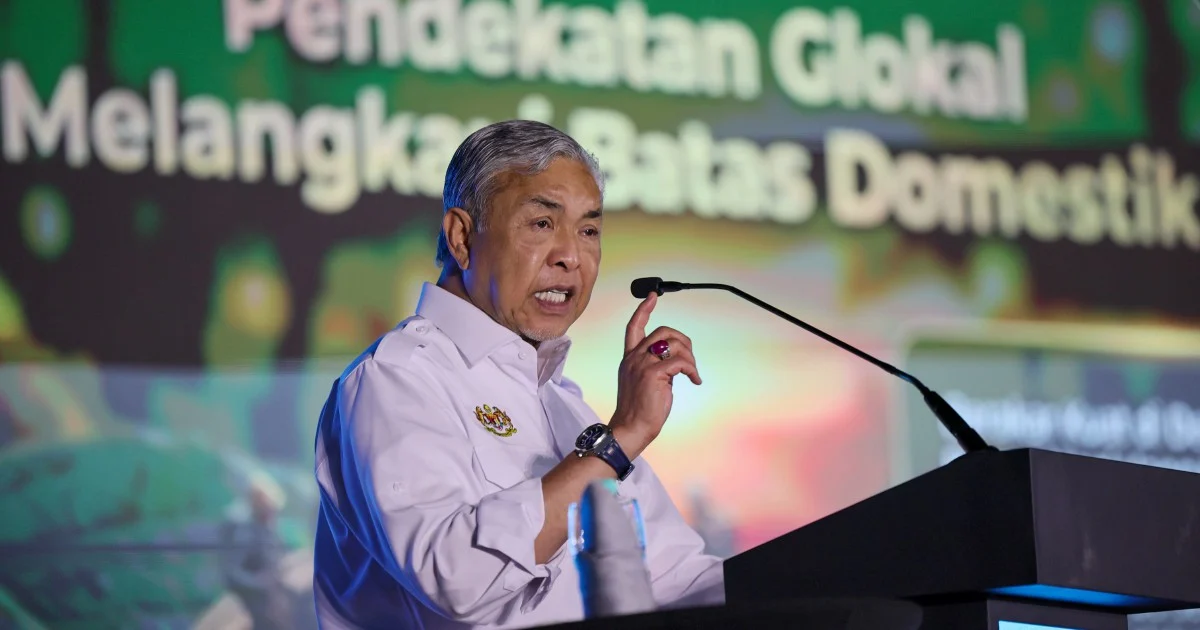
Deputy Prime Minister Datuk Seri Dr Ahmad Zahid Hamidi has called for Malaysia's rural development strategy to evolve beyond traditional approaches, framing the National Rural Economic Agenda as a transformative blueprint that must synchronize with broader global economic trends. Speaking in Maran, Zahid emphasized that rural communities cannot develop in isolation from worldwide shifts in commerce, technology, and sustainability standards. His remarks underscore growing recognition within Malaysia's leadership that rural prosperity depends not merely on local infrastructure projects but on integrating rural economies into international value chains and emerging markets.
The vision Zahid articulated represents a significant departure from compartmentalized rural policy. Rather than treating rural development as a separate concern from national economic strategy, he positioned agricultural communities and small towns as integral partners in Malaysia's global competitiveness. This framing carries particular weight for a nation where approximately 25 percent of the population resides in rural areas and agriculture remains a cornerstone of regional trade relationships. By tying rural advancement to global agendas, policymakers signal intent to modernize how rural economies operate while maintaining their distinctive character and local relevance.
The National Rural Economic Agenda referenced by Zahid encompasses multiple dimensions that extend beyond traditional farming and livestock activities. Contemporary rural development increasingly incorporates digital infrastructure, value-added agricultural processing, agro-tourism, and supply chain integration with international markets. Rural Malaysia has begun attracting investment in these sectors, but coordination between local initiatives and global economic movements remains uneven. Zahid's emphasis suggests a coordinated approach where federal policy actively steers rural development toward sectors with genuine international demand and investment potential.
Malaysia's geography and demographics make this alignment particularly consequential. Unlike densely urbanized city-states, Malaysia contains substantial rural populations whose livelihoods directly shape social stability and income distribution. When rural incomes lag urban standards, migration to cities accelerates, straining urban infrastructure while depopulating countryside regions. By positioning rural development as compatible with global standards and opportunities, policymakers attempt to create economic reasons for citizens to remain in or relocate to rural areas, thereby distributing prosperity more geographically.
The global agenda Zahid referenced encompasses contemporary priorities: climate-smart agriculture, sustainable resource management, green technology adoption, and digital economy participation. These are not abstract international commitments but practical requirements increasingly demanded by global buyers, certification bodies, and financial institutions. Malaysian agricultural producers face growing pressure to meet international environmental and quality standards to access premium export markets. Rural development that ignores these trends leaves farmers vulnerable to market exclusion and price compression.
Southeast Asian context adds further dimension to this policy repositioning. Regional competitors including Vietnam, Thailand, and Indonesia have invested substantially in modernizing rural economies and connecting small-scale producers to international markets. Thailand's push for agricultural technology adoption and Indonesia's focus on value-chain development in commodity production demonstrate how neighboring nations are repositioning rural sectors. Malaysia's emphasis on alignment with global agendas partly reflects recognition that regional competition for agricultural market share and rural investment requires updating development models.
Implementation challenges remain substantial despite rhetorical commitment. Rural infrastructure deficiencies—including reliable broadband, quality transportation networks, and modern storage facilities—persist across many Malaysian districts. Without these foundations, rural participants cannot meaningfully engage with global markets or adopt contemporary production methods. Additionally, rural communities often lack access to training programs necessary to operate within international quality and sustainability frameworks. Simply declaring alignment with global agendas without addressing these foundational gaps risks creating aspirational policy disconnected from ground reality.
Financing rural development to meet global standards requires substantial capital investment and strategic resource allocation. Federal budgets must balance competing urban and rural priorities while achieving fiscal sustainability. Public-private partnerships could accelerate development in high-potential rural areas, but they require transparent governance and clear performance metrics to succeed. Zahid's remarks suggest policy intentions, but translating them into concrete funding mechanisms and measurable outcomes remains the essential test of commitment.
The social dimensions of globally-aligned rural development merit equal attention to economic metrics. Rural communities possess distinct cultural patterns, local governance traditions, and social structures that require careful consideration as external market forces reshape economic relationships. Development that prioritizes international alignment without consulting rural populations about their priorities risks generating resentment or uneven adoption. Successful rural transformation typically combines top-down policy frameworks with bottom-up community participation and consent.
For Malaysian policymakers, Zahid's articulation of globally-synchronized rural development reflects broader regional trends toward integrating peripheral economies into international systems. Success requires not merely policy declarations but sustained investment, institutional coordination, and genuine partnership between federal authorities and rural communities. The coming years will reveal whether rural development actually moves in step with global agendas or whether rhetoric outpaces implementation capacity.

