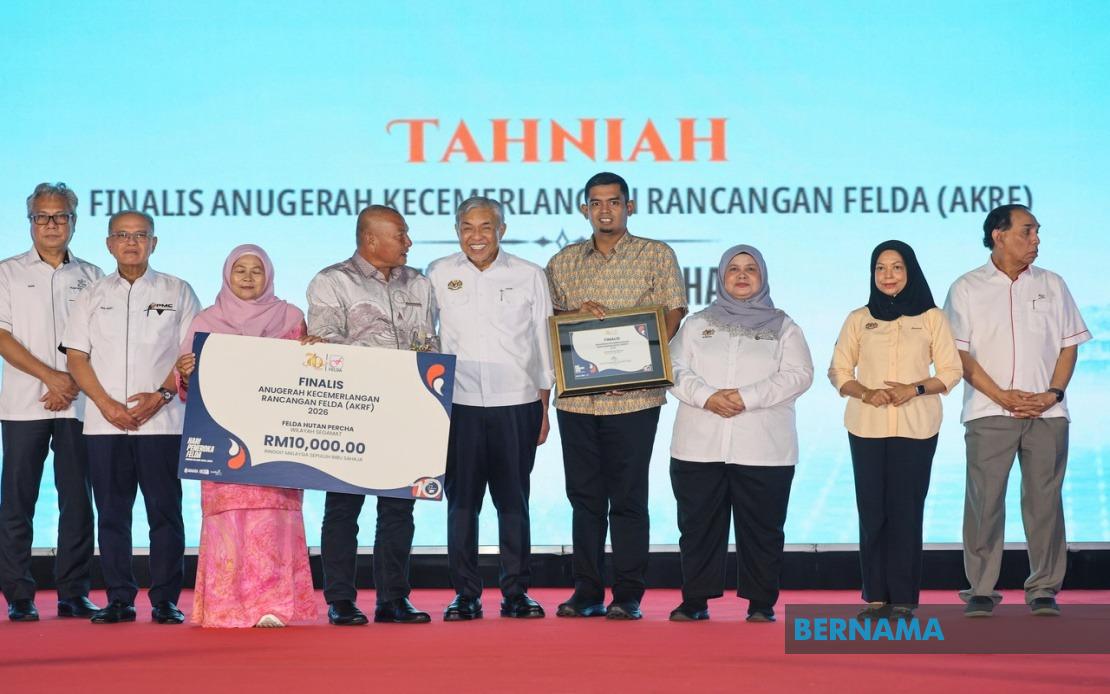
Deputy Prime Minister Datuk Seri Dr Ahmad Zahid Hamidi has challenged Malaysia's approach to rural development, arguing that policymakers and entrepreneurs can no longer confine their vision to domestic concerns alone. Speaking at the World Rural Development Day 2026 celebration held at Bandar Tun Razak Stadium in Maran today, Ahmad Zahid, who also holds the portfolio of Rural and Regional Development Minister, emphasised that the sector's future prosperity hinges on its willingness to engage with broader regional and international frameworks.
The Deputy Prime Minister's remarks signal a significant strategic shift in how the government conceptualises rural economic advancement. Rather than treating rural development as an isolated domestic challenge, Ahmad Zahid positioned it as an integral component of Malaysia's participation in larger economic ecosystems. This perspective carries particular relevance for Southeast Asia, where rural communities represent enormous untapped potential in cross-border trade and regional value chains. The vision encompasses not merely the sale of products beyond Malaysia's shores, but the deliberate cultivation of brands capable of competing in sophisticated international markets.
Central to Ahmad Zahid's message is the untapped commercial potential within the ASEAN region and the global halal economy. Malaysian rural entrepreneurs possess distinctive advantages in the latter arena, given the country's recognised standards and certification mechanisms for halal products. However, realising this potential requires shifting mentalities within rural communities themselves. Entrepreneurs must develop sufficient confidence and strategic acumen to navigate international supply chains, meet foreign regulatory requirements, and adapt their products and marketing approaches to suit diverse consumer preferences across multiple jurisdictions.
The government has attempted to operationalise this vision through concrete policy initiatives introduced over the past three years. The RisSMart and IkonDesa programmes represent targeted efforts to equip rural entrepreneurs with the tools and knowledge necessary for wider market penetration. According to Ahmad Zahid, these initiatives have successfully nurtured over 7,000 new rural entrepreneurs, a development that has simultaneously generated 15,000 employment opportunities across rural areas. More impressively, the commercial output from these enterprises has already surpassed RM1.77 billion in cumulative sales, indicating that the programmes are moving beyond theoretical frameworks into measurable economic outcomes.
This evolution in rural development philosophy reflects a broader transition away from infrastructure-centric approaches that dominated earlier planning periods. While physical infrastructure remains foundational, Ahmad Zahid's framing prioritises the development of competitive, market-ready rural economies capable of responding dynamically to future demand patterns. This shift acknowledges that rural prosperity in the twenty-first century depends less exclusively on roads, electricity, and water supply—though these remain necessary—and more fundamentally on human capital, entrepreneurial capacity, and access to information and markets.
Investments in human capital have also formed a notable component of recent rural development efforts. Ahmad Zahid highlighted the admission of nearly 500 Orang Asli students to universities during the reference period, characterising this achievement as historically unprecedented for these communities. Such educational advancement carries significance beyond individual opportunity, as tertiary-educated individuals from rural backgrounds often catalyse broader community development by introducing new skills, networks, and aspirations to their regions.
Infrastructural development has continued simultaneously with these capacity-building initiatives. During the 12th Malaysia Plan period, approximately 5,000 kilometres of rural roads underwent upgrading to enhance connectivity between remote communities and urban centres. Electricity provision expanded to encompass more than 7,000 additional rural homes, whilst clean water supply reached over 10,000 households previously lacking reliable access. These improvements represent foundational prerequisites for attracting investment and enabling entrepreneurial activity in hitherto marginalised areas.
Housing initiatives have also formed part of the integrated development strategy. Nearly 10,000 homes have been constructed or substantially refurbished throughout rural Malaysia, with benefits extending to almost 40,000 individual residents. This scale of housing intervention addresses not only immediate shelter needs but also signals government commitment to rural areas, potentially encouraging younger residents to remain in or return to their communities rather than undertaking permanent migration to urban centres.
Ahmad Zahid framed the World Rural Development Day observance as an opportunity to acknowledge the diverse stakeholders whose collective efforts have propelled rural advancement and contributed meaningfully to national prosperity. The recognition carries particular weight given that rural populations, whilst dispersed and diverse, represent a substantial proportion of Malaysia's electorate and workforce. Their sustained development constitutes both an economic imperative and a political necessity for any government committed to inclusive growth.
The United Nations General Assembly formally proclaimed World Rural Development Day on September 6, 2024, designating July 6 as its annual observance date to commemorate the establishment of the Centre on Integrated Rural Development for Asia and the Pacific. Malaysia officially observed the inaugural global celebration in 2025 and now participates as a member state in what represents an emerging international consensus regarding rural development's centrality to sustainable development goals. The 2026 celebration in Malaysia provides a platform for the government to showcase its rural development trajectory and reinforce its commitment to this agenda at both regional and global forums.
Looking forward, Ahmad Zahid's articulation of the National Rural Economy Agenda as an overarching blueprint suggests that rural development will remain a high-priority policy domain. The emphasis on international market engagement and cross-border entrepreneurship positions Malaysian rural communities as potential participants in regional economic integration processes, particularly as ASEAN moves toward greater economic cooperation. For neighbouring countries grappling with analogous rural development challenges, Malaysia's integrated approach combining infrastructure investment, human capital development, and enterprise support may offer instructive lessons applicable within their own contexts.

