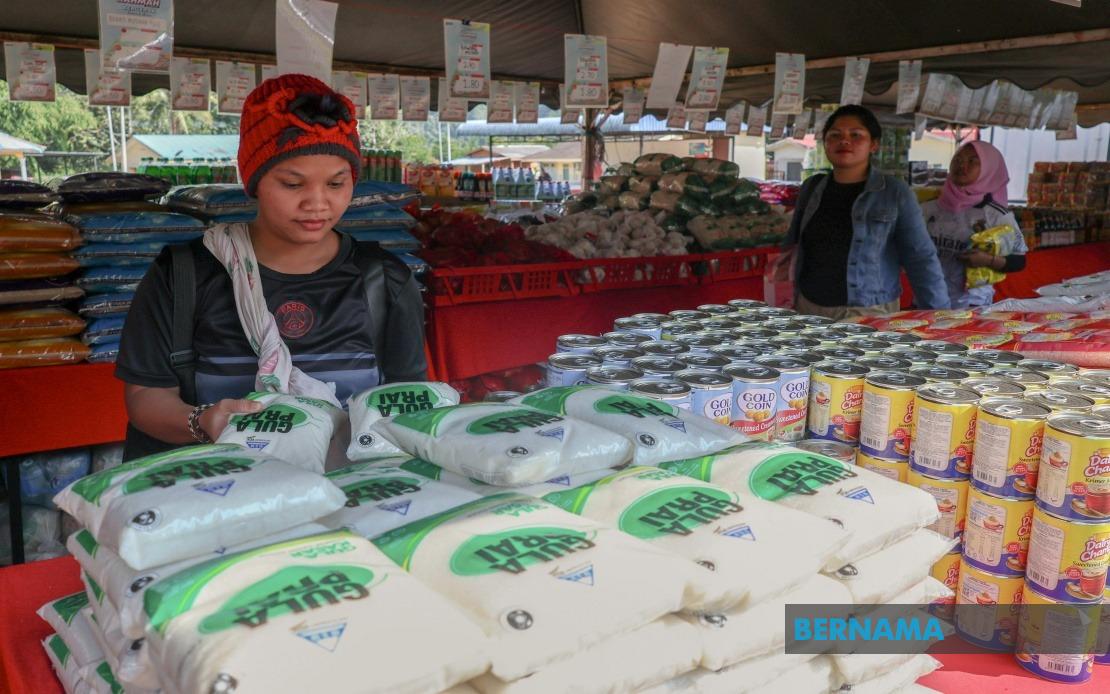
The Domestic Trade and Cost of Living Ministry (KPDN) has reported substantial progress in bringing price stability to Malaysia's remote communities through its Essential Goods Distribution Programme, which targets some of the nation's most geographically isolated populations. The initiative addresses a persistent challenge in rural economic development: the disproportionate cost burden residents face when purchasing basic necessities due to logistics and limited market competition. By establishing coordinated supply chains and enforcement mechanisms, the programme demonstrates how targeted government intervention can narrow the price differential between urban and remote consumers.
The financial scale of the commitment reflects the scope of the problem being tackled. This year alone, the ministry has allocated RM250 million to support 1.03 million beneficiaries spread across six geographically and economically distinct states: Sabah, Sarawak, Terengganu, Kelantan, Pahang and Kedah. These are not arbitrary allocations but represent regions where infrastructure limitations, distance from supply hubs, and small market sizes have historically inflated consumer prices. The infrastructure supporting this distribution spans 212 zones, encompasses 828 distribution areas, and operates through 1,532 points-of-sale—a logistical undertaking that requires sustained coordination across federal and state governments.
Sabah's experience illustrates the tangible impact the programme generates. With RM107.3 million invested this year across 78 zones and 587 retail outlets, the state has emerged as a major beneficiary. Within this framework, Libaran—a maritime constituency represented by Datuk Suhaimi Nasir in Parliament—received targeted support through an allocation of RM1.76 million serving nine distribution points and 17,061 residents. The specificity of these allocations suggests a data-driven approach to identifying and serving vulnerable populations in genuinely remote settings.
Price reductions in essential commodities have been remarkable, particularly for items that form the backbone of household budgets in rural areas. In Pulau Libaran, liquefied petroleum gas—a critical household fuel—has been brought under control from an unsustainable RM39 per cylinder to the regulated price of RM26.60, representing a 32 percent reduction. Cooking oil, equally essential for meal preparation, dropped from RM3.50 per packet to RM2.50, a 29 percent decrease. These are not marginal improvements but meaningful savings that accumulate substantially across family monthly budgets. For rural households with limited cash income, such reductions can be the difference between adequate nutrition and dietary compromise.
The controlled items under the programme—sugar, wheat flour, packet cooking oil, white rice, LPG, RON95 petrol and diesel—were selected precisely because they represent non-negotiable household expenses for rural Malaysians. Unlike discretionary purchases, these commodities appear in every household shopping list. When distributed at controlled prices, the programme directly protects real household purchasing power, allowing residents to stretch limited incomes further. The emphasis on petrol and diesel is particularly important, as these fuels enable access to employment, education, and healthcare services in areas where distances are substantial.
Implementation mechanics reveal sophisticated thinking about programme integrity. KPDN has established standard operating procedures governing deliveries and created Programme Monitoring and Coordination Committees at both ministry and state levels. These administrative structures exist specifically to prevent leakages—the diversion of controlled-price goods to unintended markets or intermediaries who profit through resale. In rural contexts where formal retail infrastructure may be limited, such oversight is essential to ensure that actual end-consumers benefit rather than having supplies captured by middlemen. The presence of monitoring committees suggests ongoing vigilance rather than one-time implementation.
Third-party evaluation provides independent validation of the programme's effectiveness. A Programme Outcome Evaluation Committee has assessed impact through respondent surveys, with findings indicating that the majority of beneficiaries report that the initiative has meaningfully eased their cost of living pressures. Importantly, respondents have expressed desire for continuation, suggesting that the programme addresses a genuine and persistent need rather than providing temporary relief. This sentiment is crucial politically and economically: it reflects real household welfare improvement and indicates that rural residents view the initiative as legitimate and valuable.
For Malaysian policymakers and regional observers, this programme offers lessons in targeted subsidy design. Rather than blanket subsidies that benefit all consumers equally—including those who least need assistance—the Essential Goods Distribution Programme concentrates resources on the populations most disadvantaged by geography. This approach is more fiscally sustainable and more precisely addresses market failures created by distribution costs. In Southeast Asian contexts where rural-urban divides persist across multiple countries, Malaysia's experience with geographic targeting may offer insights for neighbouring nations grappling with similar price equity challenges.
The programme's expansion trajectory matters for assessing its future trajectory. Currently covering six states, there may be political and economic pressure to extend benefits to additional remote regions. Budgetary constraints will ultimately determine expansion possibilities, but the demonstrated effectiveness in Sabah and other covered areas may generate momentum for broader implementation. Each expansion must, however, be weighed against fiscal sustainability and the need to maintain programme quality across distribution networks.
The timing of price controls reflects broader economic management challenges facing Malaysia. Global commodity price volatility, exchange rate fluctuations, and shipping cost pressures continuously test the viability of maintaining controlled prices. The programme's success depends on sustained commitment from KPDN and effective coordination with state governments. Disruptions to supply chains, unexpected commodity price spikes, or logistical failures could undermine the price stabilisation objectives. Long-term programme sustainability will require ongoing monitoring and potential adjustment mechanisms.
For rural Malaysian residents, the programme represents recognition that geographic disadvantage should not perpetuate economic disadvantage. While not a comprehensive solution to rural poverty or development disparities, the Essential Goods Distribution Programme demonstrates commitment to narrowing one significant gap: the arbitrary price penalties imposed by distance and limited market competition. Success in this limited but important domain creates foundation for broader rural development initiatives and provides political space for addressing other dimensions of rural-urban inequality.

