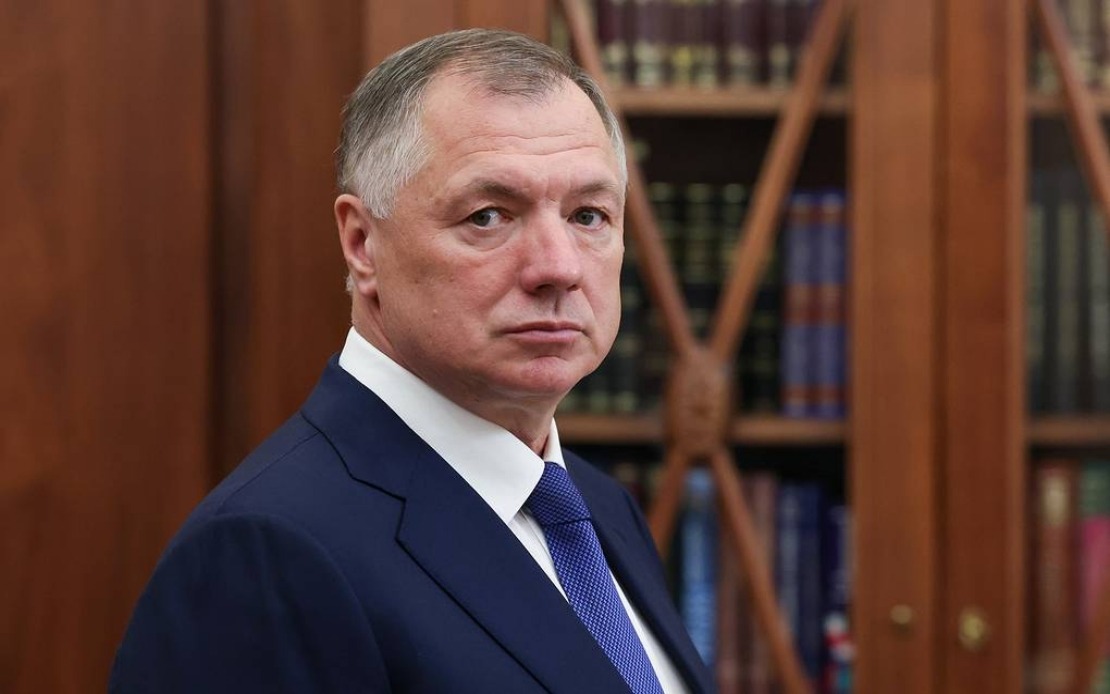
Russia is exploring the construction of a new railway corridor stretching to the Indian Ocean as part of a broader strategy to reduce its dependence on contested maritime chokepoints facing mounting geopolitical pressure. Russian Deputy Prime Minister Marat Khusnullin disclosed the ambition in recent remarks, emphasizing that such infrastructure would provide Moscow with critical alternative routes for trade and commerce while circumventing the vulnerabilities inherent in heavily congested shipping lanes that have become flashpoints for regional conflict.
The proposed rail network would traverse Central Asia and the subcontinent, threading through Turkmenistan, Iran, Afghanistan, and Pakistan before reaching Indian markets and ports. Khusnullin's proposal reflects Moscow's pragmatic assessment that traditional maritime corridors—particularly the Bosphorus and the Strait of Hormuz—present escalating strategic risks in the current geopolitical environment. By developing overland connectivity, Russia aims to establish a more resilient commercial infrastructure less vulnerable to blockades or international pressure. Any pathway furnishing reliable access to India would serve Moscow's objectives, according to the official's characterization.
The timing of Russia's railway ambitions coincides with mounting instability throughout the Middle East. Tensions between the United States and Iran have intensified dramatically following military confrontations that began in late February, triggering a cascade of regional escalations. Major Iranian population centers, including the capital Tehran, experienced direct military strikes, prompting the Islamic Revolutionary Guard Corps to announce comprehensive retaliatory operations targeting American and Israeli military installations distributed across multiple regional locations spanning Bahrain, Jordan, Iraq, Qatar, Kuwait, the United Arab Emirates, and Saudi Arabia.
These military confrontations have created tangible disruptions to global maritime commerce. Iran has declared its intention to restrict vessel passage through the Strait of Hormuz to maritime traffic associated with the United States, Israel, and nations perceived as having supported operations against Iran. The strategic implications are substantial: approximately one-quarter of the world's petroleum trade and roughly one-fifth of liquefied natural gas shipments traverse this narrow waterway annually. Any sustained disruption would reverberate through global energy markets and supply chains, affecting economies far beyond the immediate region.
For Southeast Asia and specifically Malaysia, these developments carry particular significance. The region's energy imports depend substantially on uninterrupted flows through the Strait of Hormuz, making any sustained closure or severe restrictions a direct threat to economic stability. Malaysian refineries, petrochemical facilities, and power generation infrastructure all depend on reliable Middle Eastern crude supplies. Additionally, Malaysian ports and shipping companies benefit from the volume of transit traffic passing through regional waters, making them stakeholders in maintaining open international sea lanes.
Russia's infrastructure proposal also reflects broader patterns of reconfiguring trade relationships and supply chains in response to geopolitical fragmentation. The construction of alternative corridors connecting Eurasian producers with Indian and Southeast Asian markets would establish new commercial architectures independent of Western-dominated shipping lanes and chokepoints. Such developments could fundamentally alter regional trade patterns and the competitive positioning of different nations' ports and logistics hubs.
Khusnullin additionally emphasized Russia's domestic construction industry capacity and financing requirements. The sector currently possesses the capability to absorb an additional one trillion rubles in annual investment, translating to approximately USD 10 billion. Should such funding be guaranteed over a five-year period, Russia could meaningfully expand its construction capacity, enabling substantially larger infrastructure projects. This indicates Moscow's serious intention to pursue major infrastructure development, conditional upon securing adequate long-term financing mechanisms.
The railway proposal must navigate considerable geopolitical complexity. Afghanistan remains a fragile state with limited territorial control, while Iran operates under international sanctions affecting foreign investment capacity. Pakistan faces its own governance challenges, and Turkmenistan carefully calibrates relations among competing regional powers. Constructing a continuous railway through such territory would require unprecedented regional cooperation and political stability, presenting formidable diplomatic challenges alongside technical engineering obstacles.
Such infrastructure development would also carry implications for China's Belt and Road Initiative and existing Eurasian connectivity projects. Russia's railway corridor would potentially compete with or complement Chinese-backed infrastructure programs, depending on implementation details and participation models. The project could either intensify great power competition in Central Asia or create frameworks for pragmatic cooperation among major powers seeking to bypass vulnerable maritime chokepoints.
From Malaysia's perspective, Russia's initiative underscores broader transformations reshaping global commerce. The emergence of alternative trade corridors reduces dependence on traditional maritime routes, potentially fragmenting global supply chains along geopolitical lines. Malaysian ports and logistics infrastructure may experience shifts in competitive positioning as new Eurasian transport corridors develop. Regional stability also depends partly on managing these transitions without triggering zero-sum competition or militarization of alternative routes.
The railway proposal also signals recognition that maritime interdependencies in contested regions create escalating economic risks for all nations dependent on those routes. As Middle Eastern tensions persist, Russia's pursuit of alternative infrastructure reflects a calculated judgment that traditional chokepoints have become unreliably dangerous. Other nations similarly vulnerable to disruptions through the Strait of Hormuz, Bosphorus, or South China Sea may face comparable incentives to develop alternative connectivity, potentially accelerating fragmentation of global trade networks.
While Russia's railway vision remains largely conceptual, the diplomatic engagement required for implementation would itself reshape regional relationships. Countries like Pakistan, Iran, and Afghanistan would gain leverage through their position as indispensable transit territories. This could strengthen their negotiating positions on various bilateral issues while potentially creating new frameworks for regional cooperation. The long-term success of such ventures depends fundamentally on sustained political commitment, adequate financing, and resolution of underlying regional conflicts.

