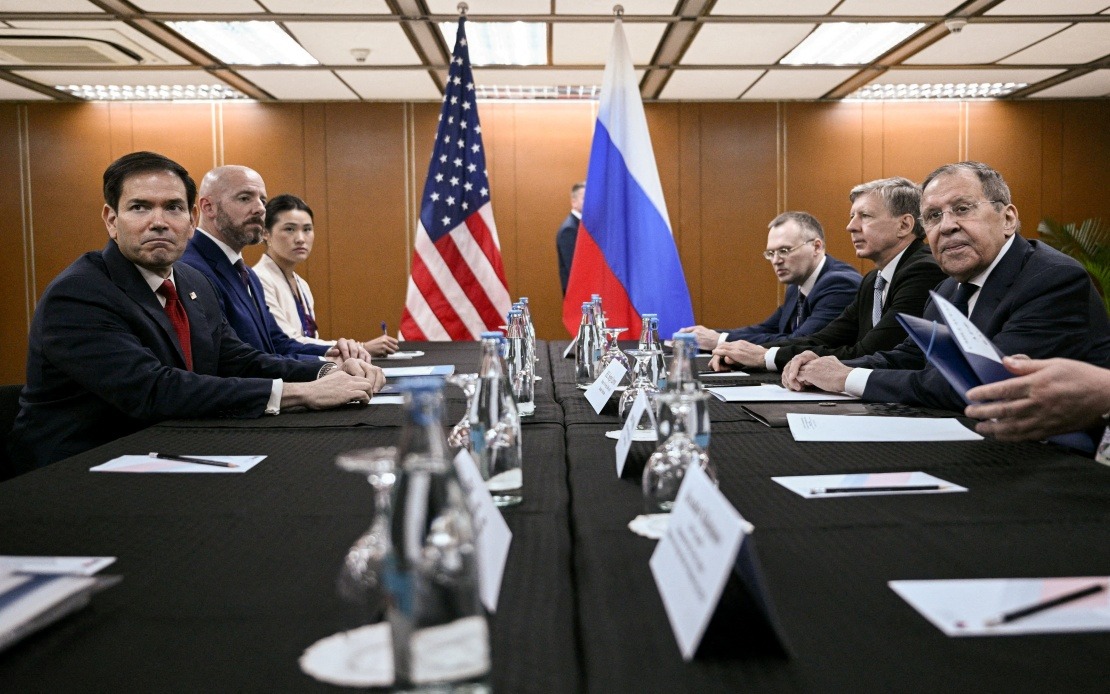
Russian Foreign Minister Sergey Lavrov and United States Secretary of State Marco Rubio have committed to preserving communication channels between their respective foreign ministries, signalling that diplomatic engagement persists despite the considerable strain on bilateral relations. The agreement, reached following their meeting in Manila, underscores a willingness by both nations to sustain official contacts within the institutional framework provided by international organisations, even as their governments remain at odds over fundamental strategic issues.
The commitment to continued communication represents a measured step toward managing the deep divide separating Moscow and Washington. Rather than pursuing wholesale diplomatic isolation, both capitals have recognised that maintaining lines of contact—however limited or formalised—serves mutual interests in crisis prevention and dialogue on issues of global concern. For Southeast Asian observers, the decision carries significance as it suggests that despite the apparent irretrievability of Russia-US relations in other domains, the two powers recognise the necessity of preserving at least the skeletal infrastructure for engagement.
Beyond the general commitment to ongoing contact, Lavrov and Rubio specifically addressed the normalisation of working conditions for their respective diplomatic missions. This practical dimension reveals attention to the operational challenges facing embassy staff and consular personnel in each other's capitals. Such discussions, while technical in nature, carry symbolic weight—they indicate that both countries wish to maintain functional diplomatic presence rather than resorting to mass expulsions or wholesale restrictions on embassy operations that could further poison relations.
A particularly noteworthy element of the Manila talks involved space cooperation, with both foreign ministers expressing support for the resumption of substantive collaboration between Russia's state space agency Roscosmos and the United States' National Aeronautics and Space Administration (NASA). This development proves especially significant given that space exploration has traditionally served as one of the few domains where Russia and the United States have maintained productive working relationships even during periods of acute political tension. The willingness to revive full-fledged contacts between these two agencies suggests that both nations recognise the scientific and practical value of continuing partnerships in fields transcending political disagreements.
For Malaysia and other Southeast Asian nations, the maintenance of Russia-US diplomatic contact carries implications for regional stability. The Association of Southeast Asian Nations (ASEAN) operates in an environment fundamentally shaped by great power competition and cooperation. When major powers maintain communication channels, the likelihood of miscalculation or unintended escalation diminishes. Moreover, ASEAN members rely on various international organisations for their own foreign policy objectives, and the continued participation of both Russia and the United States in these forums ensures that multilateral mechanisms can continue functioning as neutral spaces for dialogue.
The emphasis on interparliamentary exchanges and cultural ties in the Lavrov-Rubio discussions reveals an intention to rebuild people-to-people connections alongside official state relations. Educational exchanges, cultural programmes, and legislative contacts create informal networks that can promote mutual understanding and reduce the risk of mirror-image misperceptions. For regional observers, such exchanges demonstrate that even amid significant strategic competition, democracies can pursue dialogue across traditional dividing lines.
The Manila setting for these discussions merits consideration as well. The Philippines, as chair of ASEAN during 2024, has positioned itself as a convenor of dialogue on sensitive regional issues. The choice of Manila as the venue for Lavrov-Rubio talks underscores ASEAN's role as a diplomatic hub and suggests that Southeast Asian nations continue to provide neutral ground where major powers can engage constructively. This positioning enhances ASEAN's diplomatic relevance and reinforces the region's status as a site of multilateral engagement.
The Russian Foreign Ministry's formal statement outlining these agreements demonstrates Moscow's desire to publicise the continuation of contact, potentially addressing domestic audiences concerned about complete diplomatic isolation. Similarly, the mutual acknowledgement of these commitments by both parties signals to international observers that neither nation seeks a complete rupture of relations. This approach aligns with diplomatic practice even among adversaries, where maintaining minimum viable contact levels serves practical state interests.
However, observers should recognise the limitations of these agreements. Continuing contacts within international organisations' frameworks differs significantly from resolving the substantive disagreements dividing Russia and the United States. The agreement does not presage any softening of positions on Ukraine, NATO expansion, or other core security concerns. Rather, it represents a pragmatic acknowledgement that modern international life requires functional diplomatic engagement even between ideological and strategic competitors.
For Malaysian policymakers and analysts, the Lavrov-Rubio understanding offers lessons in diplomatic resilience. Despite profound disagreements, responsible state actors maintain institutional channels for communication. As Malaysia navigates its own complex relationships with both Russia and the United States, understanding the mechanics of great power engagement proves invaluable. The commitment to continuing contacts through international organisations provides a model for maintaining relationships that serve national interests without abandoning principled positions.
Looking forward, the success of these initial agreements in sustaining actual communication will depend on follow-up implementation. Whether foreign ministries genuinely intensify exchanges within international organisations, whether Roscosmos-NASA collaboration materialises substantively, and whether interparliamentary and cultural activities genuinely resume will determine whether Manila represented genuine recommitment to engagement or merely diplomatic theatre. For the international community and particularly for Southeast Asian nations invested in regional stability, the coming months will reveal whether this agreement translates into meaningful sustained dialogue.

