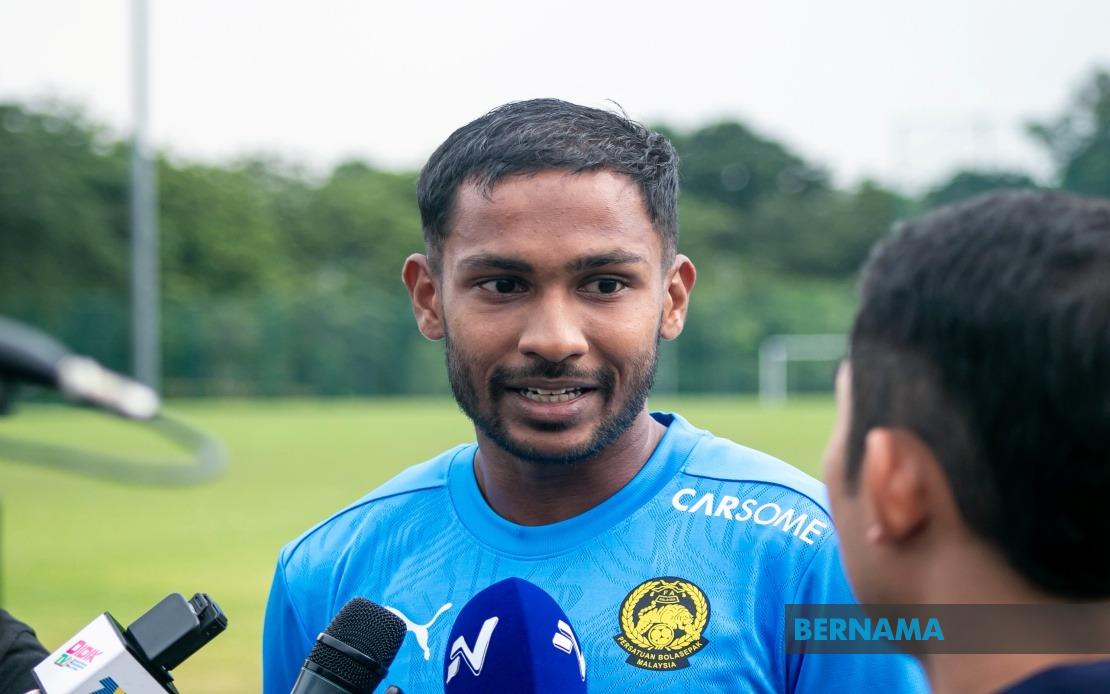
Defender V. Ruventhiran has launched a heartfelt appeal for Malaysian supporters to rally behind Harimau Malaya as the national team enters the 2026 Hyundai ASEAN Cup campaign, framing the tournament as a moment for citizens to set aside differences and unite around a common purpose. Speaking during a centralised training session in Shah Alam, Ruventhiran underscored that sporting tribalism and competing narratives should be subordinated to the larger cause of national representation, a message that resonates particularly in a football-loving nation where club rivalries often overshadow the national team.
Despite the squad facing an immediate away challenge against Myanmar at Thuwunna Stadium on July 25, Ruventhiran expressed optimism that the Malaysian public would mobilise their traditional strength in home contests. The midfielder stressed the psychological importance of crowd support, referring to the concept of the "12th man" that has long defined Malaysia's home advantage in regional competitions. His comments suggest that the national programme recognises the tangible impact of atmosphere on player confidence and match outcomes, a factor that has historically influenced results in Southeast Asian football where travelling to hostile venues presents genuine difficulties.
The tournament structure presents a formidable schedule for the Malaysian contingent. Following the Myanmar opener, Harimau Malaya will return home to face Laos at the Kuala Lumpur Football Stadium in Cheras on July 28 before embarking on another away trip to Thailand's Rajamangala Stadium in Bangkok on August 1. The group-stage campaign concludes with a home fixture against the Philippines in Cheras on August 8, giving Malaysia two of four matches at the comparatively fortress-like environment of their domestic stadium.
Ruventhiran's remarks reveal an underlying anxiety within the football federation about attendance levels at domestic matches, a chronic challenge for Southeast Asian football associations seeking to generate revenue and maintain player morale. The appeal for fans to transcend partisan club affiliations and return to the stadium reflects acknowledgment that Harimau Malaya's support base has fractured in recent years, with regional tournament performances failing to capture the imagination of a populous nation with multiple competing entertainment options.
Among the squad members energised by the tournament opportunity is Penang FC midfielder Aliff Haiqal Lokman Hakim Lau, whose career trajectory has been derailed by persistent injury complications throughout the previous season. For Aliff Haiqal, the national call-up represents considerably more than mere participation in a regional tournament; it signifies a chance to demonstrate that his rehabilitation is complete and that he remains a viable asset for both club and country moving forward. His inclusion in the travelling party suggests that the technical staff view him as a critical component of their midfield architecture.
Aliff Haiqal articulated profound gratitude for his selection, acknowledging the universal aspiration among footballers to represent their nation at the highest available level. His characterisation of the tournament as a "fresh start" underscores the restorative power that international football can provide for players rebuilding their careers after extended periods away from competitive action. The Penang FC player explicitly linked his availability for the ASEAN Cup with a broader personal renewal, suggesting that the timing of the tournament coincides with his readiness to commence a new chapter both domestically and internationally.
The injury struggles that plagued Aliff Haiqal during the previous campaign represent a narrative familiar to Malaysian football followers, where physical setbacks can rapidly erase even established careers. His determination to leverage the ASEAN Cup platform to reassert his credentials reflects the competitive intensity within the national programme, where opportunities are limited and the window for athletes to demonstrate form remains narrow. The midfielder's comments reveal an individual conscious of the precariousness of his position and motivated to seize the moment.
The tournament format itself creates significant pressure on participating nations. The group-stage configuration, with Malaysia positioned in Group B alongside Myanmar, Laos, Thailand, and the Philippines, guarantees testing opposition across the board. Thailand's historical strength in regional competitions and the Philippines' recent investments in football development ensure that qualification from the group stage represents neither a formality nor an expectation, but rather a challenge requiring consistent performance across multiple fixture phases.
The advancement criteria stipulating that the top two teams from each group progress to two-legged semi-finals introduces a knockout element that raises the stakes incrementally as the tournament progresses. The semi-finals scheduled for mid-August provide only brief recovery periods, while the finals scheduled for August 22 and 26 compress the tournament timeline, leaving no margin for inconsistency or injury-related squad disruption. This schedule demands that Ruventhiran and his teammates maintain fitness and sharpness throughout a concentrated fixture sequence.
Ruventhiran's leadership pronouncements carry additional weight given his status as a defensive linchpin for the national team. The positioning of his fan-centric message during the pre-tournament training phase suggests a conscious effort to rebuild momentum and confidence within the supporter base before matches commence. In regional football contexts where volatility and unexpected results frequently occur, the psychological preparation of both players and spectators proves critical to ultimate tournament success.
The convergence of veteran leadership represented by Ruventhiran and emerging talent seeking rehabilitation through players like Aliff Haiqal reflects the transitional phase that Harimau Malaya occupies within the continental football landscape. The 2026 ASEAN Cup represents a proving ground for both established personnel seeking to cement their legacies and recovering athletes seeking to restore their standing within the national programme. Success would validate the federation's selection philosophy and squad composition, while disappointment could trigger reassessment of both tactical approaches and personnel decisions heading toward larger regional and continental tournaments.

