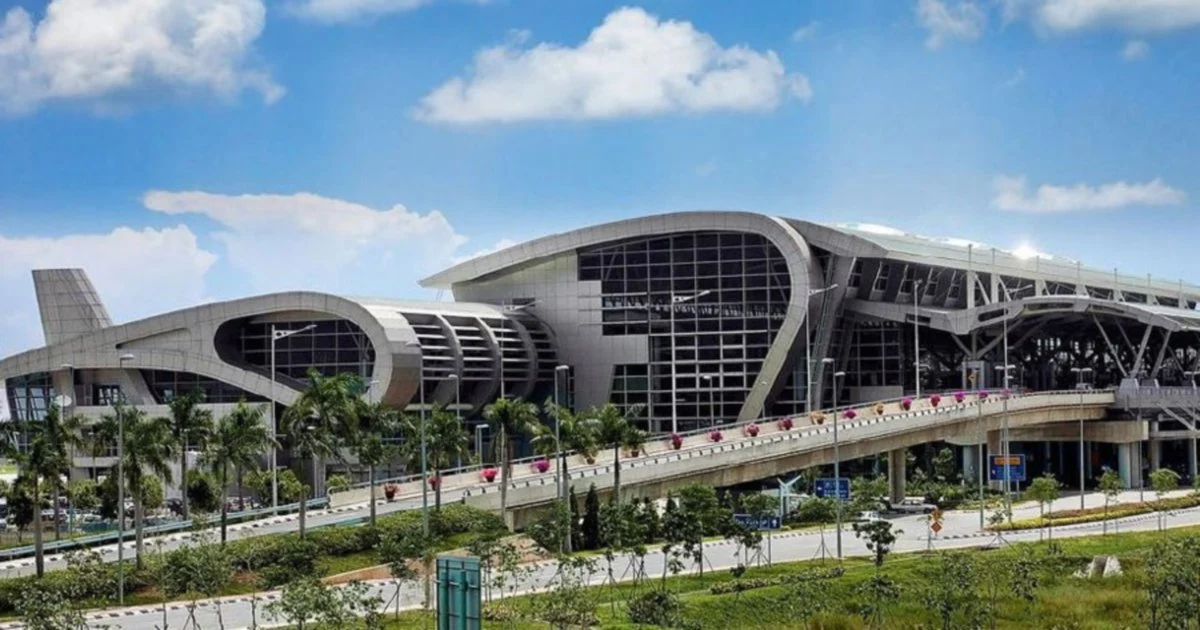
The planned modernisation of Kota Kinabalu International Airport, valued at nearly RM500 million, faces a critical roadblock as federal transport officials work through land disputes with Sabah state authorities. Deputy Transport Minister Datuk Hasbi Habibollah indicated that construction cannot commence until these underlying property and geographic complications are satisfactorily addressed between the two governmental tiers.
The expansion project represents a significant infrastructure commitment for East Malaysia's largest commercial air hub, which serves as the gateway for business, tourism, and regional connectivity in Sabah. The airport has experienced mounting passenger volumes in recent years, creating urgent pressure to enhance terminal facilities, aircraft handling capacity, and ground services. Without this expansion, stakeholders warn the facility risks becoming a bottleneck for economic activity across the entire northern Borneo region.
Land acquisition and site preparation challenges are not uncommon in Malaysian infrastructure development, particularly in Sabah where land titles, traditional claims, and jurisdictional boundaries sometimes overlap. The deputy minister's comments suggest that the current impasse involves competing interests or ambiguities concerning the airport site's exact boundaries, adjacent development zones, or property rights that must be harmonised before procurement and construction timelines can be finalised.
The involvement of the state government in resolving these matters underscores the federal-state coordination complexities that frequently accompany major infrastructure initiatives in Malaysia's 13 constituent states. Sabah operates under a devolved system whereby certain land and development matters fall within state purview, requiring collaborative problem-solving with federal agencies overseeing airport operations. This dual governance structure, while ensuring regional autonomy, occasionally prolongs administrative processes.
The RM500 million commitment reflects confidence in Sabah's economic trajectory and recognises Kota Kinabalu's pivotal role as a regional aviation hub. The airport currently handles scheduled services to major Asian markets and serves as a connection point for tourism, particularly for visitors exploring Sabah's natural attractions and business district. Expanded capacity would accommodate additional airlines, increased flight frequencies, and larger aircraft deployments.
Industry observers note that infrastructure delays in one gateway cascade across supply chains and tourism ecosystems. Hotels, ground transport operators, retail businesses, and support services aligned to the airport all depend on capability expansion to sustain growth. A prolonged delay could disadvantage Sabah in competing with Brunei and Kalimantan airports for regional traffic share, particularly as Southeast Asian tourism and business travel rebounds post-pandemic.
The deputy minister's statement suggests that negotiations are ongoing rather than stalled entirely, indicating both parties recognise the project's strategic importance. Officials from both the federal Transport Ministry and Sabah state apparatus appear committed to finding workable solutions, though public timelines for resolution have not been announced. Such silence typically reflects ongoing technical or political deliberation rather than abandonment of the project.
Malaysian infrastructure development has historically benefited from federal investment in state-level facilities, with improvements to airports, ports, and roads driving regional prosperity. The KKIA expansion fits this pattern, positioning Sabah to capture growing middle-class travel demand across Southeast Asia and beyond. Completion would signal confidence in the state's medium-term economic outlook and competitiveness as an air transport hub.
Previous airport expansion projects in Malaysia have encountered similar preliminary obstacles before achieving resolution. The combination of land acquisition, environmental assessments, utility relocation, and stakeholder consultation typically extends pre-construction phases by months or years. Experience suggests that once the land framework is clarified and formal agreements signed between state and federal entities, project progression can accelerate significantly.
The economic stakes extend beyond the airport operator's performance. Airlines evaluate airport reliability, capacity, and infrastructure quality when determining route planning and fleet deployment decisions. Enhanced facilities at KKIA could attract new airline partnerships, particularly from carriers based in China, Japan, South Korea, and the Philippines seeking to establish Sabah connections. This competitive dimension adds urgency to resolving the current impediments.
Regional context matters too, given that Kuala Lumpur International Airport and Penang International Airport have undergone recent expansions. As Malaysian airports modernise capacity, maintaining Kota Kinabalu's attractiveness requires timely infrastructure investment. The deputy minister's comments, while highlighting current constraints, implicitly confirm that the federal government regards this upgrade as a genuine priority rather than an optional enhancement.
The pathway forward likely involves technical discussions to clarify land boundaries, formal correspondence between Transport Ministry and Sabah authorities, and possibly involvement of the Land and Mines Office or Chief Minister's Department. Once these preliminary steps conclude, project documentation can move to procurement phases and construction commencement. Observers suggest a resolution window of months rather than years, though no official timeline has been provided.

