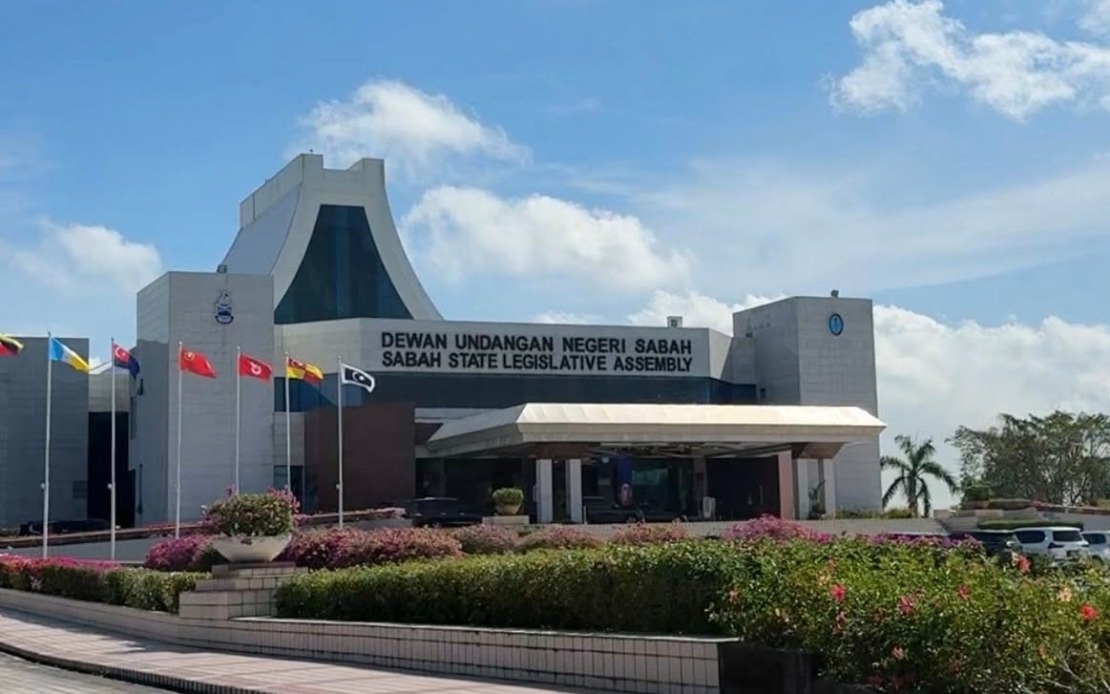
The Sabah Legislative Assembly has taken a major step in reforming two critical legal domains, approving the Muslim Succession Bill 2026 and the Native Courts Bill 2026 following parliamentary debates in Kota Kinabalu. The complementary measures, presented by Local Government and Housing Minister Datuk Dr Mohd Arifin Arif, represent a comprehensive rethinking of how Sabah approaches Islamic inheritance law and indigenous dispute resolution mechanisms. Both pieces of legislation passed after substantive discussion, with the Muslim Succession Bill debated by five assemblymen and the Native Courts Bill receiving contributions from twelve members, signalling the significance these laws hold for the state's legal infrastructure.
The Muslim Succession Bill 2026 addresses a long-standing gap in Malaysian legal architecture by creating the first dedicated framework specifically governing how Muslim estates are administered through the Syariah Courts system. This development is particularly significant for East Malaysia, where Islamic jurisprudence intersects with the diverse demographic and cultural landscape of Sabah. The bill establishes clear protocols for inheritance management grounded in Islamic principles, ensuring that the process becomes more predictable and transparent for the Muslim population across the state. By introducing systematised procedures, the legislation seeks to eliminate ad-hoc practices that may have previously allowed ambiguity in estate distribution among heirs.
One critical dimension of the Muslim Succession Bill involves protecting the interests of all beneficiaries while ensuring assets are not improperly diverted or concealed. Minister Mohd Arifin emphasised that the framework strengthens enforcement mechanisms to prevent the misuse, concealment, or unauthorised disposal of estate property. In a jurisdiction where family disputes over inheritance can become protracted and emotionally charged, having a legally codified system offers clarity and finality. The bill also streamlines how deceased estates are processed in accordance with syariah principles, reducing administrative delays that heirs have historically experienced. This modernisation responds to increasing complexity in estate composition, particularly where assets now include digital properties, business interests, and investments beyond traditional landed holdings.
The Native Courts Bill 2026 represents an equally transformative reform, overhauling legislation that has governed indigenous customary justice since 1992. Three decades of application have revealed limitations in the existing framework, prompting comprehensive restructuring to ensure the customary justice system remains relevant while preserving the cultural authenticity and procedural traditions central to Sabah's native communities. The bill acknowledges that merely updating procedural rules is insufficient; instead, it reimagines the entire judicial hierarchy and appointment mechanisms to reflect contemporary expectations of judicial competence and institutional integrity. This recalibration is essential for maintaining public confidence in customary courts among younger generations who increasingly expect institutional transparency and meritocratic advancement.
Among the Native Courts Bill's significant innovations is the establishment of a three-tiered court structure comprising the Native District Court, Native High Court, and Native Court of Appeal. This hierarchy creates a more sophisticated appellate system, allowing for review and refinement of decisions at multiple levels. Previously, the customary justice system may have lacked adequate mechanisms for correcting judicial errors or addressing concerns about procedural fairness. The new structure mirrors modern common law judicial organisation while remaining grounded in indigenous legal traditions, attempting to bridge conventional governance standards with customary authority. Such architectural reform enables indigenous communities to access justice through familiar cultural frameworks while benefiting from institutional safeguards that promote consistency and fairness.
The appointment methodology introduced by the Native Courts Bill marks a philosophical shift in how judicial authority is conferred within the customary system. Historically, judicial positions were often correlated with administrative status or seniority within community hierarchies, an approach that did not necessarily align with legal knowledge, interpretive ability, or understanding of modern dimensions of customary law. The new Native Judicial Appointments Advisory Committee fundamentally changes this paradigm by prioritising demonstrated competence, knowledge of customary jurisprudence, integrity, and qualifications over administrative convenience. This meritocratic turn professionalises the customary judiciary, ensuring that individuals appointed possess substantive capacity to interpret complex disputes involving land, inheritance, marriage, and community obligations according to established customary principles.
For Malaysian legal observers, both bills reflect a broader trend across Southeast Asia toward reconciling indigenous legal systems with contemporary governance expectations. Sabah's approach recognises that customary law and Islamic jurisprudence remain foundational to how many residents understand rights and obligations, yet these systems must operate with institutional credibility. The bills do not impose external legal frameworks onto indigenous communities; rather, they strengthen the internal legitimacy of indigenous and religious institutions by introducing transparency, consistent standards, and meaningful appeals processes. This accommodates the reality that younger, more educated community members expect their customary courts to function with professional rigour comparable to secular courts, while older generations value continuity with traditional authority structures.
The Muslim Succession Bill particularly addresses a practical challenge in Sabah, where many residents hold significant landholdings, business assets, and investments requiring orderly transfer across generations. Without clear succession frameworks harmonised across Islamic law and common law property principles, disputes over Muslim estates have created friction between Syariah and civil courts. By explicitly assigning estate administration to Syariah Courts under a comprehensive statutory framework, the bill reduces jurisdictional confusion and establishes predictable processes. This clarity extends beyond individual families to affect commercial relationships and banking practices, as financial institutions gain confidence in title transfer mechanisms for properties held by Muslim decedents.
The Native Courts Bill's emphasis on procedural reform also addresses practical concerns within indigenous communities. Disputes over communal land, inheritance according to customary law, and family matters under native jurisdiction have sometimes generated complaints about inconsistency or opacity in decision-making. By establishing a formal appointments process and hierarchical appeals structure, the bill makes the customary justice system more intelligible to external observers while preserving cultural authority within communities. Indigenous leaders retain primary decision-making power but now operate within a transparent framework that younger community members can understand and scrutinise. This balance between respecting tradition and introducing modern institutional governance represents a nuanced approach to legal pluralism.
Implementation of both bills will require substantial institutional development. The Syariah Courts must establish specialised estate administration units familiar with asset valuation, financial accounting, and complex succession scenarios under Islamic law. Similarly, the Native Courts system must recruit and train judges who possess deep customary knowledge alongside formal legal education. Sabah's state government will need to allocate resources for court infrastructure, judicial training programmes, and public education about procedures. The bills' success depends not merely on their passage but on quality implementation that delivers genuine improvements in how disputes are resolved and assets distributed. Public confidence will grow only through tangible experience with fair, efficient processes.
Regionally, Sabah's legislative initiatives in Islamic estate administration and indigenous judicial reform offer models for other Malaysian states and neighbouring Southeast Asian jurisdictions grappling with similar questions about accommodating plural legal systems within modern governance structures. The bills demonstrate that respecting cultural and religious traditions need not mean accepting inefficient or opaque institutional practices. By professionalising Islamic inheritance administration and customary courts while preserving their cultural foundations, Sabah positions itself as a jurisdiction where legal pluralism functions as a strength rather than a source of jurisdictional confusion. For Malaysian residents outside Sabah, these bills highlight how East Malaysian states are independently addressing governance challenges particular to their demographics and historical circumstances, reinforcing the constitutional autonomy and legislative capacity that distinguishes Sabah within Malaysia's federal system.

