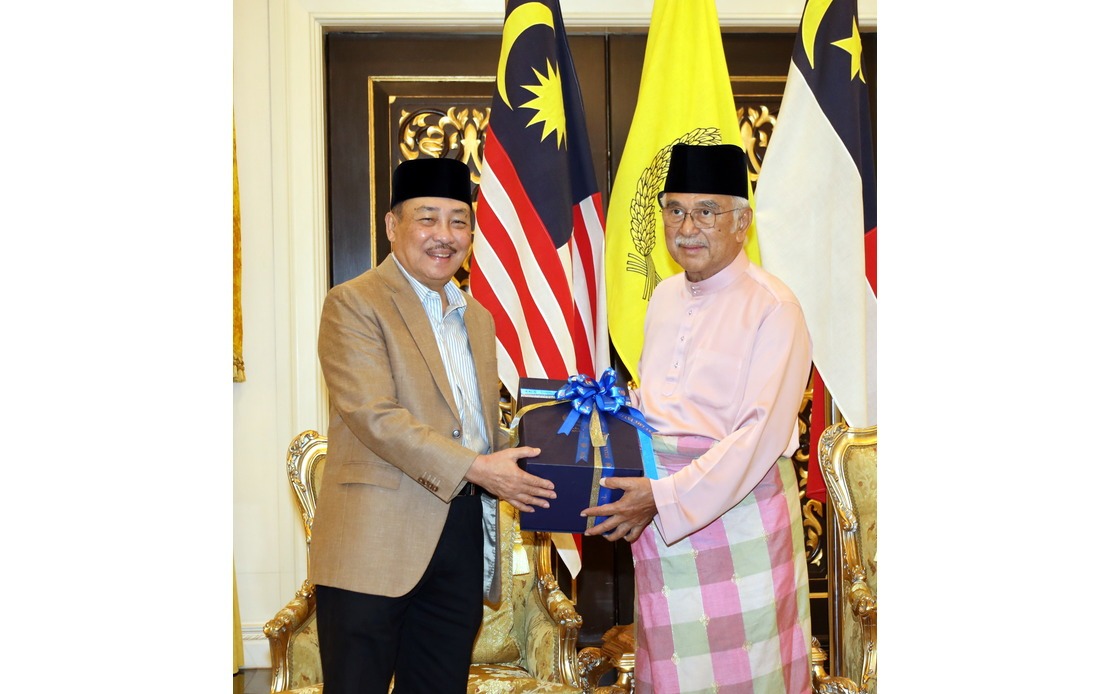
Sabah Chief Minister Datuk Seri Hajiji Noor made a formal visit to Melaka on Wednesday, meeting with Yang Dipertua Negeri Tun Dr Mohd Ali Mohd Rustam at Istana Melaka in Bukit Beruang. The encounter represented another step in deepening institutional relationships between two geographically distant Malaysian states, reflecting the ongoing importance of interprovincial diplomacy within the Malaysian federation.
Hajiji and his accompanying delegation arrived at the palace at approximately 3.35 pm, where they were received by the Melaka ruler. Such ceremonial courtesy calls form an integral part of Malaysia's federal system, serving as occasions for senior elected officials to establish personal rapport and facilitate dialogue beyond formal government channels. The visit underscores how state leaders leverage these meetings to advance their respective regions' interests while fostering broader national cohesion.
During their discussions, the Chief Minister and the Yang Dipertua Negeri explored topics of shared concern between Sabah and Melaka. While the exact nature of these conversations was not disclosed in detail, the statement from the Sabah Chief Minister's Office indicated that the dialogue covered "various matters of mutual interest" affecting both states. Such generalised language typically masks substantive discussions on trade, infrastructure cooperation, educational exchanges, or coordination on federal policy matters that impact local governance.
The delegation accompanying Hajiji included three significant figures from Sabah's administration. Datuk Rubin Balang, serving as Rural Development Minister, would likely have contributed insights on infrastructure and community development initiatives. Datuk Jamawi Jaafar, the Agriculture, Fisheries and Food Industry Minister, brought expertise relevant to sectoral collaboration, particularly important given both states' agricultural heritage and coastal resources. Datuk Mohd Razali Mohd Razi, a Nominated Member of the Sabah State Legislative Assembly, added legislative perspective to the high-level delegation.
The composition of Hajiji's team suggests that the visit was designed to cover multiple policy domains rather than serving as a purely ceremonial occasion. By bringing ministers responsible for rural development and agriculture, the Sabah leadership signalled openness to practical partnerships in sectors where Melaka and Sabah might benefit from knowledge exchange or coordinated approaches. This multi-sectoral approach has become increasingly common as Malaysian states compete for federal funding and investment while seeking to identify complementary development opportunities.
Such interstate visits carry particular significance in Malaysia's political context. With the federal system distributing powers between the national government and thirteen state governments, chief ministers often use diplomatic engagement to build coalitions, negotiate on behalf of their constituents, and position themselves as effective regional leaders. Hajiji's visit to Melaka, though described modestly as a courtesy call, demonstrates how state executives work to maintain relationships that might prove valuable when pursuing federal grants, seeking support on legislative matters, or coordinating on issues transcending state boundaries.
The meeting's conclusion with afternoon tea served a dual purpose: it provided an informal setting for candid conversation and demonstrated the personal courtesies expected of senior leaders within Malaysia's constitutional monarchy. Such social elements, often overlooked in political analysis, facilitate the trust and goodwill that underpin more substantive future cooperation. The Yang Dipertua Negeri's hosting role fulfilled his ceremonial obligations while also signalling receptiveness to strengthening Sabah-Melaka relations.
From a broader Malaysian perspective, such visits reflect the federation's functioning through interpersonal networks among state leadership. While Sabah and Melaka are geographically separated and governed by different political coalitions, the willingness to engage at this level demonstrates how Malaysia's constitutional framework enables cooperation across regional and political divides. The visit implicitly acknowledges that effective governance requires ongoing dialogue and relationship-building beyond electoral cycles and party politics.
For Sabah specifically, cultivating relationships with other state administrations serves strategic purposes. As an East Malaysian state with distinct historical and developmental trajectories from peninsular Malaysia, Sabah benefits from positioning itself as an engaged partner within the broader Malaysian federation. Regular high-level visits to other states signal that Sabah's leadership is actively working to advance the state's interests through institutional channels and personal relationships with counterparts elsewhere in Malaysia.
The lack of detailed disclosure regarding specific discussion topics reflects standard practice in such diplomatic encounters, where both parties often prefer to characterise meetings in general terms until they have determined what outcomes they wish to publicise. More substantive results—if any agreements or commitments emerged—would likely be announced through separate official channels once both administrations had aligned their messaging. This measured approach prevents speculation while maintaining the dignified tone appropriate for high-level state ceremonies.

