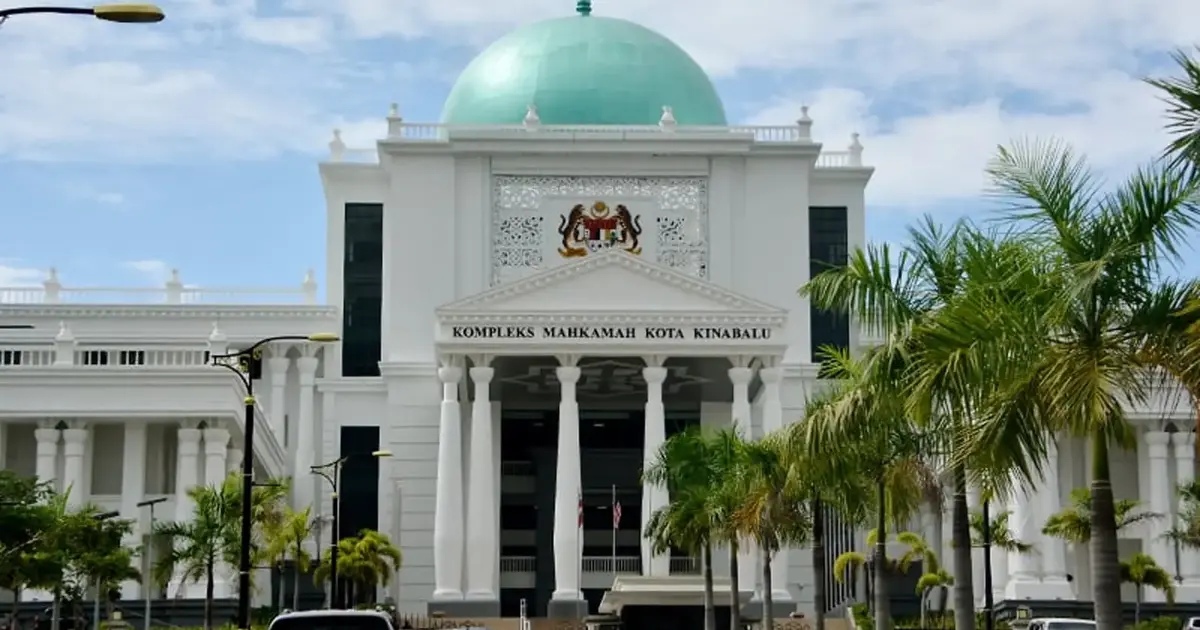
Albert Tei's legal bid to pursue a defamation claim against Sabah's state minerals company has collapsed in the Sessions Court, with judge Monica Linsua ruling that the disputed statement could not reasonably be construed as linking him to a political campaign. The dismissal marks a significant setback for Tei, who had sought damages over remarks he claimed damaged his reputation and implicated him in partisan political activity.
The court's interpretation focused on the precise wording and contextual reading of the company's statement. Judge Linsua emphasised that when the full text was examined holistically rather than isolated phrases extracted from their context, no reasonable reader would conclude that Tei had been identified as participating in organised political manoeuvring. This approach underscores the judicial principle that defamation claims must be grounded in statements that would demonstrably harm reputation through false assertions of fact, not merely through careless or poorly chosen language.
The outcome reflects a broader pattern in Malaysian defamation law where courts have increasingly scrutinised whether plaintiff's have genuinely suffered reputational injury. Tei's failure to convince the Sessions Court highlights the substantial burden claimants face when alleging that corporate communications have made damaging implications about their political allegiances or activities. The judgment suggests that vague associations or insinuations, even if uncomfortable, may not meet the legal threshold for actionable defamation.
Sabah's minerals sector remains a sensitive arena in state politics, with competing commercial interests often intersecting with political factions and resource management disputes. The minerals firm at the centre of this case operates within a landscape where state resources have historically become entangled with political patronage networks. The company's statement, whatever its exact language, apparently touched on territory where politics and business converge, though the court determined it had not crossed into defamatory territory.
For Tei, the dismissal removes an avenue through which he might have obtained public vindication or financial compensation. Defamation suits often serve purposes beyond monetary recovery, functioning as mechanisms through which public figures seek to clear their names and establish records of their conduct. The loss of this case may complicate Tei's efforts to rehabilitate his public standing if the underlying allegations have gained traction in political circles or media coverage.
The judgment also carries implications for corporate communication practices in Sabah, particularly among state-linked enterprises. Companies may view the ruling as licence to make cautiously-worded statements about political figures or their alleged conduct, provided they maintain sufficient ambiguity and avoid explicit factual assertions. This interpretive approach could embolden state firms to engage in more aggressive political commentary, secure in the knowledge that careful drafting may insulate them from liability.
Malaysian defamation jurisprudence has long grappled with the tension between protecting reputation and preserving public debate freedoms. Judge Linsua's decision leans toward permitting corporate entities considerable latitude in political speech, particularly when statements remain technically non-specific about individual culpability. This reflects a judicial philosophy that prioritises literal textual analysis over broader communicative impact or audience interpretation, though such an approach can sometimes strain notions of practical fairness.
The dismissal occurs against Sabah's complex political backdrop, where factional alignments have repeatedly shifted and where accusations of political opportunism frequently characterise public discourse. In such environments, defamation law becomes weaponised in political struggles, with various actors deploying litigation strategically to manage reputational risks. Tei's failed case represents one instance within this larger pattern of political actors engaging courts to resolve disputes that fundamentally stem from partisan competition.
Looking forward, the judgment establishes a local precedent that may influence how similar cases proceed through Sabah's courts. Other claimants alleging defamation by state firms or politically-connected entities will face Judge Linsua's interpretive standard, which requires demonstrating that statements make explicit rather than implicit political accusations. This raises the evidentiary bar and potentially discourages future litigation of this genre, even among claimants with arguably stronger cases.
The broader Southeast Asian context reveals comparable patterns, with courts across the region frequently dismissing defamation suits brought by political figures against corporate defendants. Malaysia's pluralistic legal system, inherited partly from common law traditions, often prioritises textual interpretation and factual specificity in defamation adjudication. Tei's experience aligns with international trends where courts have become more cautious about restricting corporate speech, even when that speech intersects with political terrain and individual reputations.
Tei may pursue appeals or alternative legal remedies, though the Sessions Court's findings present substantial obstacles to overturning the dismissal. The ruling underscores that Malaysian law requires claimants not merely to feel aggrieved by corporate statements but to establish through rigorous analysis that those statements contain false factual assertions about their conduct or character. Without such proof, courts increasingly decline to intervene, reflecting evolving judicial attitudes toward commercial free speech in politically-charged contexts.

