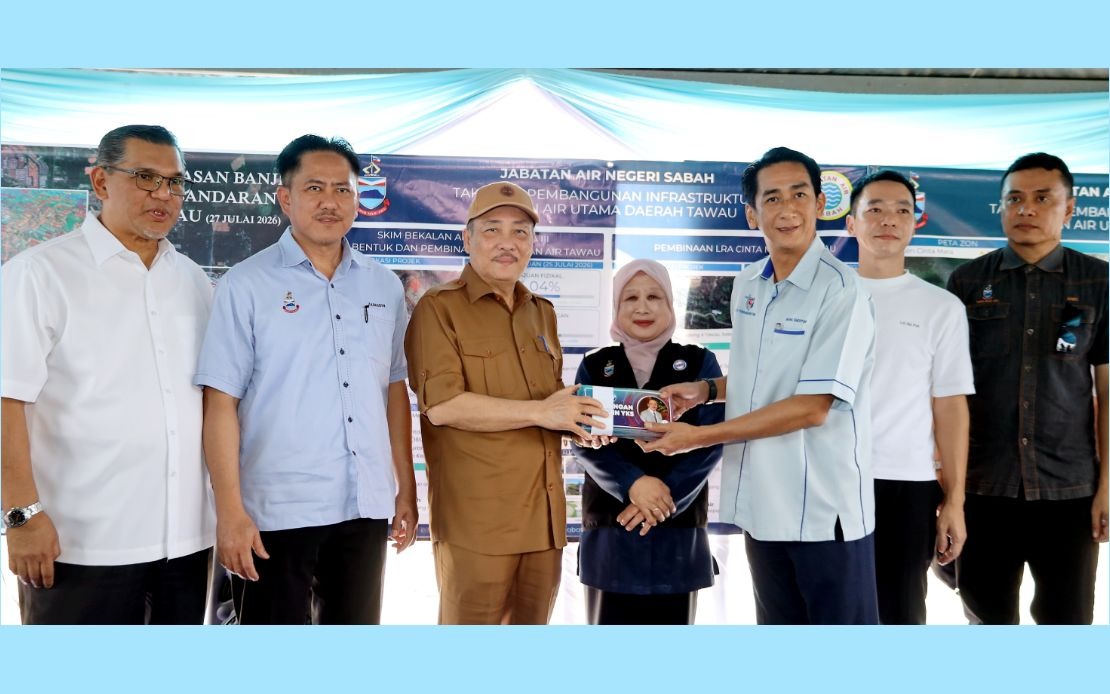
Sabah Chief Minister Datuk Seri Hajiji channelled RM30,600 in relief funds through Yayasan Kebajikan Sabah to assist households ravaged by flooding in Tawau, transferring the contribution to the municipal council leadership during a ceremony this week. The allocation targets 102 family units directly impacted by the natural disaster, translating to RM300 per household as immediate financial support to ease their recovery burden.
The flooding event that struck Tawau on July 25 forced authorities to evacuate 362 individuals to temporary shelter facilities established at Dewan Serbaguna Kompleks Sukan Tawau. The scale of displacement underscored the severity of the water emergency and the urgency of coordinated response mechanisms across multiple government departments and agencies. Tawau Municipal Council president Mohd Shoffian Mohd Said received the donation package on behalf of affected residents.
Beyond the immediate cash assistance, Hajiji's statement acknowledged the institutional framework that enabled rapid disaster management across the state. Recognition extended to personnel deployed through the Civil Defence Force, Royal Malaysia Police, Fire and Rescue Department, and Health Ministry staff who coordinated emergency operations throughout the flooding period. The Tawau disaster management committee, alongside various municipal and departmental agencies, received commendation for their integrated response approach.
This relief intervention reflects the broader institutional practice in Malaysia whereby state-level foundations leverage philanthropic mechanisms to bridge gaps between federal disaster response frameworks and community-level needs. Yayasan Kebajikan Sabah operates as an instrument through which state government resources channel supplementary assistance during crises, complementing standard disaster management protocols. The RM300-per-household distribution model, while modest in individual terms, represents recognition of government responsibility toward affected constituents during periods of environmental upheaval.
Tawau's vulnerability to flooding connects to broader geographical and infrastructural patterns affecting East Malaysian urban areas. The district, situated on Sabah's southeastern coast and characterised by low-lying terrain in certain settlement zones, experiences periodic inundation during heavy monsoon periods and localised intense rainfall events. July typically marks the transition toward Southwest Monsoon activity, creating conditions conducive to waterlogging in drainage-constrained areas.
The disaster management apparatus mobilised during the July 25 emergency exemplifies coordination protocols established under Malaysia's National Disaster Management Agency framework. Multi-agency response structures, pre-positioned relief centres, and evacuation procedures activated systematically to minimise casualties and secondary humanitarian crises. The deployment of health sector resources alongside security and emergency services demonstrates integrated crisis management practice that has become standardised across Malaysian states.
For flood-affected communities in Tawau, the RM30,600 distribution arrived during critical recovery phases when displaced residents faced multiple immediate pressures. Households evacuated to relief centres confronted disrupted livelihoods, potential property damage, and uncertainty regarding return timelines. The cash assistance, though not compensating for material losses, provides liquidity for essential purchases including food, replacement clothing, and medical supplies during displacement periods.
The relief operation also signals political prioritisation of disaster-affected constituencies within Sabah's governance framework. State-level foundations maintaining dedicated charitable portfolios enable rapid mobilisation of assistance without lengthy bureaucratic clearances required for federal-level disbursements. This decentralised approach permits Chief Ministers to demonstrate responsive governance during crisis periods, strengthening institutional legitimacy through visible direct engagement with affected populations.
Sabah's experience with monsoon-driven flooding and typhoon-related water emergencies has established institutionalised disaster preparedness infrastructure uncommon in several Southeast Asian jurisdictions. The existence of pre-established municipal relief centres, trained emergency personnel, and documented evacuation procedures reflects cumulative experience managing environmental hazards across multiple seasons. However, recurring flood patterns simultaneously highlight adaptation challenges as infrastructure development in Tawau and comparable districts often precedes comprehensive drainage system modernisation.
Looking forward, the July 25 flooding episode reinforces ongoing policy discussions regarding climate adaptation investments in East Malaysian urban planning. While immediate relief distribution addresses acute humanitarian requirements, longer-term mitigation strategies demand infrastructure investment in flood management systems, improved drainage capacity, and zoning restrictions within high-risk areas. Balancing development pressures with environmental vulnerability remains central to Sabah's governance challenges across coastal and lowland districts.
The donation distribution underscores mutual accountability relationships between state leadership, municipal administration, and emergency services during natural disasters. Recognition extended to inter-agency personnel reflected acknowledgment that coordinated response capacity relies upon sustained professional commitment across disparate government functions. For Malaysian policymakers monitoring disaster resilience frameworks, Tawau's experience offers practical insights regarding rapid relief mobilisation and institutional coordination mechanisms that warrant replication across comparable vulnerable regions throughout the nation.

