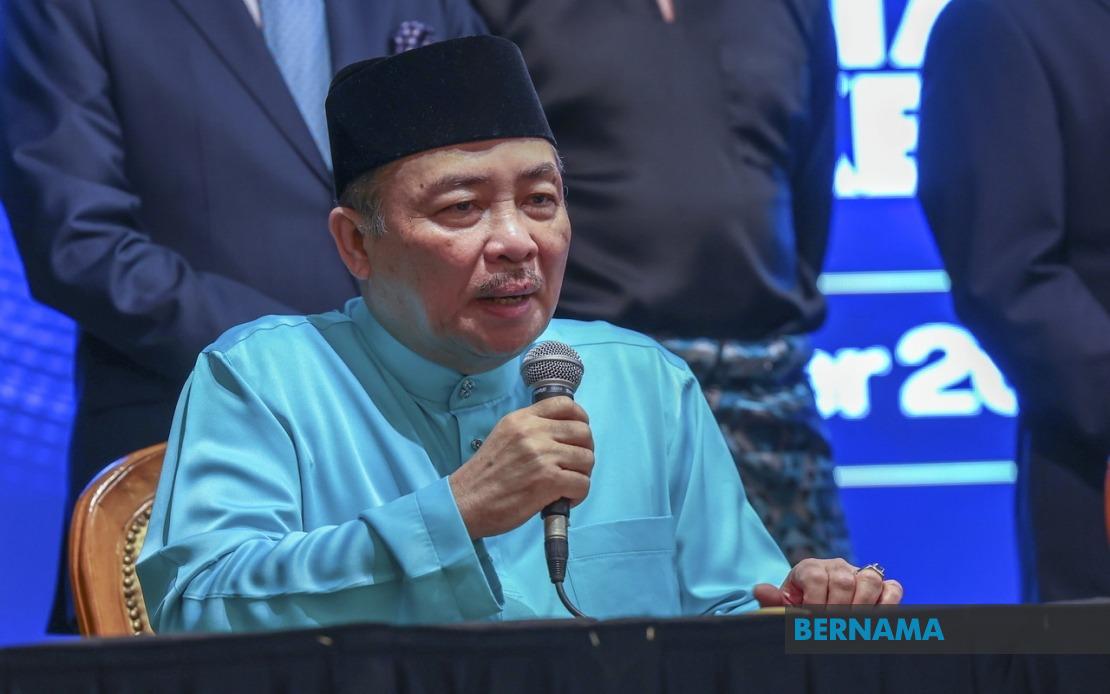
Sabah's investment in student welfare has deepened with a substantial funding allocation of over RM100 million directed towards the Sabah State Government Scholarship (BKNS) for the current year. Chief Minister Datuk Seri Hajiji Noor announced that this commitment would sustain support for current scholarship holders while simultaneously extending opportunities to 2,182 newly qualifying students across the state. The expansion reflects growing recognition that educational access remains a decisive factor in equipping Sabah's youth with competitive advantage in an increasingly complex labour market.
The scholarship initiative has already established considerable reach within Sabah's student population. With cumulative beneficiary numbers now standing at 13,389 students, the programme has matured into a substantial infrastructure for human capital development. This scale of engagement demonstrates that the state has moved beyond token gestures to systemic educational financing. The emphasis on science and technology-related disciplines signals strategic alignment with both national development priorities and emerging sectoral demands that will shape employment opportunities for the next generation of Sabah professionals.
Understanding Sabah's approach requires examining the broader context of regional education policy. As Malaysia's second-largest state by area yet among those facing geographic and infrastructural challenges, Sabah confronts particular obstacles in delivering equitable educational access. Students from rural and remote areas often face prohibitive costs that extend beyond tuition fees to encompass accommodation, transport, and materials. By concentrating scholarship allocation towards STEM fields, the state government signals that it views technical and scientific literacy as foundational to breaking cycles of economic dependency and attracting knowledge-intensive industries to the region.
The Chief Minister's statement positioned education as fundamental to Sabah's developmental trajectory. His framing emphasized that the state requires graduates distinguished not merely by academic credentials but by practical skills, competitive capability, and innovation capacity. This articulation reflects contemporary global discourse around education's role in economic transformation. For Malaysian policymakers observing Sabah's experience, the emphasis on producing workers ready for AI integration, renewable energy transitions, and technical vocational pathways offers instructive lessons about aligning educational investment with genuine labour market requirements rather than pursuing degree proliferation divorced from employment realities.
Beyond the flagship scholarship scheme, Sabah has constructed a layered support architecture encompassing fourteen distinct assistance programmes introduced since 2021. These initiatives include the one-off Higher Education Institution Registration Cash Assistance (BUDI), which addresses immediate enrolment barriers; Special Examination Cash Assistance (BAKTI), recognizing that examination participation itself carries financial impediments; Ihsan Computer Assistance (BAIK), acknowledging that technology access determines educational effectiveness in contemporary contexts; and Sabah Student Flight Ticket Assistance (GRS-SUBFLY), addressing the geographic reality that many Sabah students must travel considerable distances to reach tertiary institutions. The State Higher Education Student Contribution (SENTOSA) programme rounds out this ecosystem by managing ongoing educational expenses.
The strategic specificity of these programmes demonstrates sophisticated understanding of student financial barriers. Rather than assuming that a single scholarship addresses all obstacles, the Sabah government has disaggregated educational costs and created targeted interventions addressing distinct pinch points. This approach proves particularly valuable for students from lower-income households and families in peripheral regions, where cumulative small expenses can constitute insurmountable barriers even when tuition itself is manageable. For Malaysian observers across other states, this model offers replicable architecture that could enhance equity outcomes in educational access.
The Chief Minister's explicit acknowledgment that these measures respond to rising living costs and education expenses grounds the scholarship expansion within contemporary economic reality. Inflation pressures disproportionately impact students from working-class and middle-income backgrounds, for whom education funding represents zero-sum competition with household survival needs. By explicitly linking scholarship expansion to cost-of-living pressures, Sabah's government demonstrates responsiveness to material conditions shaping student wellbeing. This framing also positions education policy within broader social protection frameworks rather than treating it as disconnected from macroeconomic conditions.
The focus on specific sectoral pathways reveals strategic vision about Sabah's economic future. Directing scholarship emphasis towards oil, gas and energy sectors reflects both existing economic foundations and anticipated transitions within these industries toward cleaner technologies and higher-value operations. The emphasis on Technical and Vocational Education and Training (TVET) acknowledges that not all valuable economic participation requires university credentials, and that skilled tradespersons command wages and employment security comparable to or exceeding many degree holders. The inclusion of Artificial Intelligence training indicates forward-looking positioning, recognizing that AI integration will reshape employment across all sectors and that preparatory exposure at secondary and tertiary levels determines competitive positioning.
For Malaysian students and families across other states, Sabah's scholarship expansion model offers comparative reference points worth examining. Many Malaysian families struggle with education financing despite national programmes, suggesting that state-level supplementation models merit adoption elsewhere. The disaggregated approach to assistance—rather than assuming single monolithic scholarships—enables more sophisticated matching between actual student needs and available support mechanisms. Similarly, Sabah's strategic sectoral focus suggests that scholarship allocation decisions should anticipate economic transformation rather than merely supporting traditional prestige disciplines.
The scale of Sabah's commitment carries implications extending beyond individual student outcomes. Education investment constitutes economic stimulus through multiple channels: it increases demand for educational services and facilities; it enables broader economic participation by removing financial barriers to skill acquisition; and it enhances intergenerational mobility that reduces long-term social costs associated with poverty and limited opportunity. For a state seeking to position itself competitively within Southeast Asia's emerging knowledge economies, sustained education investment represents investment in future competitiveness.
The Chief Minister's characterization of human capital development as foundational to state progress reflects international consensus supported by decades of economic research. Yet translating this philosophical commitment into sustained financial allocation remains the critical variable distinguishing aspirational statements from transformative policy. Sabah's demonstrated willingness to allocate over RM100 million annually, maintain fourteen distinct assistance programmes, and expand beneficiary numbers suggests genuine institutional commitment. Whether this funding trajectory continues during economic downturns, and whether other Malaysian states adopt comparable scaled investment, will determine whether Sabah establishes itself as a regional leader in education-driven economic development.

