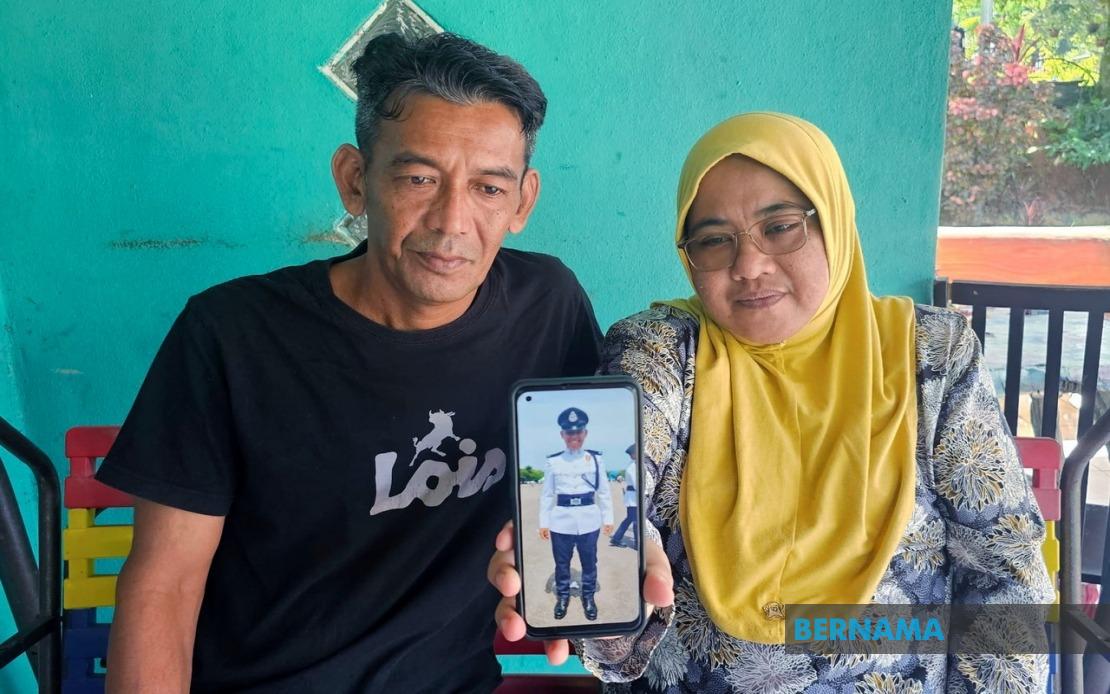
The joy that Ismarubee Ismail and his wife Nor Azila Zakaria had been harbouring for weeks crystallised into devastating grief when they learned their son would not be coming home after all. Constable Muhammad Raimi Ismarubee, 26, had promised to take leave before the end of August, but financial constraints had kept him searching for cheaper flights back to Felda Kerteh 2 in Dungun, Terengganu. That promise turned to tragedy when the young constable, stationed at Weston Police Station in Beaufort, Sabah, died in an electrocution incident on duty, robbing his parents of the reunion they had been counting down to and leaving a family grappling with incomprehensible loss.
The fatal accident occurred at the Weston Police Station near Sekolah Kebangsaan Weston when three police personnel were handling a metal pole used for harvesting coconuts. Constable Muhammad Raimi perished alongside Corporal Chiu Teck Siong, 40, and Lance Corporal Mohamad Nur Hafiz Ibrahim, 29, in what authorities have determined was an electrocution incident. The tragedy unfolded with frightening speed, claiming three lives in a matter of moments and leaving the tight-knit police station reeling from the loss of three colleagues in a single workplace accident.
Ismarubee, now 51 and working as a labourer, received the news of his son's death through a phone call from the constable's friend at around 6 pm. The timing made the blow even more cruel—just hours earlier, at 2 pm, Muhammad Raimi had sent a WhatsApp message to his parents celebrating a successful drug arrest operation, his tone upbeat and professional. That message would be the last communication his family would receive from him, frozen in time as evidence of a young officer actively engaged in meaningful police work, unaware that his working day would end in tragedy.
Muhammad Raimi was the second of three children and had only begun his service at Weston Police Station in September 2024, meaning he had been on the job for less than a year when he died. His previous return home in January had given his parents a glimpse of their son settling into his new role, but the demands of police work and the expense of travel between Terengganu and Sabah had kept him away for seven months. His parents had been counting on August to finally bring him back, a date that grew increasingly real as the month approached and they looked forward to hearing his stories in person rather than through intermittent phone calls and messages.
Nor Azila, his 46-year-old mother, painted a portrait of a dutiful and caring son who had been planning his future with optimism and purpose. Muhammad Raimi had expressed his intention to get engaged to a woman from Sabah in the coming year, a prospect that pleased his parents even as they looked forward to welcoming a daughter-in-law into their family. However, he had insisted on postponing his marriage until his youngest sibling completed the Sijil Pelajaran Malaysia examination, demonstrating a sense of family responsibility that extended beyond his own personal milestones. He wanted to ensure that his brother or sister had the support and attention needed during this crucial academic period, even if it meant delaying his own engagement.
Beyond these future plans, Muhammad Raimi had been a consistent source of financial and material support for his family. Nearly every month he would send money home, and whenever his siblings needed items for their education—including a laptop for their studies—he would purchase them without hesitation. For parents who depended on labouring work and modest household income, having a son in the police force earning a steady salary provided both security and pride. Yet that economic contribution, valued as it was, paled in comparison to the emotional bonds that held the family together and the simple presence his parents had been denied while he served in Sabah.
The circumstances surrounding the electrocution raise important questions about workplace safety protocols in police stations and the handling of equipment that could pose electrical hazards. That three officers could be simultaneously electrocuted while moving a single metal pole suggests either a significant electrical hazard that had not been properly identified or mitigated, or a breakdown in safety procedures that should have prevented personnel from handling such equipment without proper precautions. The involvement of routine maintenance work—harvesting coconuts from trees outside the station—underscores how workplace accidents can occur during seemingly mundane tasks that may not receive the same level of safety oversight as more formally structured operations.
For the broader police force in Malaysia, the loss of three officers in a single incident represents a significant tragedy that will reverberate through the Royal Malaysia Police. These were not officers lost in the line of duty in a dramatic confrontation, but rather colleagues who died in what should have been a controllable workplace hazard. Their deaths will inevitably prompt reviews of safety practices not just at Weston Police Station but potentially across police facilities nationwide, raising questions about electrical safety awareness, equipment maintenance, and the protocols governing the use of potentially hazardous items during station maintenance and operations.
According to Nor Azila, Muhammad Raimi's remains were to be brought home by police and laid to rest at the Felda Kerteh 2 Muslim Cemetery on the day these tragic details emerged. The funeral would bring closure of sorts to the family's ordeal, but it would do nothing to resolve the fundamental injustice of a young man with plans, ambitions, and a deep sense of family responsibility cut down at the threshold of his adult life. His parents would receive their son, but not in the way they had imagined—not as a visiting constable with stories of his work in Sabah, but as a casualty of what appears to have been a preventable accident.
The tragedy also highlights the particular vulnerability of Malaysian police personnel who serve far from their home states, stationed in postings that require extended separation from family. For officers like Muhammad Raimi, the financial barriers to regular leave mean that periods away from home can stretch into months, with reunions depending on the availability of affordable transport options. This structural challenge in posting policies may warrant consideration by police leadership, particularly in light of how the inability to afford frequent travel contributed to Muhammad Raimi's seven-month absence from his family before his death.
As investigations into the electrocution incident proceed, the focus will inevitably shift to establishing exactly how three trained police officers came into contact with a lethal electrical hazard and what measures—or lack thereof—contributed to their deaths. Yet for his family in Felda Kerteh 2, the technical details of the accident matter less than the overwhelming reality that their son, brother, and future bridegroom will never come home. The leave Muhammad Raimi had been planning to take, the flights he had been saving for, and the family reunion his parents had been anticipating with such hope have all been rendered impossible by a moment of catastrophic negligence.

