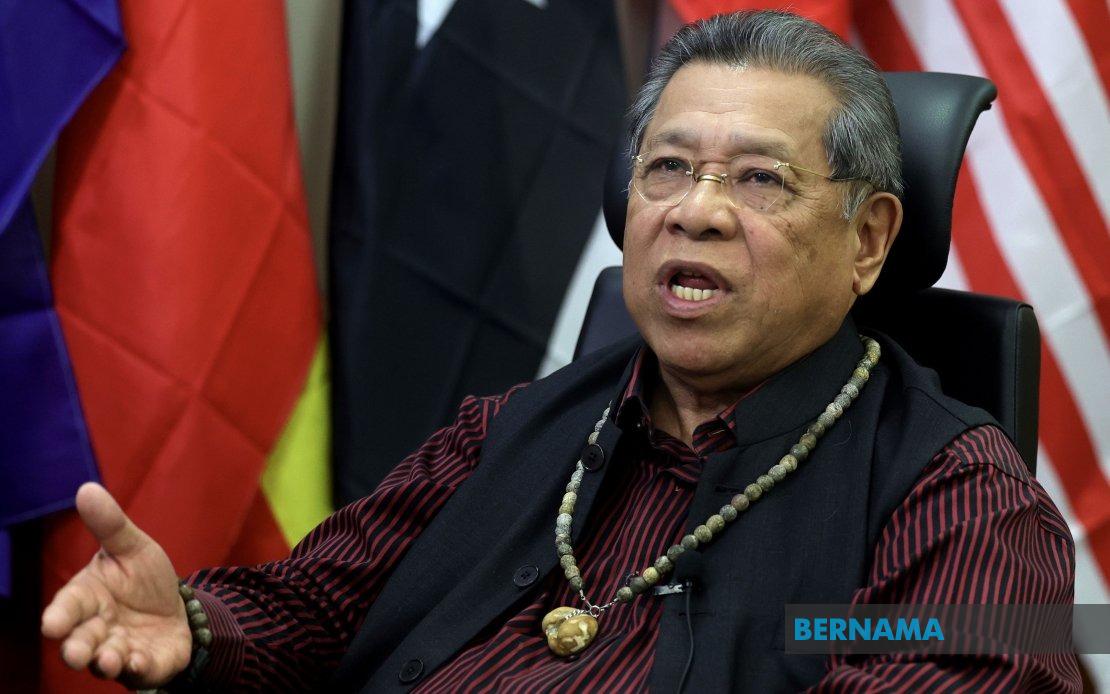
Sabah is positioned to accelerate infrastructure and social development initiatives following a significant increase in federal allocations announced during the PKR National Congress in Melaka. The windfall represents a tangible shift in resource distribution to the state, promising tangible improvements across multiple sectors affecting ordinary Sabahans. United Sabah National Organisation (USNO) president Tan Sri Pandikar Amin Mulia, speaking at the gathering, highlighted how the injection of funds would translate into concrete projects benefiting residents across the eastern Malaysian state.
The numbers underscore the scale of the commitment. Federal funding to Sabah has surged by 35 per cent over a four-year span, climbing from RM13 billion in 2022 to RM17.6 billion in 2026, as disclosed by Prime Minister Datuk Seri Anwar Ibrahim during his presidential policy address at the Melaka International Trade Centre in Ayer Keroh. This escalation reflects a deliberate budgetary strategy aimed at narrowing regional disparities and accelerating development in states that historically received comparatively lower allocations.
Pandikar Amin's endorsement carries weight within Sabah's political landscape. The USNO chief articulated his conviction that the Anwar Ibrahim-led administration remains indispensable both domestically and internationally, framing the funding increase as evidence of the government's commitment to peripheral regions. His comments, delivered to reporters during the congress proceedings, suggest alignment between the USNO and the federal government on development priorities, a significant positioning given Sabah's importance within Malaysia's federal structure and its electoral significance.
The broader context reveals an administration intent on dismantling perceptions of regional neglect. Prime Minister Anwar directly addressed criticism that certain states receive preferential treatment under the MADANI Government, contending instead that allocations reflect varying developmental priorities rather than political bias. This defence acknowledges that resource distribution remains a sensitive matter in Malaysia's complex federal system, where states hold distinct economic capacities and infrastructure requirements. The assertion that funding has expanded across the board attempts to reframe the conversation around equitable national development.
For Sabah specifically, the 35 per cent increase represents potential gains across numerous domains. Enhanced allocations could support healthcare infrastructure expansion, educational facility improvements, transportation network development, agricultural modernisation, and urban renewal initiatives. The state's geographic position, resource wealth, and demographic diversity create both opportunities and challenges that require sustained investment. Development projects funded through these allocations typically generate employment, stimulate local economies, and improve service delivery to communities that previously operated with constrained budgets.
The announcement also carries implications for Malaysia's broader development strategy. Sabah, alongside Sarawak, comprises a substantial portion of the nation's land area yet historically concentrated development activity in Peninsula Malaysia. Redirecting resources northeastward reflects a conscious effort to create more balanced regional growth, potentially unlocking economic potential in areas rich with natural resources and emerging investment opportunities. This geographic rebalancing could reshape Malaysia's economic footprint as development corridors extend beyond traditional commercial hubs.
The timing of these announcements during the PKR National Congress suggests a coordinated messaging strategy. By highlighting funding increases during the ruling party's major gathering, the administration reinforces its development narrative to both supporters and the broader electorate. For PKR, associating growth allocations with good governance strengthens the party's electoral positioning ahead of future campaigns. The timing also provides political cover against opposition claims of uneven resource distribution, offering concrete figures to counter allegations of regional favouritism.
Within Sabah's political ecosystem, the funding announcement creates opportunity for political positioning by various actors. USNO's endorsement, coupled with Pandikar Amin's public statements, signals coalition stability and suggests Sabah's representation at federal level is delivering material benefits. This dynamic maintains USNO's relevance within the ruling coalition while simultaneously burnishing its standing among constituents who evaluate political parties based on tangible development outcomes rather than ideological positioning.
The increase also warrants scrutiny regarding implementation capacity. Larger budgets prove beneficial only when effectively deployed, managed transparently, and directed toward high-impact projects. Sabah's track record in project execution, procurement practices, and maintenance of completed infrastructure will determine whether the funding boost translates into enduring improvements. Historical instances of unutilised allocations or cost overruns underscore that budgetary commitment alone does not guarantee developmental success.
Looking forward, the pattern established through this funding increase sets expectations for future allocations. Sabahans and other states may now anticipate continued growth in federal investment, anchoring development aspirations to promises of sustained fiscal commitment. However, economic variables, changing federal priorities, and political transitions could influence subsequent budget allocations. The 2026 figure represents a current commitment rather than a binding long-term guarantee, making the actual implementation of announced projects crucial for maintaining political credibility.
The funding surge also reflects broader acknowledgment that Malaysia's development cannot remain concentrated in limited geographic areas. As competition for skilled talent, investment capital, and market share intensifies regionally, developing secondary growth centres becomes strategically important. Sabah's allocation increase positions the state as a potential beneficiary of this decentralisation trend, though realising that potential requires coordinated effort across multiple government agencies and private sector participation.

