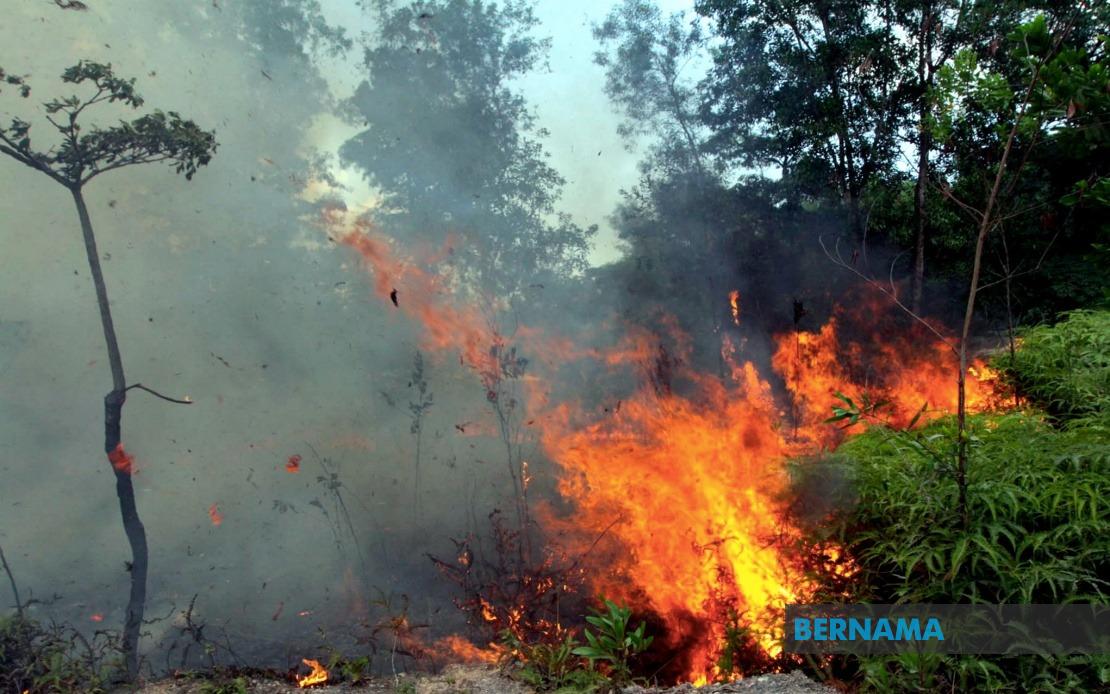
The Sabah Fire and Rescue Department (JBPM) has escalated its appeal to residents to cease all forms of open burning, citing the arrival of transboundary haze originating from active forest fires across the border in Kalimantan, Indonesia. Department director Mohd Pisar Aziz revealed that smoke from the neighbouring region has begun spreading across Sabah, blanketing areas such as Kota Kinabalu and Kimanis with visible haze that is already compromising air quality and visibility throughout the state.
The meteorological conditions driving this transboundary pollution event are rooted in prevailing wind patterns across Borneo. According to Mohd Pisar, southern and central Borneo's current wind systems are channelling thick smoke northward, directly towards northern Borneo and Sabah. This cross-border air pollution phenomenon represents a recurring seasonal challenge for the region, particularly during dry periods when fire risk intensifies on both sides of the border. The director emphasised that the convergence of haze with local weather conditions creates an especially hazardous environment, as the hot and dry weather typical of this season substantially elevates the danger of new fires igniting within Sabah itself.
Real-time air quality measurements paint a concerning picture of conditions across the state. Air Pollutant Index Management System (APIMS) readings recorded on the afternoon of the announcement showed that Sabah's air quality had reached moderate levels, a classification that typically warrants heightened vigilance. Kota Kinabalu, the state capital and most populous city, registered the highest pollution index at 83, followed closely by Politeknik Kota Kinabalu at 81 and the coastal town of Kimanis at 76. While these readings remain officially categorised as moderate rather than unhealthy, the trajectory is concerning, particularly given that haze from Kalimantan fires typically intensifies before it stabilises or improves.
Recognising that API numbers alone do not tell the complete public health story, Mohd Pisar specifically highlighted vulnerable populations who face disproportionate health risks from poor air quality. Asthma sufferers, young children, and elderly residents require enhanced protective measures irrespective of whether official readings classify air quality as moderate. This population-health perspective adds crucial nuance to public health communications, as these groups often experience respiratory distress at pollution levels that might seem acceptable to the general population. The fire department's explicit naming of at-risk groups reflects growing awareness in Southeast Asia of air pollution's differentiated health impacts across demographic segments.
The timing of the haze's arrival has coincided with what fire officials describe as critically dry conditions in several inland districts. Keningau and Pitas have each recorded seven consecutive days without rainfall up to August 10, meeting the formal threshold that triggers mandatory open-burning prohibitions under Sabah's environmental and fire-safety regulations. These dry-spell metrics are significant because they indicate meteorological conditions that maximise fire propagation risk, making any open burning—whether accidentally or intentionally set—substantially more likely to escape containment and develop into uncontrolled blazes.
Official open-burning bans in these zones apply comprehensively across multiple categories of material. The restrictions prohibit the burning of household rubbish, dried leaves, garden waste, construction debris, and any other combustible materials whose burning could contribute to degraded air quality. These prohibitions represent a precautionary approach designed to eliminate locally-ignited fire sources during a period when external pollution is already compromising air quality. The regulatory framework reflects lessons learned from previous transboundary haze crises in Malaysia and throughout Southeast Asia, where cumulative smoke from numerous small fires, combined with imported haze, has occasionally created hazardous air quality situations.
To shield public health during this period, JBPM has issued practical guidance for daily activities and behaviour modification. The public is instructed to curtail outdoor activities during the hours between 11 am and 4 pm, when temperature and meteorological conditions typically intensify air pollution concentration. Residents are advised to maintain adequate hydration, a basic physiological measure that helps respiratory tract resilience during haze exposure. The use of protective face masks in visibly hazy areas is recommended, offering a barrier against fine particulate inhalation. Additionally, households are urged to inspect electrical wiring systematically, as deteriorating electrical infrastructure represents a common fire ignition source that becomes particularly dangerous during dry periods.
Beyond household-level precautions, JBPM has requested broader public vigilance against fire hazards. Citizens are cautioned against careless cigarette disposal, as discarded smoking materials remain a leading cause of accidental fires in both urban and rural settings. More importantly, the public is mobilised as part of an early-warning network, with instructions to immediately report any suspicious activities or observed fires to emergency services at 999. This community-based monitoring approach extends official fire-service capacity, recognising that in expansive regions like Sabah, rapid detection and reporting of emerging fires by alert citizens can be the difference between a containable incident and a major conflagration.
The haze situation in Sabah exemplifies the broader environmental governance challenge facing Southeast Asia, where political boundaries prove meaningless against transboundary air pollution. Indonesian forest and peatland fires, whether resulting from agricultural clearing, accidental ignition, or deliberate land preparation, generate smoke that inevitably drifts across borders into Malaysia. For Malaysian authorities like JBPM, this creates a dual prevention imperative: suppressing local fire ignition while simultaneously managing the health and environmental consequences of imported pollution. The current episode underscores why sustained regional cooperation on fire prevention, peatland protection, and agricultural practices remains essential to protecting air quality across Borneo and the wider region.
Looking forward, the persistence of this haze will depend largely on weather patterns and the intensity of Kalimantan's fire season. Historical data suggests that these transboundary haze events can endure for weeks when regional fires remain active and wind patterns continue channelling smoke northward. Residents should remain alert to official advisories and prepared to adjust their activities in response to changing air quality conditions. The Fire and Rescue Department will continue monitoring APIMS indices and issuing updated guidance as circumstances evolve, with particular attention to whether air quality deteriorates beyond moderate levels into the unhealthy range.

