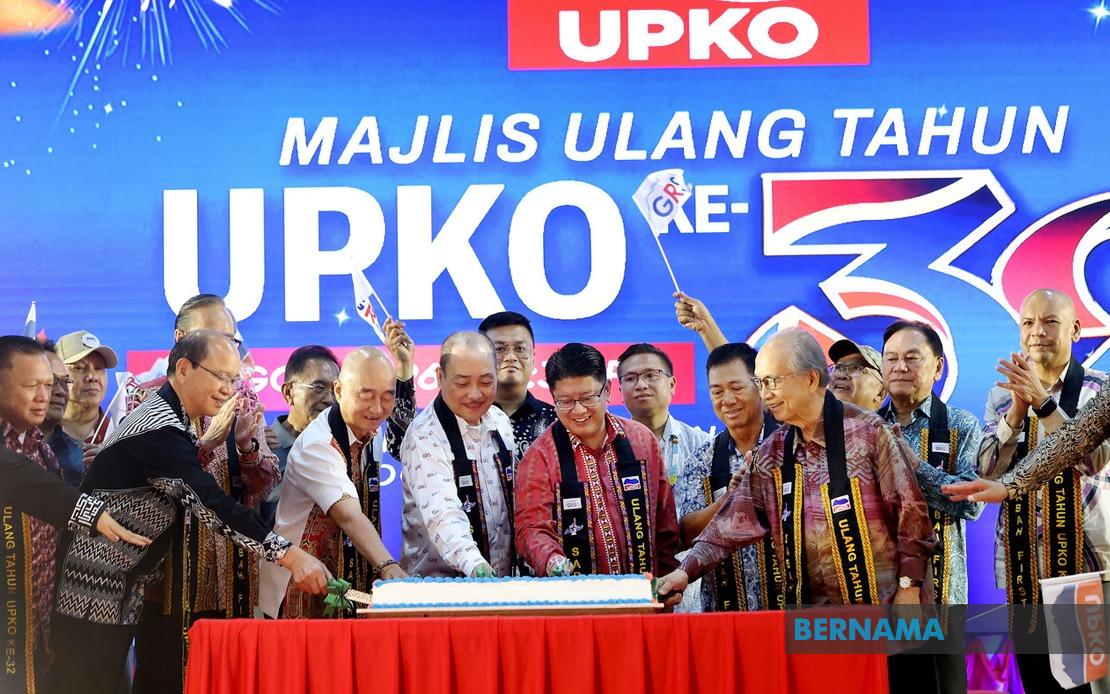
Sabah's Chief Minister Datuk Seri Hajiji Noor has reaffirmed his administration's commitment to returning every dollar of federal revenue directly to the state's residents through carefully planned development initiatives and social assistance programmes. Speaking at the 32nd anniversary celebration of the United Progressive Kinabalu Organisation and the opening of its 17th Triennial Delegates Conference in Kota Kinabalu, Hajiji outlined how the state government intends to maximise the recently increased interim special grant to benefit Sabahans across multiple sectors.
The boost in federal funding comes as Prime Minister Datuk Seri Anwar Ibrahim approved an elevation of Sabah's interim special grant payment to RM1.5 billion, a significant injection that reflects increased confidence in the state's development trajectory. Hajiji expressed gratitude for this decision, signalling that the upgraded allocation represents a tangible recognition of Sabah's importance within the federation. The timing of this announcement underscores the ongoing efforts by the federal administration to strengthen fiscal support for states facing distinctive developmental challenges and geographic constraints.
Infrastructure development stands at the forefront of how these funds will be deployed across Sabah. The Chief Minister explicitly outlined plans to construct additional paved roads and concrete bridges, addressing long-standing connectivity issues that have historically constrained economic activity in rural and semi-urban areas. Enhanced road networks are particularly crucial for a state of Sabah's geographical expanse, where transport infrastructure directly influences agricultural productivity, tourism accessibility, and social cohesion. The commitment to these physical improvements reflects recognition that foundational infrastructure remains prerequisite to sustainable development in less densely populated regions.
Beyond roads and bridges, the state government plans to significantly upgrade essential utilities that form the backbone of modern living standards. Water and electricity supply improvements across Sabah represent investments that transcend mere economic metrics, addressing fundamental human needs and quality of life considerations. These utilities have historically been sources of public concern in various Sabahan communities, and prioritising their enhancement signals responsiveness to grassroots demands. Adequate water and power infrastructure also attracts commercial investment and enables small businesses to operate more reliably, creating secondary economic multiplier effects throughout communities.
The Rumah Mesra Sabah Maju Jaya programme represents the state's commitment to affordable housing initiatives, addressing one of the most pressing social concerns affecting middle and lower-income families. By channelling federal resources into constructing additional SMJ units, the Sabah government directly addresses the housing affordability crisis that has intensified across the region. This housing-focused approach demonstrates understanding that homeownership stability directly influences family welfare, children's educational outcomes, and economic participation. The expansion of such units extends government assistance beyond temporary relief, creating lasting assets that build generational wealth among beneficiary families.
Complementing the housing initiative, the Sentuhan Kasih Rakyat (SYUKUR) programme provides targeted assistance to vulnerable populations requiring immediate support. This welfare programme's integration alongside infrastructure projects reflects a holistic policy approach recognising that development must address both immediate hardship and long-term structural improvement. The breadth of these interventions—spanning housing, utilities, roads, and direct assistance—demonstrates a comprehensive strategy rather than piecemeal responses to constituent needs.
Sabah's fiscal position has demonstrated notable stability, with the state government maintaining annual revenue collections at approximately RM7 billion since 2022. This consistent revenue generation, independent of federal transfers, indicates that the state possesses its own revenue base supporting developmental ambitions. The projection to increase collections to RM8 billion represents aggressive but achievable growth reflecting expanded economic activity and improved tax administration. Combined with federal allocations, this dual revenue stream provides Sabah with meaningful resources to implement simultaneous development programmes across multiple sectors without relying excessively on federal financing.
The state's economic resilience has proven noteworthy despite encountering both domestic constraints and international economic volatility. Global supply chain disruptions, commodity price fluctuations, and regional economic uncertainties have challenged Southeast Asian economies broadly, yet Sabah has maintained steady fiscal performance. This resilience partly reflects economic diversification across agriculture, tourism, manufacturing, and energy sectors, reducing vulnerability to single-sector downturns. The state government's ability to navigate challenging periods while maintaining revenue targets demonstrates competent financial stewardship and positions Sabah as an increasingly attractive investment destination for private capital seeking stable operating environments.
Hajiji's emphasis on Sabah as a strategic investment destination addresses both domestic economic integration and international business confidence. By demonstrating fiscal stability, infrastructure commitment, and policy consistency, the state government sends signals to potential investors that regulatory frameworks remain predictable and long-term returns viable. This investment climate focus has particular significance for a state historically peripheral to Malaysia's primary economic corridors centred on Klang Valley and Penang. Attracting foreign direct investment to Sabah redistributes economic opportunity beyond the peninsula's traditional concentration zones, fostering more geographically balanced national development.
The fiscal transfer mechanism underlying these federal grants reflects broader fiscal federalism principles determining resource distribution across Malaysian states. Sabah's negotiating position has evolved significantly in recent years, enabling the state to secure allocations reflecting its developmental needs and population size more equitably. The RM1.5 billion interim grant represents acknowledgement that Sabah requires sustained federal partnership to address infrastructure deficits accumulated during earlier periods of relative neglect. This political-fiscal realignment benefits not only Sabah but demonstrates federal commitment to regional equity, a principle increasingly important as Malaysia navigates competition for talent, investment, and economic opportunity across all regions.
Implementing these ambitious plans requires institutional capacity and administrative discipline to ensure funds reach intended beneficiaries efficiently. State government procurement processes, project management oversight, and anti-corruption mechanisms must function effectively to translate budgeted allocations into tangible community benefits. Hajiji's public commitment to channelling resources back to Sabahans creates accountability expectations that will likely intensify public scrutiny of how projects unfold. Successfully converting federal grants into visible infrastructure improvements and improved service delivery strengthens citizen confidence in government responsiveness and justifies further fiscal transfers in future budget cycles.

