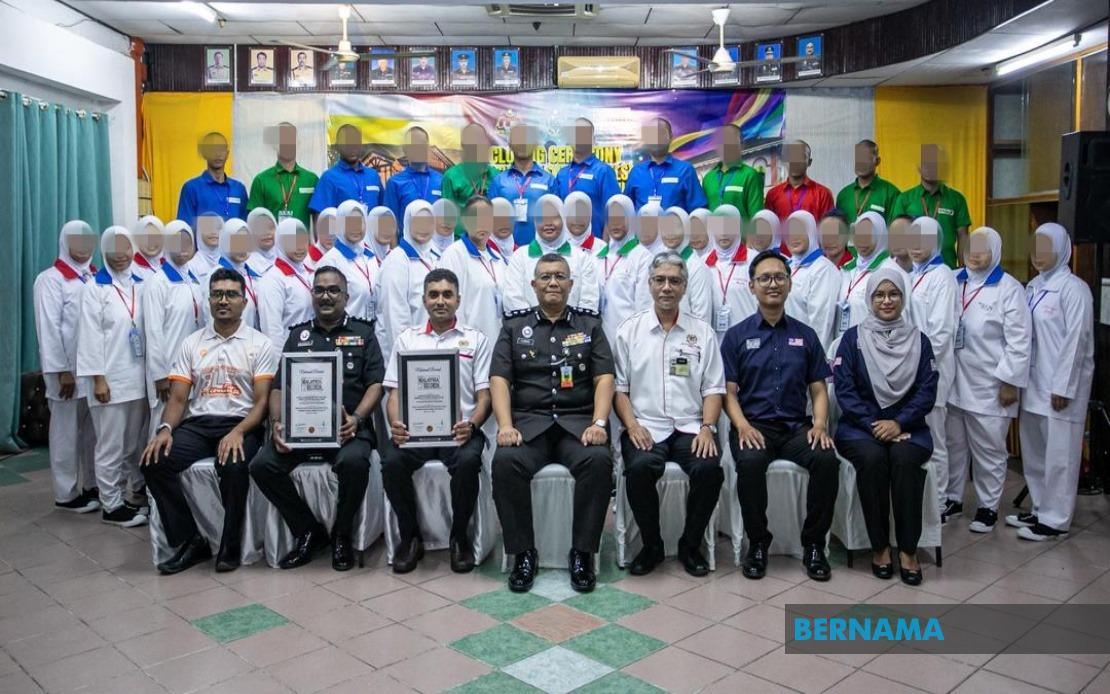
Home Minister Datuk Seri Saifuddin Nasution Ismail has commended the Malaysian Prisons Department for a significant achievement: the Batu Gajah Correctional Centre has secured recognition from the Malaysia Book of Records (MBOR) for organising a Basic Life Support (BLS) and Automated External Defibrillator (AED) training course in which 42 inmates participated. The recognition marks a milestone that extends beyond the walls of the penal institution, demonstrating the far-reaching implications of prison reform initiatives in Malaysia.
The Home Minister's public endorsement, shared through a Facebook statement on June 25, reflects a broader strategic shift within Malaysia's correctional system toward reorienting the prison mandate. Rather than viewing correctional facilities solely as punishment destinations, Saifuddin characterised institutions such as Batu Gajah as engines of rehabilitation offering individuals the prospect of genuine personal renewal. This conceptual reframing carries significant weight in the Malaysian context, where public perception of prisons has historically centred on retribution rather than redemption.
Central to the Home Minister's remarks is the assertion that training programmes like the one recognising by MBOR serve a dual purpose. On one level, participants acquire verifiable, life-saving competencies—skills in cardiopulmonary resuscitation and defibrillation that carry practical value in community settings. Beyond technical proficiency, however, the training mechanism functions as a vessel for cultivating values that the department considers foundational to successful reintegration: humanitarian consciousness, disciplined thinking, personal responsibility, and renewed self-belief. These intangible benefits may ultimately prove as consequential as the medical knowledge imparted.
The Batu Gajah initiative gains particular significance when positioned within Malaysia's broader penal reform narrative. The country has long grappled with prison overcrowding and rehabilitation effectiveness, challenges that demand innovative interventions. By spotlighting programmes that train inmates in recognised skills whilst simultaneously fostering attitudinal change, the department signals a commitment to evidence-based rehabilitation that could inform future policy direction across the Malaysian correctional system.
According to Saifuddin's statement, the Malaysian Prisons Department operates from a philosophically coherent position: rehabilitation supersedes punishment as the institutional north star. This foundational commitment translates into concrete policy outcomes, manifested through initiatives like the BLS-AED training at Batu Gajah. The philosophy reflects modern penological thinking, which increasingly emphasises that merely warehousing offenders produces suboptimal social outcomes, whereas investing in their skill development and personal transformation yields measurable benefits upon release.
The ultimate objective articulated by the Home Minister extends beyond individual prisoner development to encompass broader social gain. The department endeavours to ensure that individuals completing their sentences possess not merely survival skills but also the psychological scaffolding and practical competencies necessary to function productively within families and communities. This systemic approach recognises that successful reintegration depends on multifaceted preparation rather than simple release.
Saifuddin's public enthusiasm for programmes of this calibre serves as an implicit call to expansion. His expressed hope that similar high-impact initiatives become more commonplace within the prison system suggests official recognition that scattered, isolated programmes yield insufficient systemic impact. Scaling successful models requires institutional commitment, adequate resourcing, and sustained political will—factors that ministerial endorsement helps catalyse.
The Malaysia Book of Records recognition itself carries symbolic weight beyond the 42 inmates who participated. Such external validation provides departments with metrics of excellence and creates benchmarks that other correctional facilities can aspire toward. In Malaysia's federal structure, where prisons operate under centralised management, highlighting exemplary practice at institutions like Batu Gajah establishes replicable templates that other centres might adopt and adapt.
For Malaysian policymakers and criminologists, the Batu Gajah programme offers substantive evidence that correctional facilities can simultaneously pursue security and rehabilitation without irreconcilable contradiction. The inmates trained in life support represent future community members who will possess certified competencies—a concrete asset extending beyond their individual employment prospects to encompass enhanced public safety. When former prisoners become first responders capable of administering CPR or operating defibrillators, communities benefit from expanded emergency response capacity.
The initiative also addresses a persistent challenge in rehabilitation discourse: the gap between aspirational rhetoric and implementation reality. Numerous countries proclaim commitment to prisoner rehabilitation whilst investing minimally in programming. By showcasing a tangible, record-breaking achievement, Saifuddin provides stakeholders with a concrete example of rehabilitation materialising into measurable outcomes. This transparency potentially strengthens public confidence in correctional system efficacy and may influence contemporary debates concerning sentencing policy and prison resource allocation in Malaysia.

