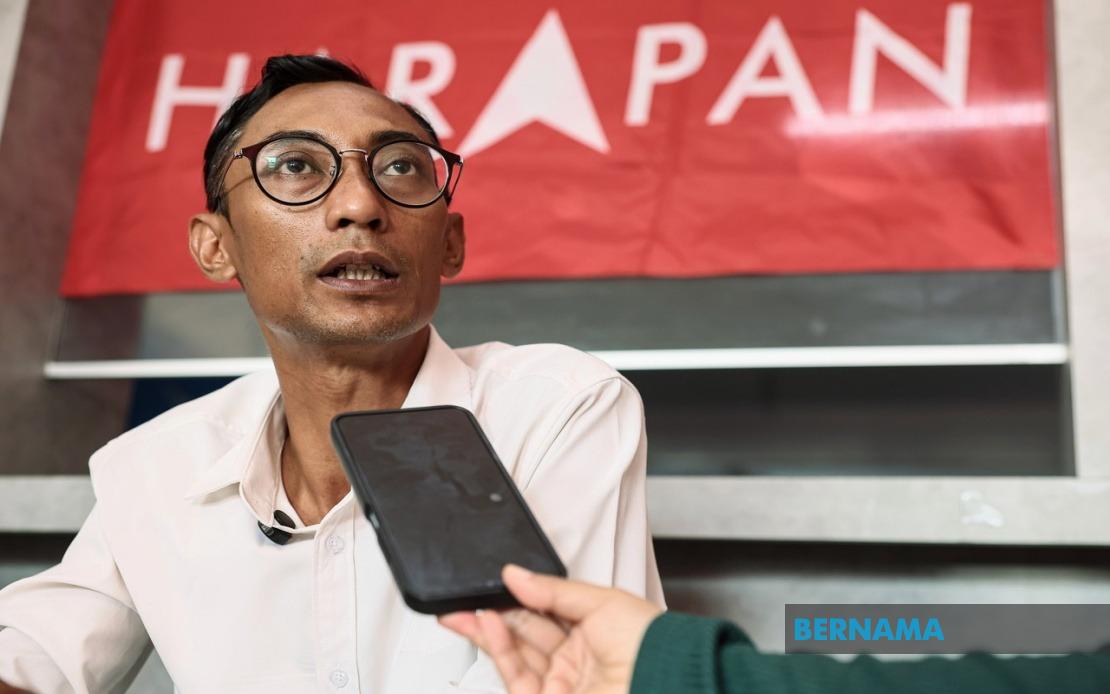
Pakatan Harapan's candidate for Endau, Saiful Nizam Samat, has built his campaign around a central premise: that the community's concerns deserve direct resonance within federal corridors of power. His 'Suara Endau ke Putrajaya' (Endau's Voice to Putrajaya) platform reflects a strategic calculation that better alignment between state-level representation and federal decision-making structures can unlock faster policy implementation and resource allocation for the rural Johor constituency.
The rationale underpinning this approach addresses a perennial frustration across Malaysian constituencies—the perceived disconnect between local needs and centralised governance priorities. Saiful Nizam articulated this reasoning by contrasting his choice of contesting in Endau against more urbanised, better-resourced seats like Iskandar Puteri or Kota Iskandar. Rather than pursuing safer electoral terrain, he has framed his candidacy as a deliberate commitment to channel grassroots advocacy toward the highest levels of administrative authority, thereby streamlining the coordination of development initiatives. This positioning appeals to voters weary of bureaucratic delays and fragmented implementation of promises.
Early indicators suggest his messaging has resonated across demographic divides within the constituency. During the initial campaign week preceding the July 11 election, voter response encompassed young professionals and elderly residents alike, indicating that concerns about local development and effective representation transcend generational boundaries. The breadth of this engagement contrasts with narrower appeal often seen in campaigns focused purely on party ideology or personalised grievances.
To maximise reach in an increasingly digitally connected electorate, Saiful Nizam's campaign harnesses both traditional and online channels. This dual approach recognises that Endau, while characterised by rural and semi-rural settlement patterns, contains voters with varying levels of digital literacy and media consumption habits. The campaign has produced a specially composed theme song featuring an accessible, upbeat melody designed to lodge in voters' minds and generate organic social media circulation, particularly among younger demographics who might otherwise overlook state-level electoral contests.
Critically, Saiful Nizam has identified Orang Asli settlements as priority destinations for direct engagement during the campaign's final days. This deliberate focus acknowledges that indigenous communities, historically marginalised in electoral discourse and often underrepresented in development planning, represent both a significant voter bloc within Endau and constituencies whose concerns require elevated advocacy capacity. By explicitly committing to visit these areas, the candidate signals recognition of specific community priorities that may diverge from broader constituency narratives.
The electoral contest in Endau involves four candidates competing for the state seat. Defending incumbent status is Barisan Nasional's Alwiyah Talib, who has held the position across two previous terms and thus brings incumbency advantage and established administrative networks. Perikatan Nasional's Hasnul Hakimi Hussien represents the opposition coalition's alternative, while Jati Awang of the Parti Orang Asli Malaysia (ASLI) reflects growing indigenous political representation. This four-way division could fragment the opposition vote, though Saiful Nizam appears focused on consolidating PH support rather than targeting specific rivals.
Saiful Nizam has reframed the contest away from direct personality-based competition, instead emphasising the credibility of his campaign infrastructure and the specificity of his voter commitments. This pivot toward organisational strength and policy concreteness sidesteps potential disadvantages against an entrenched incumbent, repositioning the election as a choice between campaign quality and feasibility of promises rather than experience or seniority.
A notable strategic element involves Saiful Nizam's appeal to diaspora voters—residents of Endau now domiciled in Singapore, the Klang Valley, and other regions. This outreach acknowledges that Malaysian electoral patterns increasingly feature voters with multi-location economic participation and that diaspora cohorts, often invested in hometown development, can deliver decisive vote margins when mobilised effectively. By framing voting as a civic responsibility to catalyse change, the candidate positions electoral participation as a concrete expression of community commitment rather than routine procedure.
The timing of this campaign occurs within Malaysia's broader post-2022 political recalibration, where voter preferences increasingly prioritise competent delivery of services and credible engagement with grassroots concerns over partisan loyalty. Saiful Nizam's emphasis on federal coordination and systematic communication with Putrajaya reflects this evolving calculus, suggesting that contemporary Malaysian voters evaluate candidates partly on their perceived capacity to navigate complex administrative hierarchies on behalf of constituents.
The Johor state election represents a significant electoral event within the broader Southeast Asian political context, as Malaysia's richest state continues to recalibrate its political identity. Elections in Johor carry particular weight in establishing momentum for federal-level political movements, and the Endau contest, while one among numerous seats contested, encapsulates broader themes about rural representation, indigenous political engagement, and the contestation between incumbent parties and opposition coalitions attempting to reshape state governance.
Early polling is scheduled for July 7, with general voting occurring July 11. The compressed campaign period means that Saiful Nizam's remaining days involve intensive grassroots mobilisation and maximising visibility among wavering voters. His campaign's self-assessed momentum and the stated enthusiasm from cross-demographic voter groups provides grounds for cautious optimism, though quantifying competitive positioning against Alwiyah Talib's incumbent advantages remains complex without formal polling data. The election outcome will partly determine whether Pakatan Harapan can strengthen its representation in Johor or whether Barisan Nasional consolidates state dominance.

