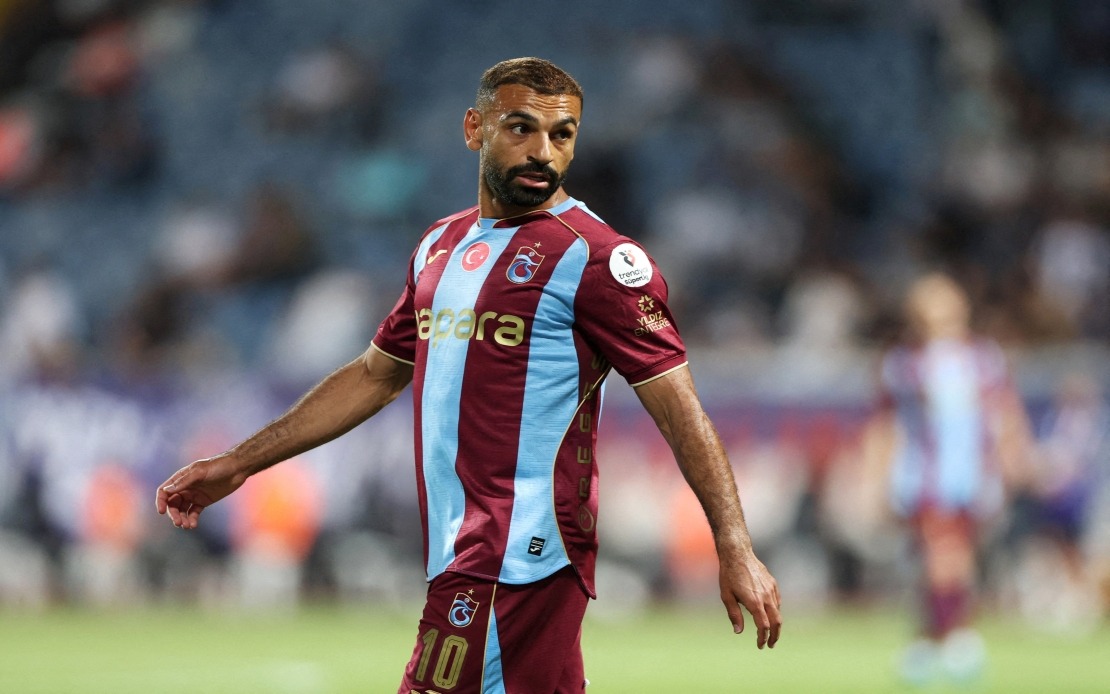
Mohamed Salah's arrival at Turkish football club Trabzonspor has set off an immediate and unexpected retail surge in one of Egypt's most iconic commercial hubs. Within just two weeks of the Egyptian star's transfer to the club, his No. 10 Trabzonspor jersey has begun dominating shop windows throughout Khan el-Khalili, Cairo's historic bazaar that serves as a major tourist and shopping destination in the heart of the capital. The rapid commercial response underscores the extraordinary reach of Salah's personal brand, which transcends conventional sports fandom and touches upon deeper cultural and diplomatic dimensions between Egypt and Turkey.
Multiple retailers operating in Khan el-Khalili have wasted little time capitalising on the excitement surrounding Salah's move, displaying his claret-and-blue Turkish jersey prominently alongside the white of his Egypt national team uniform. The juxtaposition of the two kits in shop windows speaks to a broader narrative: Salah's ability to bridge his domestic identity with international aspiration, and the willingness of Egyptian merchants to embrace his new chapter. Vendor Salah Abdulmecid, speaking from his shop in the bazaar, articulated the sentiment driving this commercial enthusiasm, expressing genuine happiness at Salah's relocation and framing it within a cultural lens that extends beyond sport.
The pricing strategy employed by vendors reflects both the value of the Salah brand and economic realities on the ground. Retailers are offering the Trabzonspor jersey at prices ranging from 400 to 500 Egyptian pounds, equivalent to approximately eight to ten US dollars. This accessible price point has likely contributed to the brisk sales reported, making the kit attainable for ordinary Egyptians who wish to express their support for their national hero despite his move abroad. The affordability also speaks to Khan el-Khalili's traditional role as a marketplace serving the middle and working classes, not merely elite tourists.
The enthusiasm surrounding Salah's transfer extends well beyond the physical marketplace. Egyptian and Arab football enthusiasts have circulated footage capturing the warm reception Salah received upon arriving in Turkey, generating waves of digital engagement and emotional investment across social media platforms. This grassroots celebration reflects the deep connection Egyptians feel to their national sporting icon, who has achieved unprecedented international success whilst maintaining strong ties to his homeland. The public embrace of his move to Trabzonspor, rather than expressions of loss or betrayal, suggests that Salah's popularity has matured beyond simple tribal support.
Shopkeepers and observers in Cairo have articulated a perspective that frames Salah's move through a diplomatic and cultural lens. Abdulmecid's comments highlight a perception of Turkey as a country whose values and traditions resonate with Egyptian society, citing shared religious commitment and cultural practices. This framing positions Salah's transfer not merely as a commercial transaction, but as a symbolic bridge between two significant Middle Eastern and Mediterranean powers. The sentiment represents a broader appreciation for Turkish society among ordinary Egyptians, one that extends beyond political considerations.
Egyptian sociologist Said Sadik has elevated the analysis by introducing the concept of Salah as a "soft power" asset for both Egypt and Turkey. According to Sadik's assessment, Salah functions as a cultural connector who strengthens interpersonal and societal bonds between the two nations. This interpretation moves beyond celebrity gossip into the realm of international relations and cultural diplomacy. The sociologist noted that Salah's name was explicitly mentioned during a high-level diplomatic engagement between Turkish Foreign Minister Hakan Fidan and Egyptian Foreign Minister Badr Abdelatty during Fidan's visit to Cairo on August 14, suggesting that the footballer's significance registers at official governmental levels.
Sadik further observed that Salah's exceptional status in Egyptian society transcends conventional sports following. He noted that even Egyptians who do not regularly engage with football content make deliberate efforts to monitor Salah's career developments and achievements. This phenomenon reflects the footballer's evolution into a national figure representing Egyptian excellence on the global stage. The retail explosion in Khan el-Khalili can therefore be understood as a natural consequence of this broader cultural positioning; merchants are simply responding to genuine and widespread demand from a population deeply invested in Salah's continued success.
The Turkish reception of Salah also carries significance for understanding the bilateral relationship between Egypt and Turkey. According to Sadik's interpretation, the enthusiastic welcome Salah received in Trabzon and across Turkey represents more than sporting courtesy; it signals genuine appreciation and strengthening human connections between Turkish and Egyptian societies. This grassroots-level warmth contrasts with historical periods of cool diplomatic relations, suggesting that popular sentiment may be creating space for improved cross-cultural understanding and engagement.
For Malaysian readers and observers across Southeast Asia, the Salah phenomenon offers instructive lessons about the intersection of sports, commerce, and diplomacy. The rapid commercialisation of his Trabzonspor transfer demonstrates how modern football transcends purely athletic competition and becomes embedded in broader narratives of national pride, international relations, and cultural identity. The speed with which Khan el-Khalili merchants adapted to retail this new product reflects the responsiveness of traditional markets to contemporary sporting developments. Furthermore, the explicit diplomatic dimensions highlighted by Egyptian analysts suggest that significant athletes increasingly function as ambassadors whose movements carry diplomatic weight and cultural resonance that extends far beyond their on-field performances.
Looking ahead, the commercial trajectory of Salah's Trabzonspor jersey in Khan el-Khalili will likely continue as long as the footballer maintains prominence in the Turkish league and on international stages. His move represents a significant moment in the ongoing globalisation of football, where elite African talent relocates to European and Middle Eastern leagues in search of new challenges. For Egypt, Salah remains a figure of immense national importance, even as he pursues his career abroad. The bazaar's embrace of his new colours demonstrates a mature acceptance of this reality, reflecting pride in his accomplishments rather than resentment at his departure.

