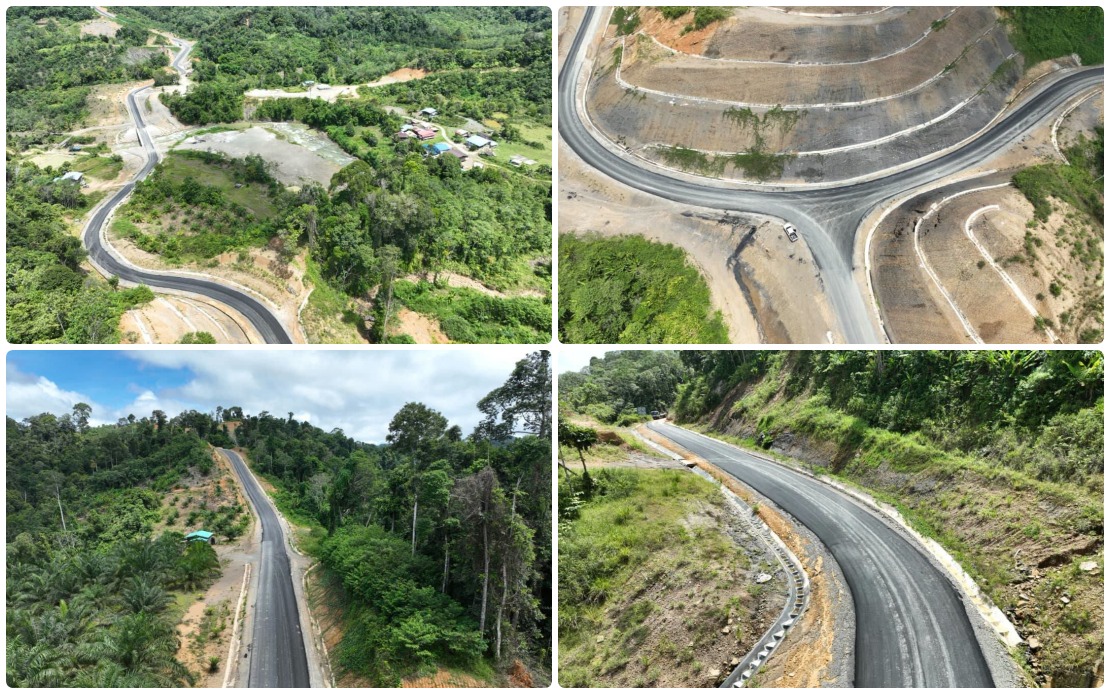
The Sapulut-Salong-Pagalungan-Pensiangan highway has now reached Pensiangan town, marking a significant milestone in infrastructure development for Sabah's interior communities. Minister of Natural Resources and Environmental Sustainability Datuk Seri Arthur Joseph Kurup announced the completion during a recent site visit, highlighting how the improved connectivity is already reshaping daily life and economic activity in the region.
The journey between Keningau and Pensiangan has been transformed dramatically by the new paved route. What previously consumed more than six hours—and could stretch much longer during inclement weather, sometimes leaving travellers stranded—now takes just three hours via a properly maintained highway. This reduction represents far more than a convenience; it addresses a fundamental infrastructure gap that has historically isolated the interior's population and constrained economic development.
As Pensiangan's Member of Parliament, Kurup fulfilled a manifesto commitment to upgrade the road corridor, which forms part of his broader vision for transforming the parliamentary constituency. During his visit, he observed tangible changes in the town's character: previously dominated by river transport with boats clustered along waterways, Pensiangan now displays automobiles parked throughout the commercial area. The shift in transport modes reflects how road quality directly influences population behaviour and commerce patterns.
The road's impact extends to public service delivery and workforce mobility. Teachers, medical doctors, and nursing professionals can now access Pensiangan far more reliably, addressing longstanding challenges in attracting and retaining skilled workers to remote areas. Accessibility improvements of this magnitude often prove decisive in whether professionals accept postings to interior regions or seek alternative employment in more accessible towns.
Perhaps most significantly, the project is catalysing demographic reversal in the region. Young people are increasingly returning to their home villages to develop agricultural land and establish businesses, reversing the rural-to-urban migration that has drained many interior communities of working-age population. This return migration, facilitated by improved road access, suggests that infrastructure investment directly influences settlement patterns and economic opportunity perception among younger generations in Sabah.
Kurup's development strategy extends far beyond this single road project. Phase Four will push the network further toward Kalimantan's border, creating potential cross-border trade corridors and tourism routes that could integrate Pensiangan into wider Southeast Asian economic networks. This border-focused approach recognises that interior regions can leverage their geographical position—currently perceived as remote—into comparative advantage through cross-border commerce and tourism.
The comprehensive master plan encompasses multiple complementary infrastructure projects that amplify the road network's impact. The completed Sinaron-Linayukan highway in Tongod and the ongoing Rancangan Belia Tiulon-Simbuan road development create a networked system rather than isolated connections. When combined with transport infrastructure upgrades—including jetty and boat facility improvements at Pangkalan Salong—the strategy provides multiple transport options suited to different cargo types and seasons, reducing supply chain vulnerability.
Agricultural and commercial infrastructure forms another pillar of the development strategy. The Sapulut coffee processing factory under construction, the completed Pagalungan Tamu market, and the Salong Agrobazaar create value-added processing and marketing channels for interior agricultural produce. These facilities address a critical gap: interior regions often struggle not because production is impossible, but because marketing and processing infrastructure remain inadequate, forcing farmers to sell raw materials at depressed prices to middlemen from more developed areas.
Connectivity improvements represent another transformative element. Upgrading telephone and internet infrastructure throughout the district removes information barriers that have historically disadvantaged interior businesses. Better digital connectivity enables participation in e-commerce, access to market information, and remote professional services that were previously impossible, potentially enabling entrepreneurship and business development without requiring physical relocation.
Border infrastructure development signals long-term strategic thinking about Pensiangan's role within Sabah and the wider region. The planned immigration and customs complex at the Kalimantan crossing, currently in approval stages, would formalise and facilitate cross-border trade and people movement. Such facilities typically attract cross-border commerce that benefits interior towns disproportionately, as these locations become natural trading hubs rather than peripheral locations.
Educational infrastructure completes the development package. The completed Sixth Form Centre at Sekolah Menengah Kebangsaan Nabawan enables students from the interior to pursue post-secondary education without leaving the region, addressing a critical factor in youth out-migration. When combined with improved road access and job opportunities, such facilities can persuade graduates to remain in or return to their communities rather than seeking education and careers in coastal cities.
The strategy reflects recognition that sustainable interior development requires integrated infrastructure—roads alone cannot overcome the isolation and limited opportunities that drive out-migration and slow economic growth. By combining transport networks with agricultural processing, markets, digital connectivity, education facilities, and border infrastructure, the plan addresses multiple constraints simultaneously. This comprehensive approach offers lessons relevant to interior development challenges throughout Southeast Asia, where similar regions struggle with connectivity, economic opportunity, and population retention despite abundant natural resources.
The transformation of Pensiangan from a river-dependent outpost to a road-accessible commercial centre demonstrates how infrastructure investment can reshape regional development trajectories. As Phase Four extends the network further toward Kalimantan, Pensiangan's role within Sabah's interior—and its potential as a regional trading hub—may fundamentally change, potentially unlocking economic opportunities currently invisible from the region's historically isolated perspective.

