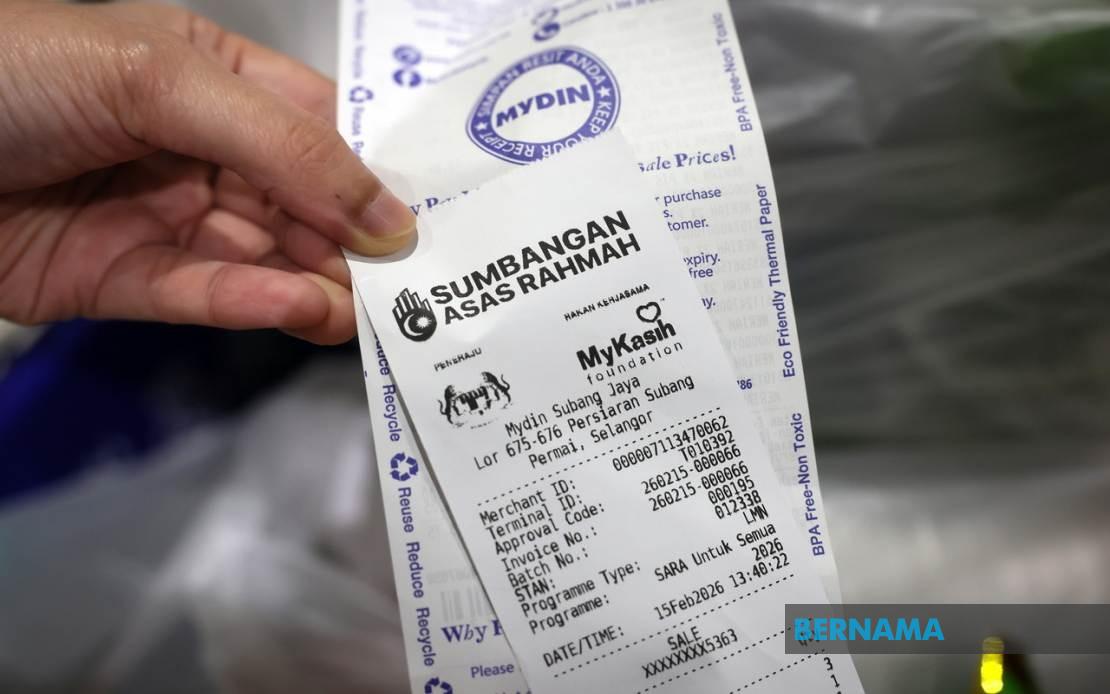
Malaysia's Sumbangan Asas Rahmah (SARA) programme has demonstrated exceptional absorption rates, with the Ministry of Finance reporting that nearly 99 per cent of eligible recipients are actively using the cashless assistance scheme. This high utilisation figure reflects strong take-up among approximately nine million people who receive monthly Sumbangan Tunai Rahmah (STR) payments, translating into RM3.45 billion in documented transactions within the economy so far this year.
The SARA Untuk Semua initiative extends the programme's reach even further, with around 22 million individuals—representing 87 per cent of all eligible recipients—participating in the scheme. These beneficiaries have collectively generated more than RM1.77 billion in purchases at registered SARA Rakan Niaga outlets, demonstrating the programme's effectiveness in channelling purchasing power directly into local retail and consumer markets. The breadth of participation underscores how the initiative has become embedded in Malaysia's social support infrastructure within a relatively short timeframe.
At its core, SARA functions as a digitally managed voucher system, with credits loaded onto MyKad identification cards that recipients can use exclusively at authorised merchants. The scheme covers 15 essential product categories, including basic foodstuffs, personal hygiene items, household cleaning materials, and medicines—categories carefully selected to address genuine cost-of-living pressures faced by lower and middle-income households. This targeted approach allows the government to ensure that assistance flows toward necessities rather than discretionary spending, maximising the social welfare impact of each ringgit distributed.
The Ministry of Finance emphasised that this spending data serves as a critical performance indicator for assessing how effectively the STR and SARA programmes are reducing financial stress for vulnerable populations. Officials noted that tracking actual recipient expenditure patterns provides tangible evidence of the assistance reaching its intended beneficiaries and being deployed for its stated purposes. The high transaction volumes also offer reassurance that the digital infrastructure has achieved reliable nationwide coverage, enabling smooth redemptions across the network of participating outlets.
Beyond immediate poverty alleviation, government officials highlight the broader economic multiplier effects generated by placing purchasing power in the hands of lower-income consumers. When households in this income bracket receive cash assistance or vouchers, the money typically cycles quickly through local retail networks, small vendors, and supply chains. This activity stimulates demand for small business operations, supports employment in distribution channels, and generates tax revenues—effects that extend far beyond the initial transfer payment.
The impressive take-up statistics were disclosed in a parliamentary written reply from the Ministry of Finance responding to Datuk Aminolhuda Hassan, a PH member representing Sri Gading. His query sought information about the government's key performance metrics for both STR and SARA, reflecting broader legislative interest in monitoring the effectiveness of flagship assistance programmes. The official response demonstrates the administration's commitment to transparent reporting on social welfare outcomes.
Govnment investment in these assistance initiatives has expanded substantially in recent budgets. The combined STR and SARA allocation is scheduled to reach RM15 billion in 2026, up from RM10 billion allocated in 2024. This 50 per cent funding increase signals the government's prioritisation of social safety nets amid persistent concerns about rising costs for essential goods and services. The trajectory suggests that policymakers view these programmes as central to their broader agenda of protecting household purchasing power and maintaining social stability.
The expansion of assistance budgets reflects acknowledgment that conventional inflation measures may understate cost pressures experienced by lower-income Malaysians. Food, energy, housing, and healthcare expenses often consume substantially larger portions of working-class household budgets than official figures suggest. By scaling up direct assistance, the government aims to provide more direct relief than what monetary policy or general economic growth might deliver unaided to these vulnerable segments.
The digital architecture underpinning SARA offers distinct advantages over traditional cash transfers or food subsidy programmes. The MyKad-based system creates an auditable transaction trail, enabling officials to monitor programme efficacy and detect anomalies in real time. This technological infrastructure also reduces leakage, prevents duplicate benefits, and allows authorities to update recipient eligibility databases systematically. For beneficiaries, the system preserves dignity by eliminating means-testing bureaucracy at point-of-purchase while restricting access to items addressing genuine needs rather than lifestyle choices.
Looking forward, the Ministry of Finance committed to sustained monitoring of both programmes to ensure that assistance genuinely reaches those facing the most acute cost-of-living challenges. Officials indicated plans to continue assessing transaction data, recipient demographics, and spending patterns to optimise programme design. This commitment to evidence-based management suggests future refinements may address any gaps or inefficiencies revealed by the performance data already being collected.
For Malaysian policymakers, the SARA programme demonstrates how digital identity infrastructure and merchant networks can be leveraged to deliver targeted social protection at scale. As Southeast Asian governments grapple with inequality and living cost pressures, Malaysia's experience offers a case study in implementing cashless assistance schemes that achieve broad coverage while maintaining programme integrity. The 99 per cent utilisation rate and rapid growth trajectory suggest this model has achieved product-market fit among intended beneficiaries and is positioned for potential expansion or regional adaptation.

