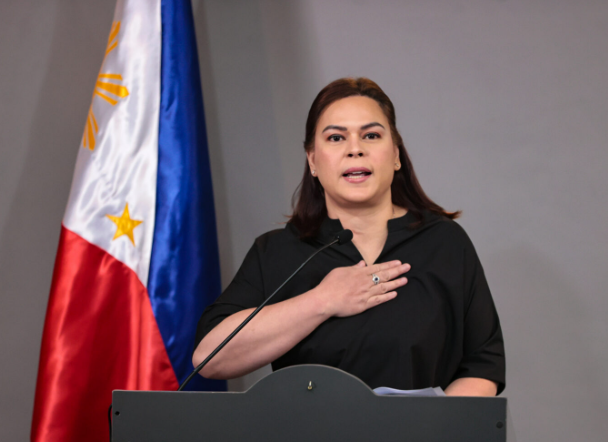
Vice President Sara Duterte seized on Tuesday's Edsa gathering of Iglesia ni Cristo members to amplify her longstanding critique of President Ferdinand Marcos Jr.'s administration, characterizing the rally as evidence of deepening public discontent. Speaking on June 30, Duterte framed the thousands of INC faithful who assembled along Epifanio de los Santos Avenue as a manifestation of what she termed a "growing sentiment" that extends well beyond the religious organization's specific grievances. Her intervention transformed what the church described as a protest against "selective justice" into a broader indictment of the Marcos government's stewardship.
The Iglesia ni Cristo had mobilized its members primarily to oppose the filing of a plunder complaint against Senator Rodante Marcoleta, framing the case as an example of weaponized legal processes and the "distortion of law" by the administration. However, Duterte's commentary elevated the demonstration into a referendum on the broader performance and character of the Marcos presidency. By linking the church's narrow institutional grievance to widespread frustrations across Philippine society, the vice president constructed a narrative in which diverse forms of discontent converge around a central failure of leadership and governance.
Duterte's core indictment focused on what she characterized as the administration's fundamental inability to address the Philippines' most pressing socioeconomic challenges. She highlighted the administration's inaction on rising consumer prices, which have squeezed household budgets across income levels, alongside deteriorating job security and escalating costs of basic necessities. These concerns resonate particularly in Southeast Asia's context, where inflation and wage stagnation have become recurring political flashpoints across the region. The vice president suggested that rather than implementing substantive policy responses to these material hardships, the Marcos government had instead prioritized silencing critics and consolidating power through what she characterized as intimidation masquerading as accountability.
Central to Duterte's argument is her claim that the administration has constructed what amounts to an oppressive political environment hostile to dissent. She specifically alleged that individuals questioning alleged corruption within Malacañang, critiquing government performance, or raising allegations against the President face official retaliation designed to discourage future criticism. This framing transforms the conflict between Duterte and Marcos from a personal or factional dispute into a fundamental constitutional question concerning the limits of executive power and the viability of democratic contestation. The vice president positioned herself as defending institutional principles rather than merely advancing partisan advantage, though this distinction may prove difficult for audiences to parse given her own impeachment by the House of Representatives.
Duterte articulated her critique in language that transcends conventional party politics, insisting that the underlying issues concern "the honor of the State and the future of a people" rather than sectarian political competition. By reframing the conflict in terms of state legitimacy and collective welfare, she attempts to position her criticisms as principled rather than self-interested. This rhetorical move gains significance in the Philippine context, where political dynasties and personalistic networks have historically dominated electoral competition, and where appeals to national interest often function as camouflage for factional ambitions.
The timing of Duterte's statement carries particular weight given her own precarious political position. The House of Representatives impeached her on multiple grounds, including alleged threats against Marcos and his wife, unexplained wealth accumulation, and misuse of confidential funds. Her Senate Impeachment Court trial is scheduled to commence on July 6, placing Duterte in the position of mounting a public defense of her own record while simultaneously attacking the administration's conduct. This creates an obvious tactical dilemma: aggressive countercriticism of Marcos may energize her political base and frame her own impeachment as politically motivated, but it also risks appearing hypocritical to observers who note that both figures have leveled serious accusations against one another.
For Malaysian and Southeast Asian observers, Duterte's political trajectory illuminates the vulnerability of institutional checks on executive power when factional competition becomes sufficiently intense. The impeachment process, theoretically designed to police official misconduct impartially, has instead become another arena for partisan conflict. This dynamic raises concerns about whether formal constitutional procedures can meaningfully constrain power when political actors view their opponents not as legitimate rivals but as existential threats to their political survival. The Philippines' experience suggests that impeachment proceedings function effectively only when substantial portions of the legislature view them as institutions requiring protection from partisan weaponization.
Duterte's invocation of democratic principles and free expression, while substantively defensible, also deserves scrutiny given her own record and current legal vulnerabilities. Her impeachment reflects House allegations of threats against the President and his wife, a conduct that observers across the political spectrum have characterized as transgressing democratic norms. Yet Duterte's willingness to stand before the public and articulate a comprehensive critique of Marcos's governance demonstrates that the Philippine political system has not collapsed entirely into authoritarian dysfunction. The space for public dissent, even by a politically wounded vice president facing imminent trial, remains more open than in various regional neighbors.
The Marcos administration's response to Duterte's accusations will substantially shape how Philippine society interprets her claims about official intolerance of dissent. If the government responds with additional legal or administrative actions against Duterte, it may inadvertently validate her argument that the administration conflates political opposition with criminal wrongdoing. Conversely, if Marcos chooses to ignore Duterte's rhetoric and focus on policy performance, he may effectively concede the political narrative about governance failures while removing the appearance of vindictiveness that could transform Duterte into a sympathetic figure despite her own legal troubles.

