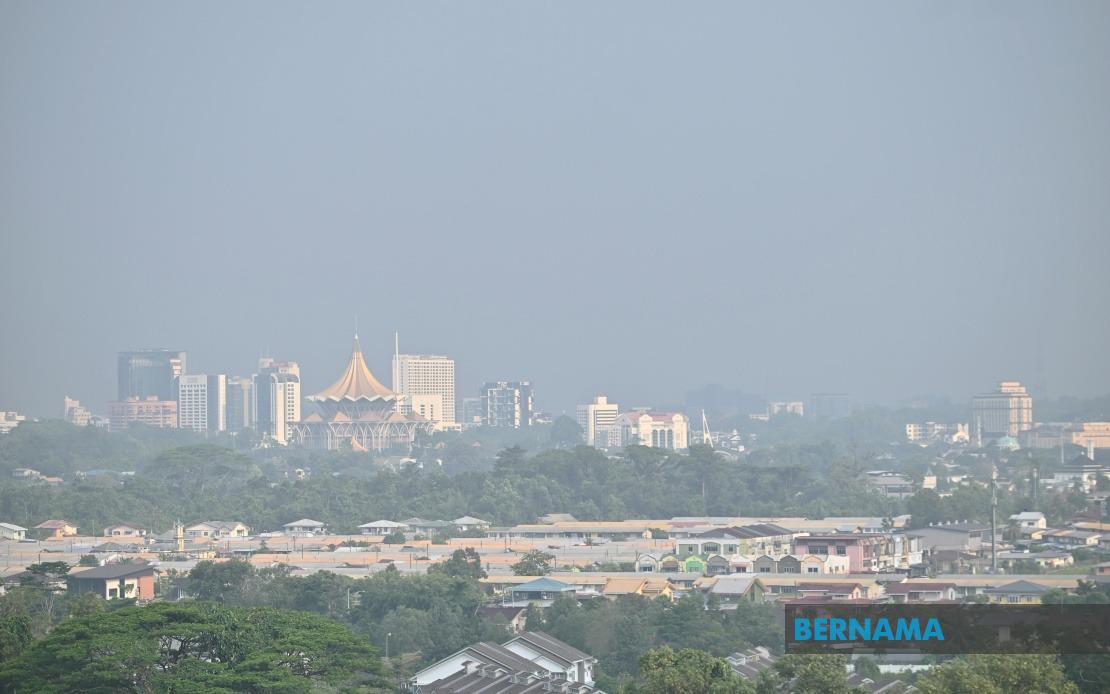
The Malaysian Meteorological Department (MetMalaysia) has issued a cautionary alert for residents of Sarawak and neighbouring parts of Borneo, warning that an extended spell of hot, dry weather will persist through August 20. The forecast carries significant implications for air quality and visibility across the region, particularly in southern Sarawak where atmospheric conditions are expected to deteriorate further. This extended heat wave presents accumulating risks for residents, businesses, and transportation networks already grappling with seasonal challenges.
MetMalaysia attributed the prolonged hot and relatively dry conditions to two converging meteorological factors: the influence of southerly wind patterns and the persistence of a substantial number of active fire hotspots across Borneo. These elements combine to create an environment conducive to haze formation and the degradation of air quality. The southerly winds are essentially channelling warm, moisture-depleted air masses into the region, while simultaneously transporting smoke and particulate matter from burning vegetation across larger geographical areas, compounding the visibility and respiratory health concerns for residents.
As of 10 am on August 14, the Air Pollutant Index Management System detected ten locations nationwide registering unhealthy air quality readings, with the overwhelming majority concentrated in Sarawak. This distribution underscores how the state has become the epicentre of air quality deterioration in Malaysia during this period. The concentration of unhealthy readings in Sarawak reflects the state's geographical proximity to major fire hotspots and its vulnerability to transboundary haze, a recurring seasonal phenomenon that can disrupt economic activity, educational services, and public health across the state.
The implications for Sarawak extend beyond mere meteorological concern. Sustained periods of haze significantly impact visibility, creating hazardous conditions for road and air transport. Businesses dependent on outdoor operations face constraints, while healthcare systems prepare for increased respiratory complaints, particularly among vulnerable populations including children, the elderly, and those with pre-existing lung conditions. Schools may be forced to restrict outdoor activities, disrupting normal educational routines. The cumulative economic cost of such extended weather episodes across the state's tourism, agriculture, and services sectors can be substantial.
Simultaneously, MetMalaysia issued a separate weather advisory affecting the peninsular regions. A thunderstorm and heavy rain warning covered the entire states of Perlis, Kedah, and Penang, along with the Federal Territory of Kuala Lumpur, extending through 1 pm that same day. The warning extended to specific districts across Perak, including Kerian, Selama, Larut Matang, Manjung, and Bagan Datuk, as well as multiple zones in Selangor encompassing Sabak Bernam, Kuala Selangor, Klang, Petaling, Gombak, and Hulu Selangor. This alert exemplified the meteorological contrast playing out across Malaysian territory, with Peninsular Malaysia experiencing moisture-laden conditions while Sarawak remained locked in a drying pattern.
The dual weather scenarios occurring simultaneously across Malaysia reveal the complex atmospheric dynamics governing the region's monsoon systems and wind patterns. While Peninsular Malaysia benefits from moisture-laden southwesterly winds bringing rain relief and cooler conditions, Sarawak finds itself in the opposite situation. The southerly winds affecting Borneo represent a different component of the broader wind circulation patterns, delivering warm, dry air rather than precipitation. Understanding these differential impacts is crucial for regional planning and resource allocation, particularly as climate variability continues to influence seasonal weather patterns.
For Malaysian residents and authorities alike, the extended forecast necessitates proactive preparation and heightened awareness. The Metropolitan authorities and state governments in affected areas typically activate contingency protocols when such extended weather warnings are issued. These may include deploying additional air quality monitoring stations, issuing public health advisories, stockpiling essential supplies for emergency response, and coordinating with transportation authorities regarding potential visibility-related restrictions. In Sarawak specifically, officials would be expected to enhance monitoring of fire hotspots and coordinate with neighbouring jurisdictions on transboundary haze mitigation.
MetMalaysia emphasised the importance of maintaining awareness of evolving weather conditions by encouraging the public to regularly consult official channels for updates. The agency directed residents to monitor its dedicated website, official social media accounts, and the myCuaca mobile application, all of which provide real-time weather alerts and hourly forecasts. This multi-channel communication strategy recognises that different demographic segments prefer different information sources, ensuring that weather warnings reach the broadest possible audience. In an era where weather impacts can affect critical infrastructure and public safety, such accessible information dissemination becomes essential.
The persistence of hotspots across Borneo remains a central concern underlying the extended forecast. These active fire locations serve as the primary source of haze and particulate matter degrading air quality. Their continued presence into late August suggests that substantial biomass remains unburned or that new ignition sources are emerging across the region. Whether these hotspots result from agricultural clearing, forest fires, or other combustion sources, their suppression represents a critical intervention point for addressing the haze phenomenon at its source rather than merely managing its atmospheric consequences.

