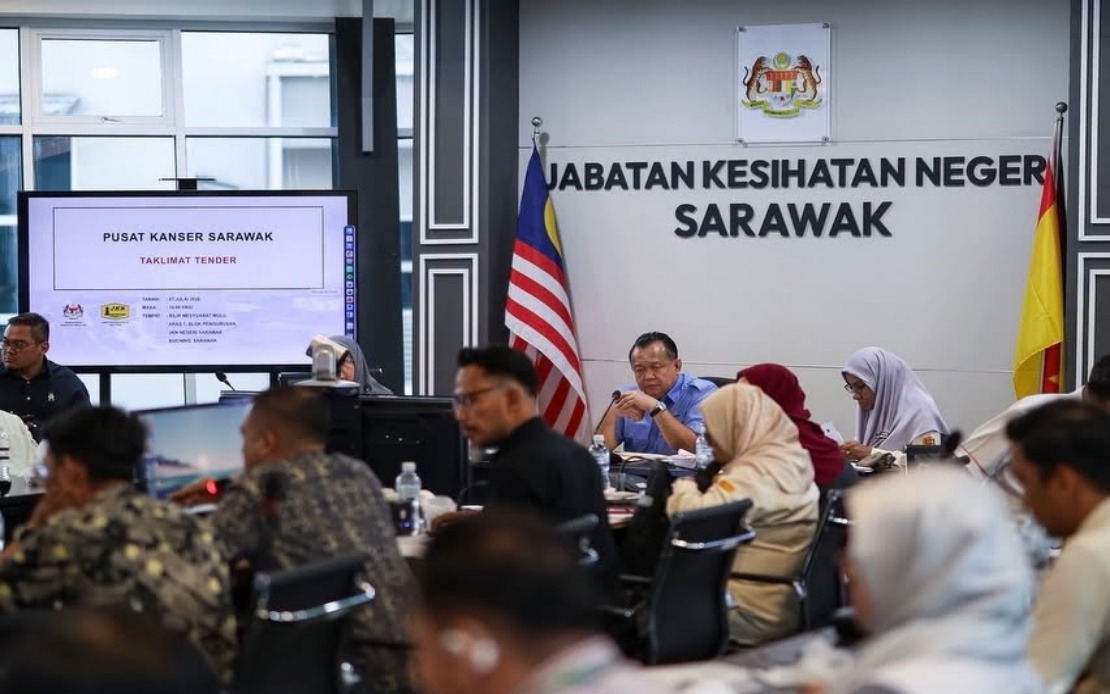
Construction on Sarawak's flagship cancer treatment facility is poised to commence in the opening weeks of 2027, provided the tender process concludes as scheduled and the Letter of Acceptance reaches the winning contractor by early January. Works Minister Datuk Seri Alexander Nanta Linggi outlined this timeline during a site visit to the Kota Samarahan location this month, where the sprawling medical complex will eventually anchor the state's oncology services.
The procurement stage has progressed significantly, with ten construction firms advancing through rigorous pre-qualification assessments and receiving comprehensive project briefings to inform their competitive submissions. These contractors are now in the critical phase of drafting detailed proposals, a process expected to consume roughly three months before formal tender responses arrive for evaluation. The ministry's plan depends on completing this assessment phase swiftly enough to formalise the winning bidder's appointment before the new year commences.
Once the successful contractor secures their acceptance letter, they will face a demanding 60-month timeline to execute both the architectural and construction components of this complex healthcare infrastructure project. Following practical completion, a further two-year Defects Liability Period will ensure that any structural or systems deficiencies are rectified before full handover occurs. This extended warranty phase reflects the critical nature of hospital operations and the requirement for flawless functionality in medical facilities.
The architectural blueprint must satisfy stringent parameters established by Malaysia's Health Ministry while simultaneously embracing contemporary healthcare design principles. This dual mandate means the successful design team will need to balance regulatory compliance with cutting-edge approaches to patient experience, medical efficiency, and operational sustainability. The integration of modern methodologies with mandatory health standards represents a significant technical challenge that justifies the thorough tender process already underway.
The facility's specifications are ambitious in scope. Positioned on a 10.9-hectare parcel immediately adjacent to the existing Sarawak Heart Centre, this new cancer institute will accommodate 310 inpatient beds whilst maintaining separate outpatient facilities for non-admitted patients. This co-location with the heart centre creates synergies for shared support services, emergency equipment, and specialist medical staff who may rotate between complementary disciplines. The consolidated healthcare precinct strengthens Sarawak's capacity to provide tertiary-level treatment for major chronic diseases.
Financial projections indicate the complete undertaking will exceed RM1 billion in cost, representing one of the state's most substantial healthcare capital investments in recent years. The Sarawak government has committed the full RM1 billion from its budget allocations, though arrangements exist for subsequent reimbursement according to mechanisms negotiated with the federal government. This funding structure reflects the cooperative framework between state administrations and Putrajaya in developing major medical infrastructure deemed essential for public health provision.
For Malaysian and Southeast Asian healthcare observers, the Sarawak Cancer Centre project signals the region's growing commitment to establishing world-class oncology services beyond the traditional Klang Valley concentration. Sarawak's geographic positioning and expanding population demands justify dedicated cancer treatment infrastructure within the state rather than forcing patients toward Peninsular Malaysia. The facility will serve not only Sarawak's 2.8 million residents but potentially draw patients from surrounding areas within Borneo seeking advanced cancer therapies.
The tender methodology adopted—design-and-build—transfers substantial design responsibility to the contractor rather than maintaining rigid pre-determined specifications. This approach can accelerate timelines and promote innovation, though it demands rigorous contractual protections to ensure the Health Ministry's clinical requirements are met. The pre-qualification process already undertaken suggests the tender committee has established clear benchmarks for technical competence and financial stability among competing firms.
The project's significance extends beyond immediate medical provision. Establishing a modern cancer centre in Sarawak strengthens the state's appeal as a healthcare destination and may influence medical tourism patterns within East Malaysia. Additionally, the construction phase itself will generate employment, skills development, and economic activity within Kota Samarahan whilst building technical capacity in local construction and engineering sectors. The operational phase will create hundreds of permanent positions for medical professionals, nurses, technicians, and support staff.
Completion in 2027 positions the cancer centre to address rapidly rising oncology demand driven by demographic aging and improved disease detection rates across Southeast Asia. By the time the facility opens, Sarawak's cancer incidence rates are likely to have increased further, making timely delivery essential for health security. The project thus represents proactive healthcare planning rather than merely responsive infrastructure development.
Governance and oversight mechanisms will prove critical during the extended construction period. Managing a RM1 billion project across five years demands sophisticated project controls, regular stakeholder communications, and flexibility to address unforeseen challenges without compromising the delivery timeline or quality standards. The involvement of both state and federal authorities adds administrative complexity but also ensures alignment with national health priorities and building standards.

