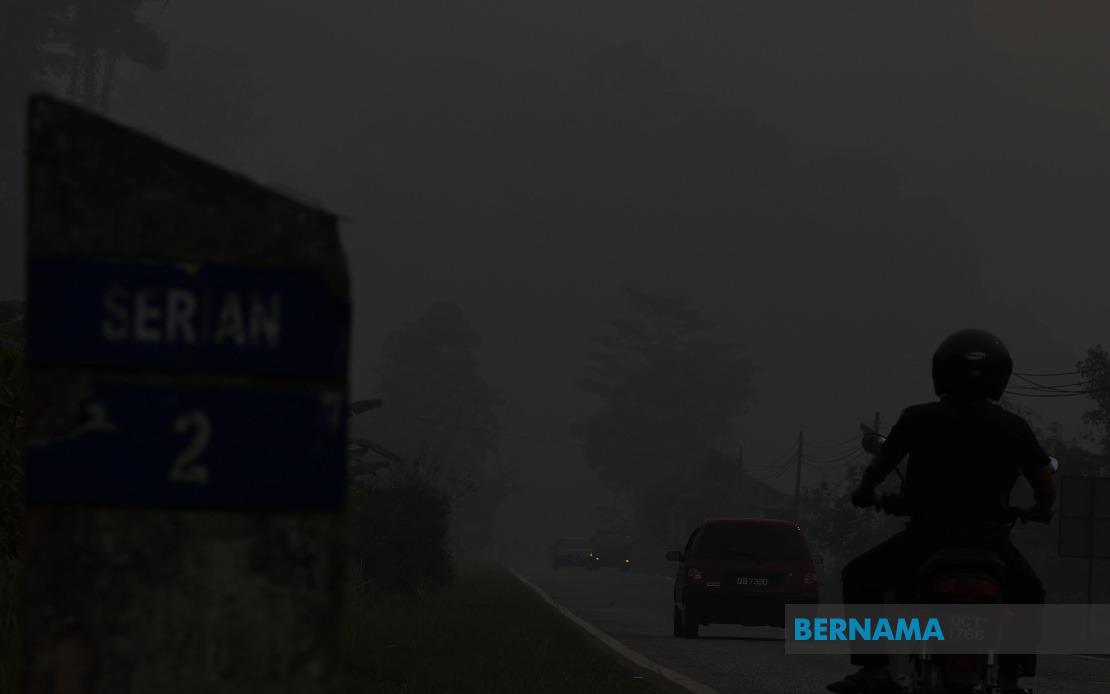
Officials in Sarawak have issued guidance to event organisers across the state, urging them to carefully evaluate atmospheric conditions and pollution data before committing to schedule activities. The Sarawak Disaster Management Committee (SDMC), chaired by Datuk Amar Douglas Uggah Embas who also serves as Deputy Premier, emphasised that decisions about proceeding with official, private, and community events must account for current haze severity and Air Pollutant Index measurements, with public health as the primary consideration.
While responsibility for event scheduling ultimately rests with individual organisers, the SDMC has outlined clear benchmarks and recommendations to guide decision-making. The committee stressed that organisers should exercise caution and prudence, particularly when activities involve vulnerable populations including children, elderly participants, and those with existing health conditions. The guidance reflects growing concern about the quality of air across multiple districts, which has deteriorated significantly in recent days.
When the API reading reaches 200, outdoor physical activities should come under serious scrutiny. The SDMC has specifically advised organisers to reconsider any strenuous exercise or sports programmes under such conditions, recognising the documented health risks associated with prolonged exposure to polluted air. Rather than proceeding with standard outdoor formats, organisers are encouraged to explore practical alternatives that prioritise participant safety. These options include relocating events to indoor venues where air filtration systems provide better protection, redesigning activities to reduce physical exertion, or deferring programmes until air quality improves.
The committee has indicated that the threshold for more severe action sits at API 500. Should pollution levels climb to that extreme level, established disaster management protocols provide for closure of both government and private sector workplaces, with exceptions only for essential services. Such measures would require formal declaration of a Disaster Emergency by the National Disaster Management Committee (NADMA), a step that represents escalation beyond current advisory status.
Recent air quality readings across Sarawak have painted a concerning picture of deteriorating conditions. By midday on August 30, several districts had already recorded hazardous pollution levels. The Serian District Police Headquarters monitoring station registered the highest API reading at 412, indicating hazardous air quality that poses significant risks to public health. Samarahan district followed with an API of 332, while Kuching recorded 304, both exceeding the threshold at which outdoor physical activities warrant cancellation or postponement.
Beyond these three most severely affected areas, unhealthy readings extended across a wider geographical area. Sarikei registered 197, Sibu 190, Bintulu 183, Mukah 176, and Samalaju 175. Further east, Kapit recorded 161, Miri 159, and the Miri Industrial Training Institute monitoring station showed 156. This pattern demonstrates that air quality degradation was widespread rather than localised, affecting population centres and industrial areas throughout the state.
The SDMC has signalled its ongoing commitment to environmental surveillance and coordinated response. The committee indicated it continues to work with both state and federal agencies to maintain continuous monitoring of atmospheric conditions. This collaborative approach enables progressive implementation of protective measures aligned with established disaster management frameworks, ensuring that actions remain proportionate to the severity of air pollution episodes. Regular data collection through the Department of Environment's Air Pollutant Index Management System (APIMS) portal provides the factual basis for official recommendations and policy responses.
For Malaysian readers and regional observers, this situation illustrates the persistent challenge of transboundary haze that periodically affects Southeast Asia. Sarawak's experience reflects patterns seen across the broader region during peak agricultural burning seasons, when smoke from peat and land clearing in neighbouring areas can dramatically degrade air quality across large territories. The SDMC's measured approach—providing guidance without imposing blanket prohibitions—reflects the practical reality that event scheduling involves complex social and economic considerations beyond air quality alone.
The emphasis on organisers' responsibility to make informed decisions carries important implications for civil society and business sectors. Rather than awaiting government mandates, event planners are expected to demonstrate environmental awareness and health consciousness in their decision-making. This distributes responsibility across multiple stakeholders rather than concentrating it in government bureaucracy, though it also places an information burden on organisers to actively monitor API readings and understand the health implications at different pollution levels.
Looking forward, the guidance issued by the SDMC serves as a practical framework for managing events during episodic haze events that may recur with regularity. As climate patterns and agricultural practices continue to influence regional air quality, having established protocols and clear communication channels between disaster management authorities and event organisers becomes increasingly valuable. The committee's approach balances maintaining public activities and economic activity with protecting vulnerable populations from acute air pollution exposure, a tension that will likely persist as long as transboundary haze remains a seasonal concern for Sarawak and Southeast Asia.

