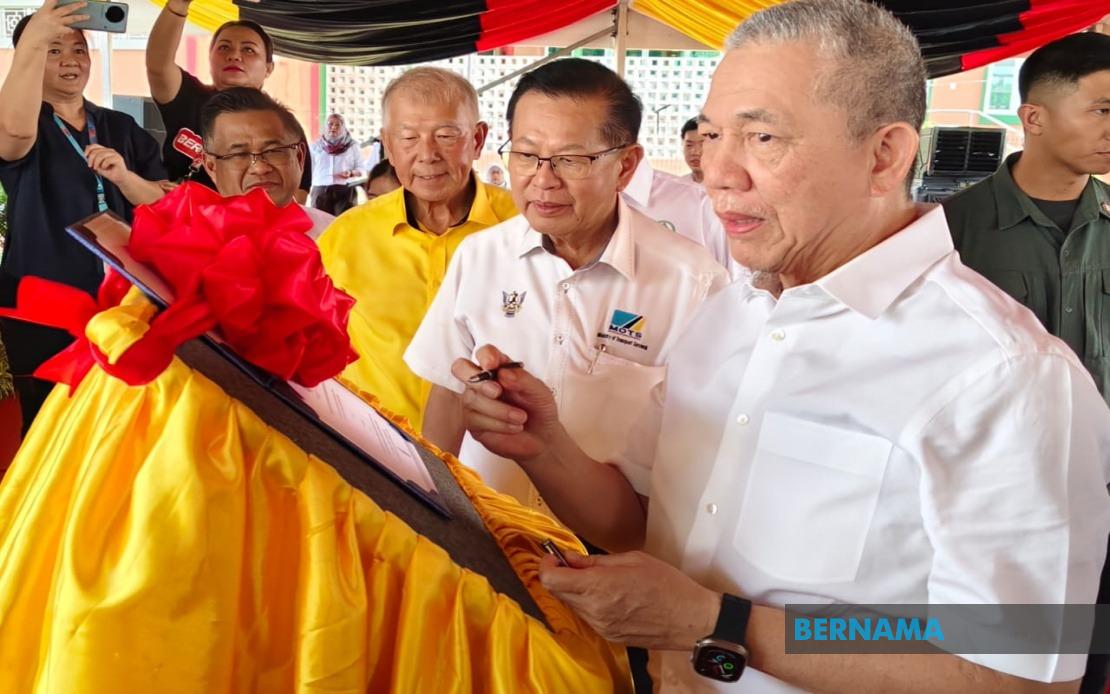
Deputy Prime Minister Datuk Seri Fadillah Yusof has unveiled an ambitious intervention strategy for Sarawak involving 52 initiatives designed to mitigate the dual threats of erosion and flooding that plague the state's vulnerable coastal and riverine areas. These projects, collectively valued at RM9.46 million, represent a targeted response to environmental degradation that has increasingly endangered lives, livelihoods, and critical infrastructure across the region.
The portfolio of approved schemes demonstrates varied stages of implementation. Among the cohort, 12 have already reached completion, suggesting tangible progress on the ground, while construction work is actively proceeding on 13 others. The remaining 27 projects remain in preliminary planning and preparation phases, indicating a sustained pipeline of protective measures extending into the medium term. This staggered approach allows for learning and refinement based on outcomes from earlier interventions while maintaining consistent momentum in addressing the state's environmental vulnerabilities.
Fadillah, who also serves as Energy Transition and Water Transformation Minister, drew specific attention to efforts in Miri during a site visit to one of three Cakna MADANI projects operating in that district. The Riverbank Stabilisation Project at the Tab Cinaq Cemetery, budgeted at RM134,682, exemplifies the practical nature of these interventions. Construction commenced in May and targets completion by November, focusing on erecting a 50-metre retaining structure to arrest riverbank degradation, prevent further land loss, and shield the burial ground alongside nearby facilities from recurring erosion hazards.
Beyond these immediate interventions lies a more expansive and substantially funded long-term framework. The Malaysian government has endorsed 29 major flood mitigation undertakings spanning the state, requiring total investment of RM3.834 billion. This considerably larger commitment reveals the scale at which policymakers view Sarawak's flood vulnerability, positioning the state as a priority region for comprehensive water management infrastructure. The distinction between immediate stabilisation work and longer-term structural resilience indicates a two-pronged strategy addressing both acute erosion problems and systemic flood risk.
The composition of this broader portfolio reveals meaningful differentiation in project types and financing mechanisms. Eighteen of the 29 flood mitigation schemes represent continuations of previously initiated work, collectively requiring RM3.567 billion to complete. The remaining eleven are newly approved projects with an allocated budget of RM267 million. This mix of completion and expansion suggests that earlier assessments of flood vulnerability have proven accurate, necessitating sustained investment, whilst emerging threats and new flood modelling data are driving the addition of fresh interventions.
Among the continuation projects stands the RTB Sungai Miri, a flagship flood management initiative carrying a total cost of RM31 million. Work on this scheme commenced in October 2023 and has achieved approximately 58.11 percent physical completion as of Fadillah's recent visit. The projected completion date of November 2026 places the project within a three-year delivery window, suggesting moderate pace of execution that reflects the complexity of riverine engineering work and the need for quality construction in flood-prone terrain.
The Cakna MADANI Programme itself represents a strategic pivot towards community-centred infrastructure development, with coastal erosion mitigation and river conservation works forming core pillars of intervention. For Sarawak specifically, these initiatives target the state's particularly acute exposure to both seasonal flooding and progressive coastal retreat—twin phenomena that have displaced communities, threatened agricultural productivity, and imposed significant maintenance burdens on transportation networks and utilities in recent years.
The concentration of resources on riverbank stabilisation and flood mitigation reflects evolving climate patterns and historical experience. Sarawak's geography, marked by extensive river systems and coastal lowlands, makes it inherently susceptible to both fluvial and tidal flooding. Recent years have seen repeated inundation events that have prompted state and federal authorities to fundamentally reassess traditional approaches, moving toward engineering-based solutions that modify the landscape to resist water rather than merely responding to floods once they occur.
For Malaysian readers and policymakers observing Sarawak's experience, these projects offer instructive case studies in climate adaptation. The investment magnitude—RM3.834 billion for long-term measures alone—underscores the financial reality that managing environmental change requires sustained budgetary commitment extending well beyond typical budget cycles. The emphasis on completing pre-existing projects while simultaneously initiating new schemes suggests that initial assessments of infrastructure needs have proven inadequate, a pattern likely replicated across other flood-prone states in Southeast Asia.
The success of these Sarawak initiatives will likely influence federal spending priorities and methodologies across Malaysia's other vulnerable regions. States such as Selangor, Johor, and Kelantan, which have experienced devastating floods in recent years, may look to Sarawak's implementation experience—particularly the effectiveness of combined stabilisation and mitigation approaches—in refining their own strategies. Furthermore, the relatively granular focus on specific locations like Tab Cinaq Cemetery demonstrates that contemporary flood management encompasses protection of cultural and heritage sites alongside residential and commercial areas.
Fadillah's ministerial portfolio combining energy transition and water transformation reflects the increasing interconnection between climate action and infrastructure resilience in Malaysian policy frameworks. The 52 Cakna MADANI projects should thus be understood not merely as standalone environmental remediation efforts but as components of a broader national climate adaptation agenda. The projects signal recognition that water management—encompassing both flood control and water security—will define developmental capacity across the region for decades ahead.
Looking forward, the progression from immediate erosion containment through to comprehensive basin-wide flood mitigation suggests that Sarawak's policymakers are thinking systemically about water governance. This integrated perspective, if sustained through to implementation and beyond, may establish important precedents for how Malaysia manages its relationship with water resources amid environmental uncertainty. The RM9.46 million in immediate Cakna MADANI funding and the broader RM3.834 billion long-term commitment represent a substantive wager that proactive infrastructure investment now will forestall far costlier disasters and displacement later.

