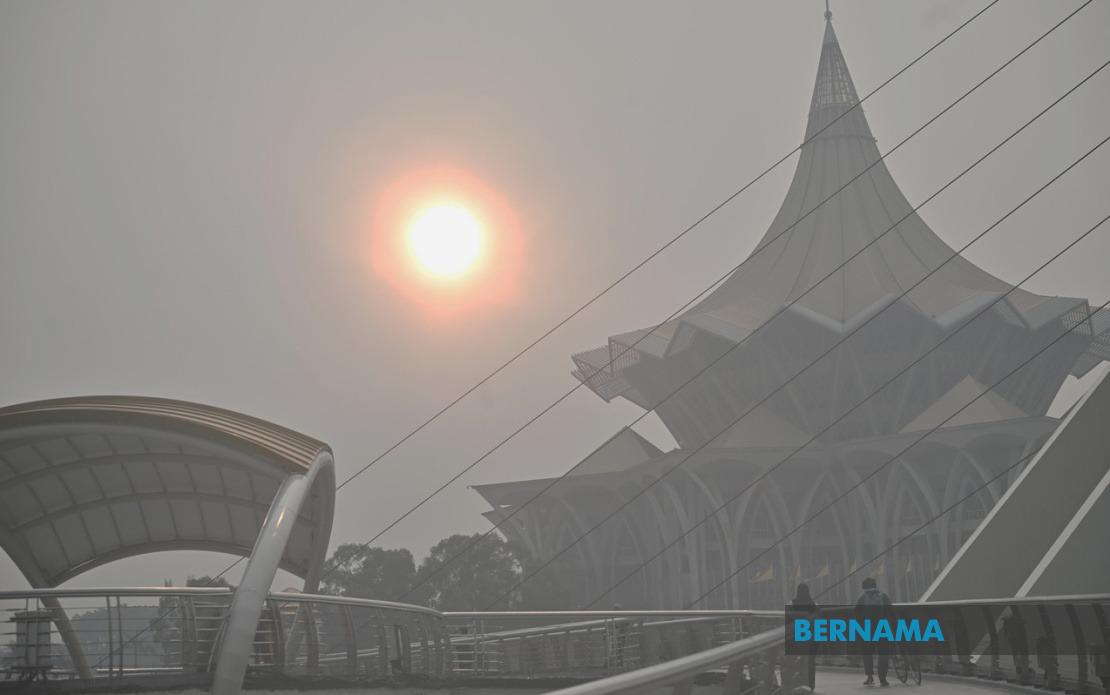
Nearly 600 schools throughout Sarawak have been shuttered due to an extended period of hot and dry weather that has created hazardous conditions across multiple districts. The Sarawak Education Department announced the temporary closure affecting 509 primary institutions housing 107,590 pupils alongside 82 secondary schools with 89,733 enrolled students, distributed among 10 District Education Offices spanning the period from August 20–21. The decision reflects growing alarm over environmental conditions that threaten both immediate public health and longer-term resource management across the state.
The geographical scope of the closures reveals the breadth of weather impact across Sarawak's territory. Ten administrative districts have been designated as affected areas: Kuching, Padawan, Bau, Lundu, Samarahan, Simunjan, Serian, Sri Aman, Lubok Antu and Betong. This distribution underscores how the dry spell transcends typical wet-season patterns in the region and penetrates both coastal and interior divisions. For Malaysian educators accustomed to managing tropical humidity and unpredictable rainfall, such prolonged drought conditions represent an unusual and difficult operational challenge.
The decision to close schools reflects escalating concerns about air quality, which has deteriorated markedly in recent days. As of mid-afternoon on August 20, authorities identified nine locations recording unhealthy Air Pollutant Index readings. Kuching registered 191, Samarahan 175, Serian 195, Sri Aman 178, Sarikei 154, Sibu 108, Lundu 180, Tebedu 169, and Lubok Antu 191. These figures indicate that vulnerable populations—particularly children, elderly persons, and those with respiratory conditions—face genuine health risks from sustained outdoor exposure. School closures represent a precautionary measure acknowledging that young people remain especially susceptible to air quality degradation.
Beyond immediate health concerns, the Sarawak State Disaster Management Committee has flagged interconnected environmental dangers accompanying the weather pattern. Prolonged heat and moisture deficit significantly elevate the probability of uncontrolled forest fires, peatland combustion, and open-area blazes. These fire risks carry devastating consequences for biodiversity, carbon release, and community welfare across affected regions. Peatland fires prove particularly problematic because they burn beneath surface vegetation, persist for extended periods, consume enormous fuel volumes, and release disproportionate atmospheric pollution compared to above-ground fires. For Southeast Asia broadly, such incidents create transboundary air quality impacts affecting neighbouring nations.
Water resource stress represents another dimension of concern driving the coordinated government response. Extended dry periods deplete surface and groundwater reserves crucial for agriculture, industry, and domestic consumption. Sarawak's population and economic sectors depend on reliable water availability, making extended drought conditions genuinely threatening to normal operations. When combined with elevated fire risk, water scarcity becomes particularly problematic because firefighting operations and community protection measures require substantial liquid reserves. The state disaster management apparatus must balance competing demands on diminishing resources.
The coordination between the Sarawak Education Department and disaster management authorities reflects institutional recognition that climate-related disruptions increasingly require integrated governmental responses. Rather than isolated sectoral reactions, the state has activated monitoring protocols across multiple domains: atmospheric conditions, fire risk assessment, air quality measurement, and resource availability surveillance. This systematic approach suggests learning from previous drought episodes and development of institutional memory regarding crisis management protocols. For other Malaysian states encountering similar environmental pressures, Sarawak's response framework provides potential models for coordinated action.
The closure decision also carries economic and social ramifications extending beyond immediate student welfare. Parents must arrange emergency childcare, adjust work schedules, or manage household disruptions on short notice. Teachers face income uncertainty if compensation mechanisms remain unclear. Businesses catering to school populations experience demand fluctuations. Students lose classroom instruction time, potentially affecting academic progress if closures extend beyond projected periods. Extended educational disruptions can prove particularly damaging for economically disadvantaged learners lacking home resources to support independent study.
The underlying meteorological conditions warrant examination within broader climate patterns affecting Southeast Asia. Extended dry spells increasingly characterise regional weather behaviour, suggesting potential climate system shifts requiring long-term adaptation strategies. Malaysian policymakers across all states must consider whether traditional infrastructure design assumptions remain valid amid changing precipitation patterns. School building ventilation systems, water supply infrastructure, and emergency protocols may require upgrading to accommodate more frequent or intense weather extremes. Investment in climate resilience represents a growing imperative for national and regional authorities.
Forward monitoring represents the critical next phase of response. The Sarawak State Disaster Management Committee has committed to continuous surveillance of eighteen designated locations, tracking atmospheric conditions, fire activity, and resource status. This real-time assessment capacity enables dynamic decision-making regarding school reopening timelines and public health recommendations. Malaysian residents in affected areas should monitor official announcements and comply with health guidance regarding outdoor activities and vulnerable group protection. Air quality data remains publicly accessible through online platforms, enabling individual assessment of personal exposure risk.
The broader lesson from Sarawak's situation extends throughout Malaysia's peninsula and eastern territories. Environmental challenges increasingly demand proactive governmental coordination and public responsiveness. While school closures represent disruption, they acknowledge that institutional flexibility serves community protection during hazardous conditions. As climate variability intensifies, such adaptive responses may become more commonplace across Malaysian education systems, requiring advance planning, clear communication protocols, and community understanding regarding environmental necessity.

