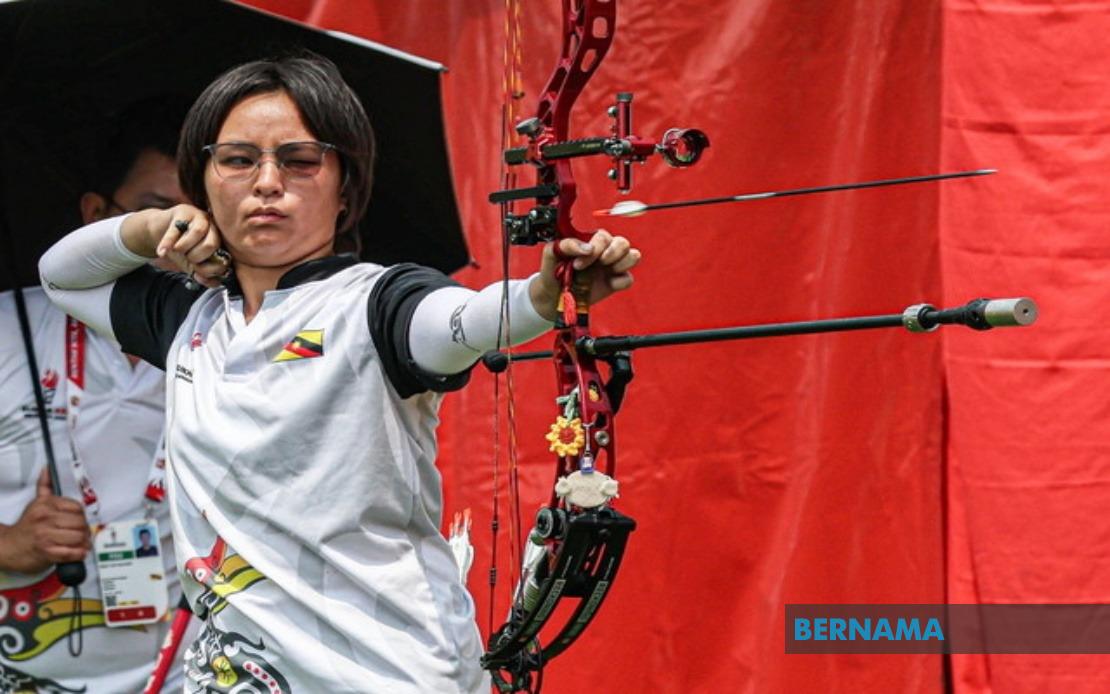
Sarawak delivered a striking archery performance at SUKMA 2026 when 17-year-old Wee Yee Qi claimed two gold medals on her Games debut, capitalising on a strategic shift in equipment that has already begun yielding impressive results. Competing at the National Institute of Valuation (INSPEN) Stadium in Bangi, the Miri-born archer's dual victories underscore the effectiveness of her transition from recurve to compound discipline late in the previous year, marking a pivotal moment in her emerging career.
Wee Yee Qi's first triumph came in the mixed team event, where she partnered with Eason Lau Hui Wan to overcome Kedah's Muhammad Zaim Ahmad-Ili Nabihan Shafizan in a tightly contested final. The winning combination secured a narrow 151-150 victory, demonstrating both precision and composure under pressure in what proved to be a closely matched encounter. This success set the stage for an even more dramatic display of resilience later in the day, as Sarawak's archery contingent continued to assert their growing strength at the national championship.
The day culminated in a second gold medal when Wee Yee Qi competed alongside Aira Nadirah Aizuddin and Nur Zara Aisyah Khairul Fadly in the women's team competition. The Sarawak trio orchestrated a remarkable recovery from a position of disadvantage, having trailed throughout the opening three ends before rallying during the critical final phase to edge out Terengganu 217-213. This comeback victory against Airazalia Azrai, Nur Shafiena Mohd Shuhamri and Putri Aqiera Issandra Ismayuddin illustrated not only technical competence but also the mental fortitude increasingly characteristic of Sarawak's young archery talent.
Reflecting on her achievements immediately after the finals, Wee Yee Qi credited the coaching staff instrumental in her development and progression through competitive circuits across the region. She acknowledged that her six-year journey in archery began when talent scouts identified her potential while still in school, an experience that transformed initial recognition into genuine passion for the discipline. The consistent backing of her family throughout this trajectory has proven essential to sustaining the dedication required for elite performance in a sport demanding technical precision and mental discipline.
Wee Yee Qi's decision to abandon the recurve format stemmed from recognition that the switch would better suit her strengths and competitive profile. Having struggled to make meaningful headway in recurve competition, the transition to compound archery represented a calculated strategic repositioning rather than retreat. The immediate success at SUKMA 2026 validates this equipment choice and suggests that technical fit between archer and discipline can prove decisive in unlocking potential that previous circumstances had constrained.
The 17-year-old's immediate focus now shifts toward academic obligations, with the Sijil Pelajaran Malaysia examination scheduled for November. This balance between education and elite sport reflects the reality facing many Malaysian athletes in secondary school, requiring careful time management and institutional support to maintain progress in both spheres. Once examination commitments conclude, Wee Yee Qi intends to redeploy full attention toward archery development, with the overarching objective of eventually wearing the Malaysian national colours in international competition.
Sarawak's archery success at SUKMA 2026 extended beyond Wee Yee Qi's achievements, with the state's broader contingent demonstrating competitive capacity that positions the eastern Malaysian jurisdiction as an emerging force within the sport's national hierarchy. The victories also highlight how regional variations in talent development and coaching infrastructure are beginning to produce tangible results in disciplines where Sarawak has historically occupied secondary status to Peninsular Malaysian strongholds.
Bronze medals awarded to Selangor in both mixed and women's team events reflected the depth of national competition across archery disciplines at the Games. In the mixed team final, Selangor's Muhammad A'rif A'fiq Suhaimi-Nur Alyaa Nazurah Fadzil Fairuz defeated Sabah's Hiew Ichin-Catherine Looi Mei Qi Abdullah 154-152, while Selangor's women's trio of Amira Batrisyia Mohamad Azizul Rahman, Nur Alya Sofrina Mohd Sarif and Nur Alyaa Nazurah Fadzil Fairuz secured third place with a 219-212 victory. This spread of medallists across multiple states underscores that archery talent, once concentrated regionally, now extends more broadly across Malaysian territories.
Wee Yee Qi's trajectory carries significance beyond personal achievement, illustrating how strategic equipment choices and youth development pathways can produce accelerated progression through Malaysia's competitive sporting hierarchy. The compound format, increasingly popular globally, demands different biomechanical and technical approaches than traditional recurve shooting, and her early success suggests Malaysian coaches are successfully identifying optimal discipline placements for emerging talent. Her double gold at SUKMA 2026 therefore represents not merely individual triumph but validation of evolving national selection and development philosophies that prioritise evidence-based equipment matching and personalised progression planning.

