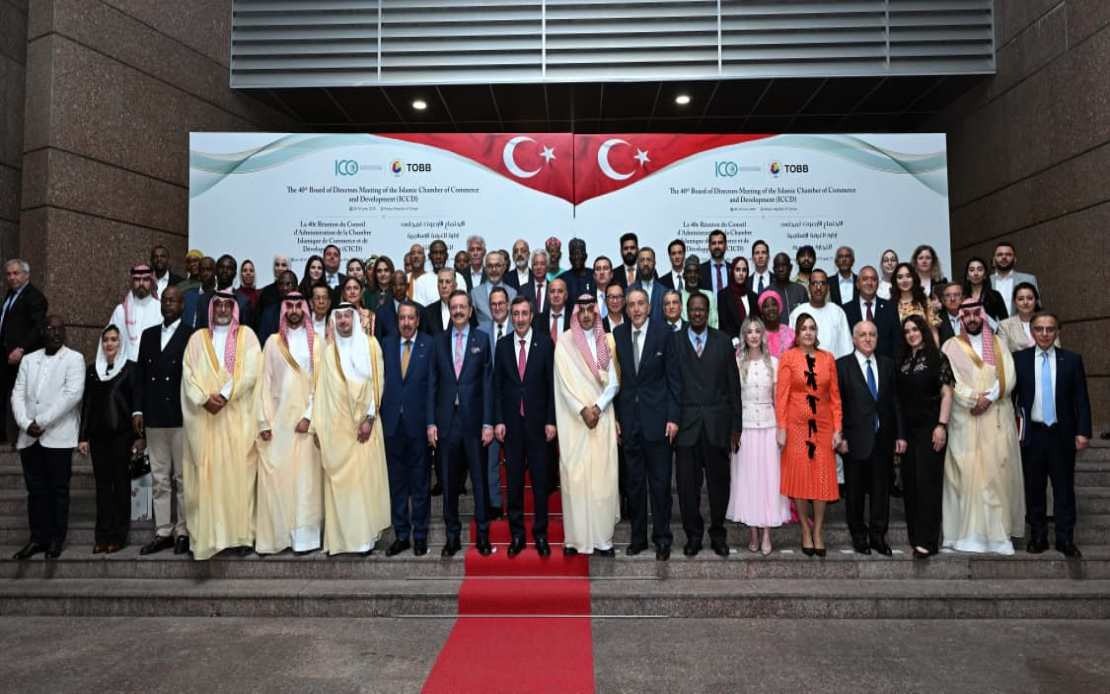
Saudi Arabia is intensifying efforts to forge closer economic partnerships with major Muslim-majority economies, with particular emphasis on Malaysia and Indonesia as strategic partners for shared prosperity and regional development. The appeal was delivered by Abdullah Saleh Kamel, chairman of the Federation of Saudi Chambers and president of the Islamic Chamber of Commerce and Development, during concurrent board and finance committee meetings held in Ankara, Turkey. His remarks underscore the Kingdom's commitment to leveraging its position as a leading supporter of the multilateral trade body to advance collective economic interests across the Islamic world.
The Federation of Saudi Chambers' participation in these high-level proceedings represents more than a routine institutional engagement. By positioning itself as the voice of the Saudi private sector within the ICCD framework, the organisation is reinforcing Riyadh's strategic role in shaping economic policy among Islamic nations. Since the chamber's inception, Saudi Arabia has been among its most substantial financial and political backers, making these latest appeals for deeper cooperation a natural extension of that long-standing commitment. This continuity signals that economic integration remains a cornerstone of Saudi Arabia's broader foreign policy objectives in the Muslim world.
Malaysia and Indonesia have emerged as particular focal points in Saudi Arabia's economic outreach strategy, reflecting their significance as major Muslim-majority economies with substantial populations and rapidly expanding private sectors. The statement specifically identifies these nations as demonstrating the kind of economic dynamism that positions them as ideal partners for cross-border investment and trade expansion. Both countries represent attractive destinations for Saudi capital and expertise, while simultaneously offering the Kingdom access to their sophisticated financial systems, consumer markets, and manufacturing capabilities. The deliberate highlighting of Malaysia and Indonesia suggests a carefully calibrated approach to strengthening relationships with Southeast Asia's leading Islamic economies.
The emphasis on youth entrepreneurship and private-sector growth across these partnerships reflects recognition that sustainable economic development requires mobilising the next generation of business leaders and innovators. Saudi Arabia, grappling with its own demographic dividend and economic diversification priorities, sees mutual benefit in fostering environments where young entrepreneurs from Muslim-majority nations can access capital, networks, and knowledge-sharing opportunities. Malaysia's established reputation for supporting small and medium enterprises, combined with Indonesia's massive untapped entrepreneurial potential, makes these cooperation mechanisms particularly valuable for all parties involved. The focus on youth signals that Saudi policymakers are thinking beyond immediate trade gains toward long-term institutional capacity-building.
Food security and sustainable agriculture have become increasingly urgent concerns across the Muslim world, with growing populations and climate pressures threatening traditional agricultural systems. By emphasising these themes, Saudi Arabia is acknowledging that intra-Islamic economic cooperation must address fundamental development challenges affecting millions of people. Malaysia and Indonesia, as significant agricultural producers and consumers, face particular pressures in this domain. The ICCD framework provides a mechanism through which best practices in sustainable farming, supply chain resilience, and food production technology can be shared, potentially transforming how the broader Islamic world approaches food security challenges in coming decades.
Regional trade connectivity represents another crucial dimension of these initiatives. The current fragmentation of trade networks across the Islamic world means that goods, capital, and services often flow more readily between Muslim-majority nations and external partners than between Muslim nations themselves. By making regional trade connectivity a central pillar of cooperation efforts, Saudi Arabia and the ICCD are attempting to redirect commercial flows in ways that strengthen intra-Islamic ties while reducing dependence on external intermediaries. For Malaysia, which benefits from positioning itself as a trade hub for Southeast Asia, such arrangements could expand opportunities for regional influence and economic integration across the broader Islamic world.
The ICCD itself is positioned to play an increasingly significant role in advancing these objectives. As the chamber pursues expansion of intra-Islamic trade and investment, it functions as a multilateral platform capable of addressing barriers to commercial cooperation that individual nations might struggle to resolve bilaterally. The board's attention to developing the chamber's work and implementing programmes aimed at strengthening economic cooperation suggests that concrete mechanisms are being established to translate these aspirations into functioning trade relationships. The chamber's golden jubilee celebration planned for 2027 will likely serve as a showcase for progress achieved through these enhanced cooperation frameworks.
The implications for Malaysia are substantial and multifaceted. Enhanced Saudi investment in Malaysian ventures could provide capital for infrastructure development, manufacturing expansion, and technology transfer in priority sectors. Simultaneously, Malaysian businesses gain access to Saudi Arabia's vast capital resources and strategic position bridging Asia, Africa, and the Middle East. The emphasis on private-sector leadership rather than governmental direction suggests that these partnerships will largely develop through market mechanisms, allowing Malaysian entrepreneurs considerable autonomy in pursuing opportunities that align with their strategic interests.
Sustainable development and economic integration among Muslim-majority economies carries geopolitical dimensions beyond purely commercial considerations. As Western economies face potential fragmentation and as global supply chains undergo reshuffling, a strengthened network of Islamic economic cooperation could reduce the region's vulnerability to external shocks while amplifying its collective negotiating power in international forums. For Malaysia, participating actively in these expanded cooperation mechanisms enhances its standing within the broader Muslim world while creating valuable alternatives for economic engagement beyond traditional Western partnerships. The diversification of Malaysia's economic relationships serves both immediate commercial interests and longer-term strategic positioning in an increasingly multipolar world order.

