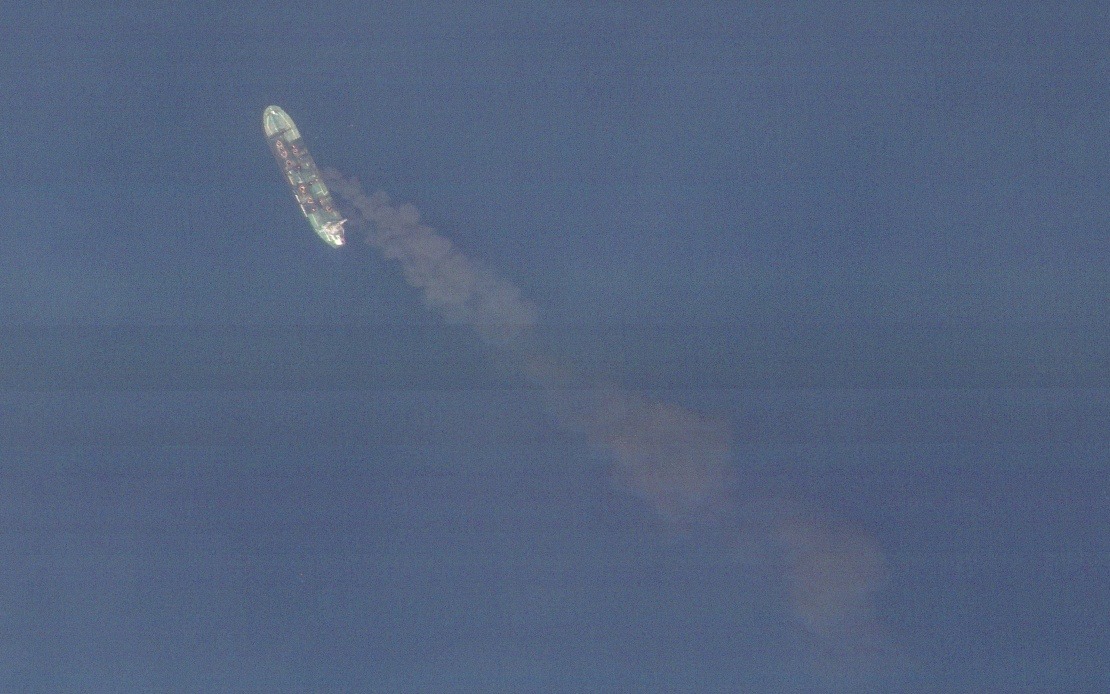
The military alliance leading operations in Yemen has declared its determination to maintain freedom of navigation through one of the world's most critical shipping corridors, after the Iranian-aligned Houthi militia announced restrictions targeting Saudi commercial traffic. The commitment reflects growing tensions that threaten to destabilise a region already ravaged by nearly a decade of armed conflict, with immediate implications for global maritime trade and regional security.
Speaking through official channels, coalition spokesperson Turki Al-Malki outlined the military's operational approach to the escalating standoff. His statement, issued via X late on July 21, emphasised that the Joint Forces Command stands prepared to deploy comprehensive protective measures in accordance with established international maritime law. The coalition framed its posture as both defensive and compliant with accepted norms governing sea passage, suggesting it aims to avoid accusations of unilateral aggression whilst signalling readiness for confrontation.
The Houthi action itself represents a dramatic escalation rooted in competing claims about maritime blockades. The group justified its shipping restrictions by invoking what it characterised as a reciprocal blockade principle, arguing that Saudi Arabia has maintained a suffocating siege on Houthi-controlled territory for nearly twelve years. This rhetorical framing transforms what might otherwise appear as an arbitrary restriction into, in the Houthis' calculation, a proportionate response to alleged strangulation of the Yemeni economy.
Rejecting such characterisations, Turki Al-Malki dismissed the Houthi position as inflammatory rhetoric designed to obscure factual conditions on the ground. He pointed to documentary evidence that over three hundred commercial vessels have successfully navigated into ports controlled by Houthis throughout the first half of 2024, delivering essential commodities including foodstuffs and petroleum products. This selective deployment of statistics underscores how both sides weaponise narratives around humanitarian access, each claiming to represent victims while vilifying the other.
The Saudi Foreign Ministry reinforced this messaging in a parallel statement that categorically refuted Houthi allegations of an imposed blockade. Officials emphasised the kingdom's substantial investment in Yemen's welfare through development initiatives and direct budgetary transfers, attempting to reframe Saudi Arabia's role as constructive partner rather than oppressor. This framing, however, sits uneasily alongside Yemen's humanitarian catastrophe and the extensive destruction inflicted during years of aerial bombardment and military operations.
The immediate trigger for current hostilities originated from an attempted aircraft landing at Sanaa International Airport the previous week. The Saudi-backed Yemeni government launched strikes against the facility specifically to prevent an Iranian aircraft carrying senior Houthi leadership from touching down, a move clearly designed to disrupt political meetings and signal continued military dominance. The Houthis responded swiftly with their own barrage of missiles and drone strikes directed at Saudi territory, demonstrating their capacity and willingness to project power across borders.
These recent exchanges must be understood within Yemen's broader trajectory since late 2014, when the Houthis militarily seized the capital Sanaa and consolidated control over much of Yemen's northern territories. The Saudi-led coalition's subsequent 2015 intervention was ostensibly aimed at restoring the internationally recognised government, yet the conflict has devolved into a grinding stalemate marked by humanitarian devastation and shifting factional alignments. What began as a battle for political control has transformed into a proxy struggle with deep regional and international dimensions.
Particularly concerning for regional stability is the fragility of the ceasefire framework established through United Nations mediation in 2022. That truce, though incomplete and frequently breached, represented the most significant de-escalation mechanism in years. The current escalation surrounding maritime restrictions and airport strikes suggests the de-escalation architecture is cracking under renewed pressure, with each side testing the other's resolve and red lines. For Malaysian and Southeast Asian observers, the deterioration carries implications beyond the Middle East, given the region's dependence on uninterrupted Red Sea transit for energy and goods.
The Bab al-Mandab Strait itself functions as a critical choke point linking the Indian Ocean to the Suez Canal and thence to Europe. Approximately twelve percent of global maritime trade flows through this narrow passage, making it essential infrastructure for international commerce. Any sustained disruption—whether through military operations, shipping bans, or general lawlessness—ripples across global supply chains and energy markets. For economies like Malaysia that rely heavily on predictable maritime routes and stable energy prices, Red Sea instability constitutes a material concern requiring careful diplomatic attention.
The coalition's statement that it will employ "all necessary and decisive operational measures" contains implicit threat of further military action should the Houthis persist in enforcing their announced ban. This language echoes patterns of escalation and counter-escalation that have characterised the Yemen conflict, where rhetorical firmness frequently translates into kinetic operations. The Houthis, for their part, have demonstrated capability to conduct sophisticated attacks on shipping and regional infrastructure, suggesting that any coalition enforcement action would likely trigger retaliation rather than compliance.
What distinguishes this episode from previous cycles of conflict intensification is the apparent collapse of informal understandings that had kept certain domains—notably civilian aviation and core economic infrastructure—partially insulated from systematic targeting. The strike on Sanaa airport and the subsequent maritime ban both suggest those implicit restraints are eroding, raising the spectre of a return to the more destructive patterns that characterised the conflict's earlier phases.
For Malaysia and other Southeast Asian nations with significant economic exposure to Middle Eastern stability, the trajectory in Yemen warrants close monitoring. The potential for a major shipping disruption in the Red Sea would create immediate economic consequences, particularly for energy-dependent economies, whilst also demonstrating how regional conflicts can rapidly acquire global significance. Diplomatic channels should remain open to identify any opportunities for supporting renewed de-escalation, given the international stakes involved in preventing further deterioration of Red Sea security.

