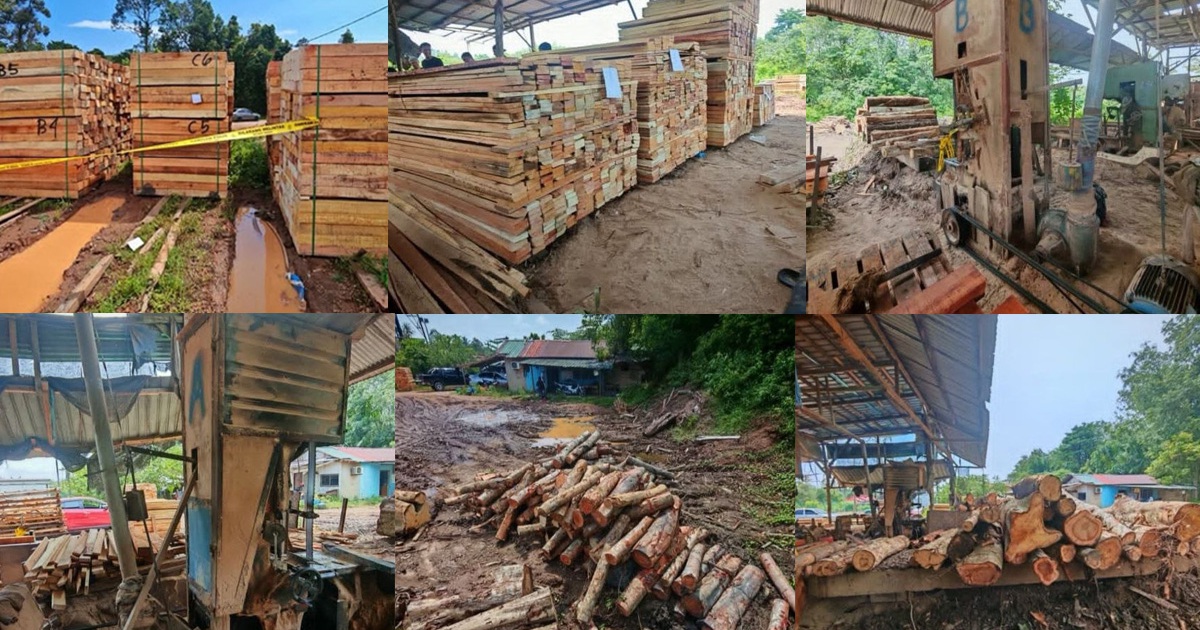
Law enforcement authorities in Kelantan have intensified their efforts against illegal timber operations, arresting a sawmill operator and three workers during a coordinated raid on an unlicensed processing facility in Kampung Bukit Kechik. The operation resulted in the seizure of timber and industrial machinery valued at RM600,000, marking another significant enforcement action in the state's ongoing battle against unauthorised forest product extraction and processing activities.
The raid, conducted in the Tanah Merah district, targeted a facility that had been operating without the necessary permits and licenses required to process timber commercially. Such unlicensed operations represent a persistent challenge for Malaysian authorities, as they undermine regulatory frameworks designed to ensure sustainable forest management and proper taxation of timber trade. The enforcement action underscores the continuing vulnerabilities in timber supply chains, particularly in states like Kelantan where forestry resources remain economically significant and monitoring capabilities are regularly tested.
The four individuals detained in connection with the operation now face investigation under relevant timber and forestry regulations. The detained sawmill operator, as the operator of the unlicensed facility, is likely to face more serious charges compared to the workers apprehended at the site. The distinction in culpability reflects standard prosecutorial practice in such cases, where the person directing and profiting from illegal operations bears greater responsibility than those employed to perform labour.
The confiscation of RM600,000 worth of timber stock and processing machinery represents a substantial economic impact on the operation, though investigators will need to determine whether this constitutes the total inventory of illegally processed materials. The seizure of equipment alongside raw materials suggests authorities are taking a comprehensive approach, aiming to dismantle the operational capacity of such facilities rather than simply removing evidence. This strategy creates stronger deterrents against future violations, as replacement of expensive industrial equipment imposes considerable financial burdens.
Kelantan's forestry sector has been subject to escalating scrutiny from both state and federal authorities in recent years. The state, which possesses extensive timber reserves and a well-established sawmill industry, has experienced recurring problems with both unauthorised felling and illegal processing operations. These activities deprive the state and federal governments of legitimate timber revenues while simultaneously undercutting legitimate sawmill operators who maintain proper licensing and compliance with environmental regulations.
The illicit timber trade represents a broader regional concern affecting Malaysia's standing on environmental stewardship. International buyers and timber certifications systems increasingly demand proof of legal and sustainable sourcing, making illegal timber marketable primarily through informal or secondary channels. The raid's success in disrupting one such operation contributes to enforcement efforts that support Malaysia's regulatory credibility and protect legitimate timber exporters from market distortion caused by cheaper, illegally-produced competitors.
The operation also highlights the strategic importance of ground-level intelligence and surveillance in detecting unlicensed facilities. Such sites typically operate with low visibility, often processing materials during hours calculated to avoid detection by regular enforcement patrols. The successful targeting of this particular facility in Kampung Bukit Kechik suggests either informant-based intelligence, systematic monitoring of suspicious commercial activity, or enhanced coordination between local enforcement agencies and forestry officials.
For Malaysian readers and businesses in the legitimate timber sector, enforcement actions like this carry dual significance. While they represent appropriate state action against law-breaking competitors, they also indicate that regulatory bodies continue attempting to maintain standards despite resource constraints and the logistical challenges of monitoring dispersed rural operations. Traders and mills operating legally incur higher compliance costs and should theoretically benefit from reduced competition from illegal operators.
The investigation phase will likely examine the supply chain feeding this sawmill—determining whether logs were sourced from illegal felling operations or diverted from legitimate timber concessions. Prosecutorial authorities will also investigate sales channels, attempting to identify downstream buyers who knowingly or unknowingly purchased products from an unlicensed facility. Such investigations can reveal systemic weaknesses in timber tracking and create opportunities for expanding enforcement beyond the initial raid.
Authorities have not disclosed the specific timber species seized or the condition of the machinery, details that would clarify whether operations were large-scale and well-established or relatively nascent. The four-person workforce suggests a modest operation, though seasonal fluctuations in hiring and the possibility of shift-based staffing mean this may not represent total employment.
The charges these individuals face will depend on whether violations involved forestry laws, environmental regulations, or business licensing statutes. Potential penalties could range from fines to custodial sentences, with severity typically corresponding to the value of materials involved and the deliberateness of the violation. Prosecutorial discretion and settlement negotiations may alter outcomes, though the substantial seized assets suggest authorities regard this as a serious infraction warranting full legal proceedings.
This action forms part of a broader enforcement landscape across Malaysia, where state forestry departments and federal agencies attempt to balance economic resource extraction with regulatory compliance. Kelantan's experience reflects national patterns: demand for timber persists, legitimate mills operate under regulatory frameworks, but financial incentives for circumventing rules remain strong enough to sustain a shadow industry that authorities must continuously combat through enforcement, intelligence gathering, and inter-agency coordination.

