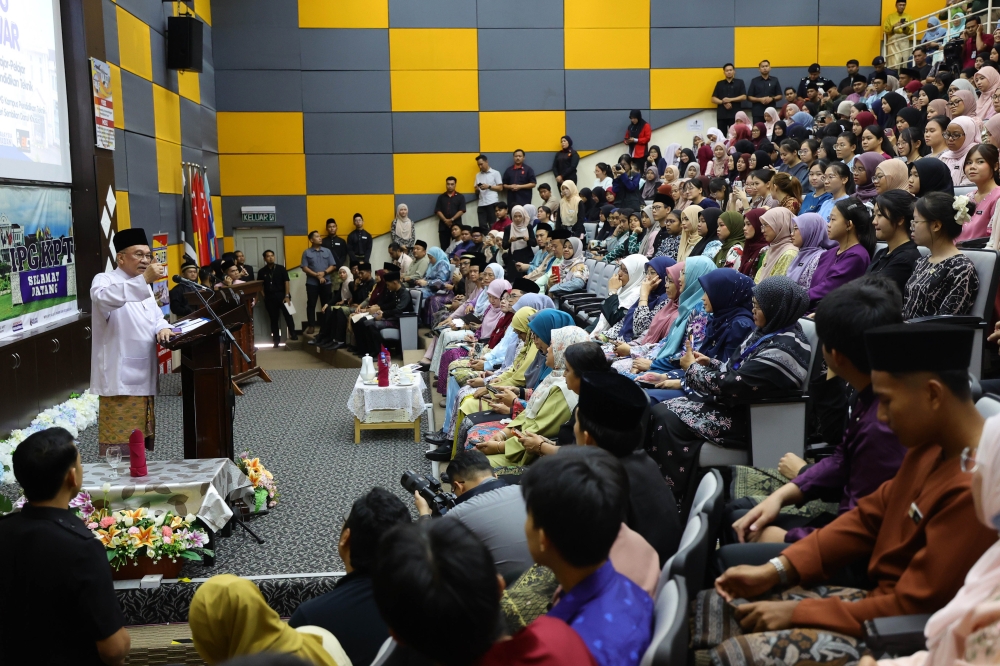
Prime Minister Datuk Seri Anwar Ibrahim has delivered a pointed message to Malaysia's schools: protecting an institution's reputation cannot come at the expense of bullied children. Speaking in Nilai on July 17, Anwar drew a firm line on what he views as a systemic problem affecting young people in classrooms across the nation, signalling that his administration will not tolerate the institutional cover-ups that have historically allowed bullying to fester unchecked.
The Prime Minister's statement addresses a persistent challenge within Malaysian education where some schools have been accused of downplaying bullying incidents, transferring problematic students quietly, or discouraging families from reporting abuse through formal channels. Such practices prioritize maintaining a school's competitive standing in rankings and parental perception over the documented psychological and physical harm experienced by victims. Anwar's intervention suggests the federal government views this as a governance failure requiring direct leadership attention rather than a matter best left to individual school management.
Bullying in Malaysian schools has become increasingly documented through social media exposures and investigative reports, often revealing that administrators were aware of incidents but chose inaction. Cases ranging from physical assault to sustained psychological harassment have played out against institutional silence, leaving victims without recourse and perpetrators emboldened. The reputational calculus that schools apply—weighing the damage of disclosure against the damage of concealment—has historically favored opacity, particularly when accused students come from influential families or when the school fears loss of enrollment.
Anwar's assertion that student safety must take precedence reflects growing international consensus on child protection standards. Most Commonwealth nations, including neighbouring Singapore, have implemented mandatory reporting frameworks that eliminate institutional discretion in bullying cases. Malaysia's education system, by contrast, has relied more heavily on voluntary compliance and individual principal judgment, creating gaps where motivated administrators can delay or suppress information. The Prime Minister's statement, while rhetorically strong, raises questions about whether the government intends to implement binding legal frameworks or will continue depending on persuasion.
The timing of Anwar's remarks carries additional weight given Malaysia's ongoing education reforms and his administration's broader emphasis on institutional accountability. His government has positioned itself as committed to modernizing the civil service and reducing corruption, and extending that principle to education oversight represents a natural policy extension. However, translating principle into practice requires resources, training, and mechanisms that schools have often lacked—school counsellors are frequently overworked, many administrators lack formal training in safeguarding protocols, and complaint procedures remain opaque to parents.
For Malaysian parents, Anwar's statement potentially signals a shift in how complaints should be handled. Families who have been discouraged from escalating bullying incidents through formal channels may view the Prime Minister's comments as license to pursue matters more persistently. Parents might expect greater transparency in disciplinary processes, better communication about safety incidents, and genuine preventive measures rather than reactive damage control. Whether schools interpret this directive as mandatory change or aspirational messaging will largely determine its practical impact on ground-level behaviour.
The statement also reflects international pressure on Malaysia's education system regarding child welfare standards. Global surveys have consistently identified bullying as a significant problem in Southeast Asian schools, with Malaysian prevalence rates comparable to regional peers. International school accreditation bodies increasingly scrutinize safeguarding policies, and as Malaysia seeks to position itself as a regional education hub attracting expatriate families, alignment with international safeguarding standards becomes commercially important as well as ethically imperative.
Teachers and administrators face a complex position in this environment. Many enter education motivated by genuine concern for student welfare, yet institutional pressures—demands for examination results, competition for enrollment, pressure from powerful parents—can create incentives to minimize rather than amplify problems. Anwar's statement places responsibility firmly on institutional leadership rather than individual teachers, suggesting that principals and senior management cannot deflect accountability by claiming ignorance or claiming that isolated teachers acted beyond their authority.
The practical implementation of Anwar's directive will likely depend on whether the Ministry of Education translates it into specific procedural requirements. This could include mandatory incident reporting timelines, protected reporting channels for students and parents, documented investigation protocols, and clear escalation procedures that remove discretion from individual schools. Without such structural mechanisms, the Prime Minister's statement risks becoming aspirational rhetoric that leaves institutional culture fundamentally unchanged.
For Malaysia's students and their families, Anwar's intervention at least establishes that the highest level of government views bullying concealment as unacceptable. This shifts the conversation from whether schools have a right to suppress incidents toward a broader national discussion about what student safety actually requires. Whether that rhetorical clarity translates into measurable protection for vulnerable young people will depend on the government's willingness to implement binding safeguards and hold institutions accountable for compliance.

