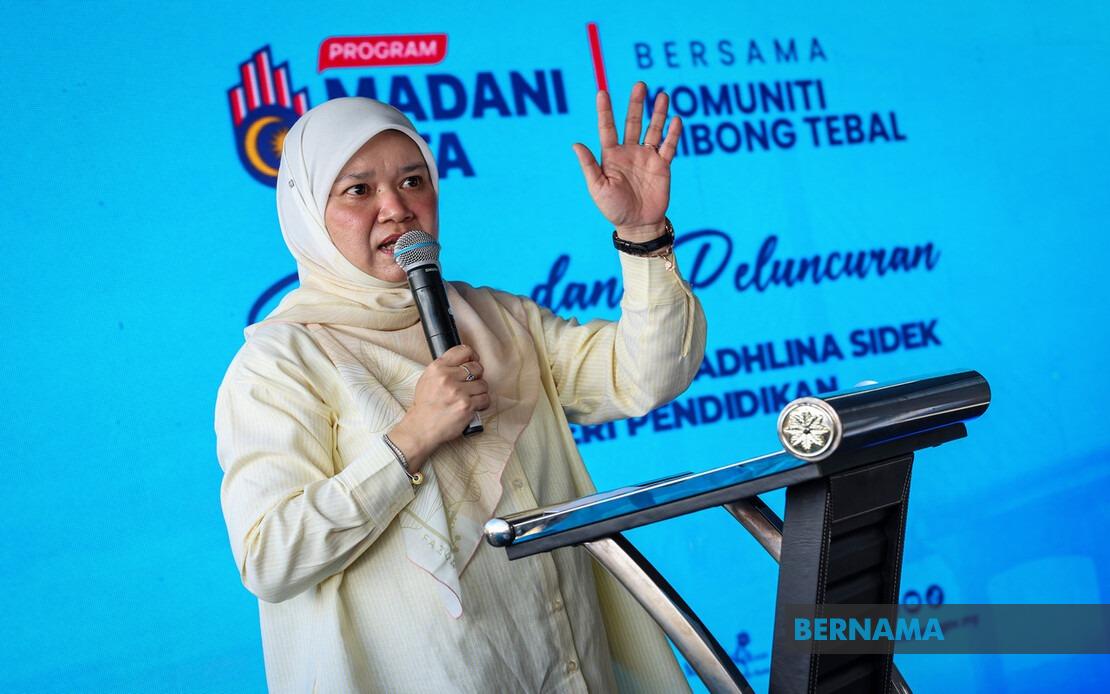
Education Minister Fadhlina Sidek has praised the National Information Dissemination Centre (NADI) Mahir school uniform initiative as a meaningful response to the persistent financial pressures facing Malaysian households. Speaking in her capacity as Member of Parliament for Nibong Tebal, Fadhlina highlighted how the programme's instalment payment system addresses one of the routine but significant expenses that often strains family budgets, particularly among lower and middle-income households at the start of each academic year.
The initiative extends beyond simple consumer convenience. By enabling families to spread uniform costs across multiple payments rather than bearing the full expense upfront, the scheme reduces the likelihood that cost barriers will prevent children from attending school properly uniformed—an often overlooked dimension of educational accessibility that can affect student participation and confidence. For many Malaysian families already juggling multiple financial obligations, the flexibility offered by this payment structure translates into tangible relief during back-to-school periods.
Equally significant is the programme's role in creating sustainable employment and entrepreneurial pathways. The school uniforms offered under this scheme are manufactured by 120 graduates of the NADI Mahir Jahit skills training programme, who have successfully transitioned from formal training into self-employment as seamstresses and tailors. These individuals completed intensive instruction through NADI's Pintar Services platform and now operate as independent entrepreneurs, generating their own income while contributing to the supply chain that serves the nation's schools.
This employment generation dimension reflects a deliberate policy approach that treats social programmes as multifunctional tools. Rather than simply subsidising school supplies or relying on commercial providers, the government has designed a system that simultaneously addresses parental financial strain, creates dignified work opportunities for trained individuals—predominantly women—and stimulates the microeconomic activity of local entrepreneurs. Such integrated programme design can yield broader community benefits beyond the immediate stated objective.
Fadhlina elaborated on NADI's broader portfolio of community interventions, noting that various initiatives implemented through the centre have demonstrated measurable impact across different segments of Malaysian society. The NADI Tuisyen Rakyat tutoring programme has enrolled over 42,000 students nationwide, providing subsidised academic support to help bridge achievement gaps. In Nibong Tebal specifically, more than 73 students have participated, with the programme producing 65 high-achieving examination results in the 2025 Sijil Pelajaran Malaysia assessment—suggesting that accessible tutoring support can meaningfully influence educational outcomes.
Beyond traditional academic support, NADI has established itself as a platform for youth engagement through competitive gaming initiatives. The NADI E-Sukan programme positions esports as a legitimate arena for developing soft skills including strategic thinking, teamwork coordination, and resilience under pressure. Nibong Tebal's participation has yielded notable achievements, including a national championship win in the NADI E-Sukan MADANI Mobile Legends competition and runner-up finishes at state level in both gaming and culinary competitions. These results demonstrate that youth talent development need not be confined to conventional sporting or academic pathways.
The programme's expansion into artificial intelligence literacy represents NADI's attempt to equip young Malaysians with competencies increasingly central to the modern economy. The 1 NADI 1 Prompt Engineer initiative, which has attracted 11 participants in Nibong Tebal alone, suggests growing recognition that AI familiarity will become a baseline expectation in numerous professions. By introducing these concepts at community level through accessible programmes, government agencies can help narrow the digital skills divide that might otherwise advantage only those with family or educational proximity to technology sectors.
For a regional audience, NADI's model offers instructive insights into how centralised government infrastructure can be repurposed to address multiple policy objectives simultaneously. Rather than fragmented programmes, the integrated approach spanning uniform provision, skills training, academic support, youth engagement, and digital literacy suggests that community development benefits from institutional coherence. The replication of such models across Southeast Asia could help nations address interconnected challenges of educational access, youth unemployment, and skills development through coordinated rather than siloed interventions.
The Nibong Tebal initiative also underscores the importance of political leadership in translating policy frameworks into on-ground implementation. Fadhlina's active involvement in promoting and explaining the programme—rather than merely announcing it through official channels—signals genuine ministerial commitment and creates visibility that encourages community participation and builds public confidence in government schemes. Such engagement, particularly by elected representatives, can be crucial in determining whether well-designed programmes actually reach their intended beneficiaries.
Looking forward, the success of NADI Mahir's school uniform component suggests potential for expansion or adaptation to other school necessities that create similar financial friction for families. Textbooks, writing materials, technology devices, and meal programmes represent other areas where instalment-based or subsidised provision could maintain educational participation while generating employment for trained service providers. The model demonstrates that addressing educational equity need not rely solely on direct subsidies but can incorporate economic activity and entrepreneurial development as integral components.
For Malaysian policymakers and education administrators, the NADI initiatives collectively demonstrate that investments in youth development, skills training, and community entrepreneurship yield dividends that extend far beyond the immediate programme participants. When parents experience reduced financial anxiety about school expenses, when young people discover interests and talents through gaming or skills competitions, and when women entrepreneurs establish stable income streams through tailoring work, the cumulative social and economic benefits substantially exceed the programme's direct costs. Such holistic approaches to social policy are increasingly important as governments seek to maximise impact amid fiscal constraints and competing priorities.

