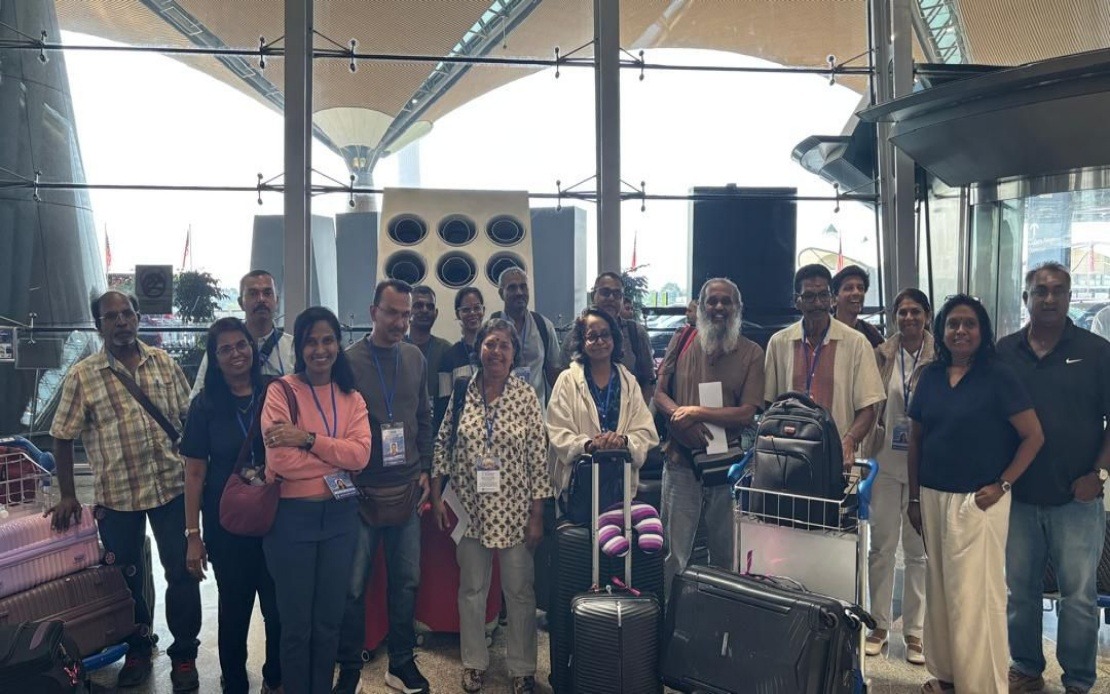
Mounting anxiety gripped Malaysian families on August 27 after contact was lost with 17 nationals trekking towards Mount Kailash in Tibet for a religious pilgrimage. The group, organised through Nepal-based Fishtail Tours & Travels, fell out of communication following severe flash floods that struck the border region between Nepal and Tibet on August 26, cutting off accessible routes and disrupting telecommunications in the affected districts.
Among those unaccounted for are four members of one family: S. Raman, 59; M. Neelavany, 54; S. Murukan, 60; and G. Padmahwathi, 58. Their relative, R. Logadashini, described the anguish of the situation, noting that the last confirmed contact came at approximately 8.18 am Nepal Standard Time on August 26, when the group was positioned roughly two kilometres from the Nepal-Tibet Immigration Checkpoint. The final message from family members arrived minutes later at 8.40 am Malaysian time, after which all communication channels went silent. Despite urgent attempts to reach the tour operator and the Malaysian Embassy in Kathmandu, no updates had been received regarding the group's status or safety.
The scale of the communication blackout extends beyond the initially reported 17 individuals. Malaysia's Foreign Ministry, operating under the banner Wisma Putra, confirmed that 55 Malaysians in total had registered with the Malaysian Embassy in Kathmandu and were similarly unreachable in the aftermath of the disaster. However, the ministry cautioned that no official confirmation of Malaysian casualties had been received at that point, emphasising that the situation remained fluid and that many individuals may have simply been temporarily without access to communications infrastructure.
The catastrophic weather event that triggered the crisis stemmed from intense rainfall combined with a glacial collapse in Nepal's Rasuwa and Nuwakot districts. These two districts form a critical corridor for international travellers, serving as the primary passage for pilgrims bound for Mount Kailash and trekkers heading towards the Everest region. The combination of factors rapidly overwhelmed local drainage systems and created destructive water flows that severed key road connections linking the affected area to Kathmandu, the capital city. This geographic isolation significantly hampered the ability of search and rescue teams to reach stranded individuals and assess the extent of the damage.
Recognising the urgency of the situation, Prime Minister Datuk Seri Anwar Ibrahim issued immediate directives to all relevant government agencies to prioritise locating and establishing contact with affected Malaysians. The Malaysian diplomatic missions stationed in both Kathmandu and New Delhi were formally mobilised to coordinate response efforts. The embassy in Kathmandu proceeded to work in close collaboration with Nepalese authorities, local search and rescue teams, the travel agencies involved in organising the pilgrimages, and other stakeholders to determine the safety status and current whereabouts of the Malaysian nationals scattered across the affected region.
Not all Malaysian pilgrims trekking in the broader area faced danger from the flooding. A separate group of 56 individuals led by Datuk N. Mohanadas, the legendary Malaysian mountaineer celebrated for his achievements on Mount Everest, confirmed their safety and continued progression along their planned route. This contingent included 39 Malaysians alongside four Singaporean and three Canadian participants. Despite being acutely aware of the severe weather developments and catastrophic flooding occurring at the Nepal-Tibet border region, Mohanadas reported that his group had been unaffected due to their geographic positioning and the particular route they were traversing. The group proceeded with their three-day Mount Kailash pilgrimage ritual without interruption.
The incident highlights the inherent vulnerabilities faced by international pilgrimage groups operating in remote, mountainous regions characterised by unpredictable weather patterns and limited infrastructure. Mount Kailash, situated in the Tibetan plateau at an elevation of over 6,600 metres, attracts thousands of pilgrims annually from across Asia, including significant numbers from Malaysia. The journey typically involves traversing through Nepal before crossing into Tibet, making the Nepal-Tibet border corridor an unavoidable segment of these spiritual expeditions. The recent flooding underscores how rapidly conditions in these zones can shift from manageable to catastrophic, potentially trapping travellers with minimal warning systems or alternative exit routes.
For Malaysian pilgrimage operators and their clients, the incident carries profound implications regarding risk assessment and emergency preparedness protocols. While flash flooding in Himalayan regions is not unprecedented, the severity and speed of the August 26 event caught many by surprise. Travel agencies organising such expeditions typically coordinate with local guides and monitor weather forecasts, yet the unpredictable nature of glacial collapse—which contributed significantly to this particular event—represents a challenge that conventional weather monitoring cannot always anticipate. Families of the missing pilgrims now face an agonising waiting period as diplomatic channels and rescue operations attempt to establish what occurred to their relatives in the critical hours following the communications blackout.
The broader context of these pilgrimages reflects deep religious and cultural significance within Malaysian society, particularly among Hindu communities for whom Mount Kailash represents one of the world's most sacred mountains. The lake adjacent to Mount Kailash, known as Manasarovar, holds equally profound spiritual importance. These journeys, often undertaken at significant personal expense and after extensive planning, are considered major life events for devotees. The sudden loss of contact with multiple groups has therefore struck not merely at the level of individual family anxiety but has resonated across entire communities awaiting news of their members.
As rescue and diplomatic efforts intensified, Malaysian authorities faced the dual challenge of gathering accurate information while managing public expectations and family concerns. The initial uncertainty regarding total numbers of affected nationals—with reports varying between 17 initially identified individuals and the broader figure of 55 registered with the embassy—reflected the confusion inherent in emergency situations where communication infrastructure has been compromised and individuals may have scattered across vast areas. Officials stressed the importance of awaiting official confirmations before drawing conclusions about specific individuals' fates, acknowledging that some of the 55 registered Malaysians might have been located or might have regained communications capability in the hours following the initial crisis.
The incident serves as a sobering reminder of the risks inherent in adventure tourism and religious pilgrimage in geographically challenging regions. While such journeys offer profound spiritual and personal rewards for participants, they simultaneously expose travellers to natural hazards that can escalate rapidly beyond the capacity of local authorities to manage. For Malaysian families with members in the affected region, the waiting period represented an indefinite suspension between hope and fear, with each passing hour without communication adding to their distress. The government's mobilisation of diplomatic resources and coordination with international partners represented the standard protocols for such situations, though the outcome remained uncertain as rescue teams battled against damaged infrastructure and continuing difficult weather conditions in the remote mountain valleys.

