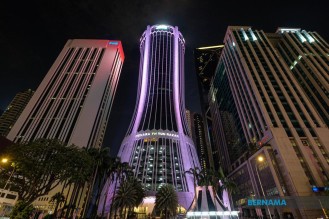
The Securities Commission Malaysia's newly assigned responsibility to oversee Tabung Haji's investment portfolio represents a watershed moment for institutional accountability in Malaysia's Islamic finance sector. According to Dr Mohd Faisol Ibrahim, a senior lecturer in Islamic Economics and Banking at Universiti Sains Islam Malaysia, this regulatory intervention addresses fundamental governance weaknesses that have long plagued the institution and its millions of depositors across the country.
The government formalised this supervisory arrangement on August 11 during a special parliamentary sitting, responding to damaging revelations contained in a comprehensive Royal Commission of Inquiry report released in late July. The transition places TH's fund management under Securities Commission oversight while maintaining the institution's operational autonomy and preserving its primary mandate of facilitating pilgrimage to Mecca. This structural separation aims to insulate commercial investment decisions from political considerations that have historically compromised institutional performance.
Dr Mohd Faisol emphasises that the SEC's involvement must extend beyond passive monitoring into active participation within TH's investment decision-making apparatus. By embedding Securities Commission representatives directly within the investment committee, regulatory authorities can establish real-time scrutiny of proposed investments, evaluating risk profiles and projected returns before capital deployment. This embedded oversight approach contrasts sharply with post-hoc reviews that characterised previous management frameworks, where problematic investments proceeded unchecked until significant losses materialised.
The academic underscores that TH depositors—primarily Malaysian Muslim pilgrims saving specifically for hajj expenses—deserve competitive dividend returns comparable to conventional savings instruments, despite TH's unique positioning outside the traditional banking sector. This expectation creates inherent tension: the institution must balance capital preservation, liquidity maintenance for pilgrims' immediate needs, and wealth generation sufficient to sustain operations. Without rigorous investment governance, this balancing act has historically tilted toward speculative ventures yielding spectacular losses rather than sustainable returns.
Dr Mohd Faisol proposes establishing dual oversight committees working in tandem to create institutional checks and balances protecting against unilateral decision-making. Separating investment approval from risk assessment ensures that commercial merit receives independent evaluation before capital commitment. Such structures would require involvement from multiple regulatory stakeholders including Bank Negara Malaysia and the Ministry of Finance, creating friction that actually strengthens institutional integrity by preventing rushed or ideologically motivated allocations.
The Royal Commission's earlier findings painted a troubling picture of TH's operations between 2014 and 2020, documenting systematic governance failures and mismanagement that devastated depositor confidence. The institution's crisis—which saw significant asset impairments and dividend reductions—rippled through Malaysian society, affecting millions of ordinary Malaysians who had entrusted savings specifically designated for sacred religious obligation. The human dimension of this institutional failure extends beyond financial metrics into profound breaches of trust and stewardship.
Strengthening Bank Negara's advisory role assumes particular importance in this reformed framework. As Malaysia's principal financial regulator and guardian of monetary stability, the central bank possesses expertise in evaluating complex investment structures, assessing systemic risks, and identifying red flags that specialist TH management might overlook. Enhanced BNM involvement transforms the institution from a passive observer into an active validator of strategic decisions, lending credibility to investment policies while establishing accountability relationships.
The academic further recommends fundamental financial restructuring to buttress TH's long-term sustainability. Increasing minimum savings requirements for hajj performance, calibrated against currency fluctuations and global economic conditions, would expand the institution's capital base while cushioning against volatility. This approach recognises that hajj costs inherently fluctuate with ringgit strength and international commodity prices, requiring corresponding adjustments to depositor contributions rather than relying upon speculative investment gains to subsidise pilgrimage affordability.
Governance standards comparable to those governing other major investment institutions under Securities Commission jurisdiction must now apply uniformly to TH, despite its distinctive religious and social mission. Solvency ratios, reserve adequacy, profit distribution transparency, and disclosure standards should reflect institutional scale and depositor vulnerability. These requirements represent not bureaucratic obstruction but protective mechanisms ensuring that commercial expertise informs TH's portfolio construction while preventing concentrated exposure to correlated risks.
The Royal Commission's recommendation to prohibit active politicians from TH board membership addresses a particularly damaging governance gap. Political directors historically pursued sectoral investments or preferred allocations reflecting electoral considerations rather than financial soundness, subordinating fiduciary duty to partisan advantage. Establishing an independent body to manage board appointments removes appointment authority from politicians whose electoral cycles create pressures incompatible with long-term institutional stewardship.
Separating powers between the Religious Affairs Ministry and Finance Ministry represents another crucial structural reform embedded within the RCI's 25 recommendations. Religious affairs expertise—essential for maintaining TH's hajj mandate and pastoral relationships with depositors—should remain administratively distinct from commercial investment judgment. This functional separation prevents religious considerations from compromising investment discipline while insulating pilgrimage facilitation from purely financial pressures.
For Malaysian depositors and regional observers, the Securities Commission's expanded role signals governmental commitment to preventing institutional failures that undermine public trust in Islamic financial instruments. The supervisory framework represents institutional learning from costly experience, embedding lessons from TH's crisis into reformed governance structures. As Southeast Asia's Islamic finance sector expands, Malaysia's experience demonstrates that religious mandates require commercial sophistication and regulatory oversight to sustain credibility and protect vulnerable constituencies who entrust savings for sacred purposes.
The implementation of these reforms will require sustained political commitment and regulatory coordination among multiple agencies. Success depends upon Securities Commission resources sufficient for intensive oversight, Bank Negara's willingness to challenge proposals on risk grounds, and institutional independence from pressure to approve investments for reasons beyond financial merit. This governance ecosystem, properly calibrated, can restore TH to its intended role as trusted custodian of Malaysian Muslims' pilgrimage aspirations rather than vehicle for speculative capital deployment.

