The Sejahtera MADANI initiative operating in Perak has reached a significant milestone, disbursing RM2.3 million across roughly 2,000 beneficiaries since its launch, with government officials now announcing a fresh injection of RM3 million to extend the programme's reach across the state. The expansion reflects growing confidence in the scheme's delivery mechanism and recognition that demand for targeted assistance continues to outpace available resources in Malaysia's northern regions.
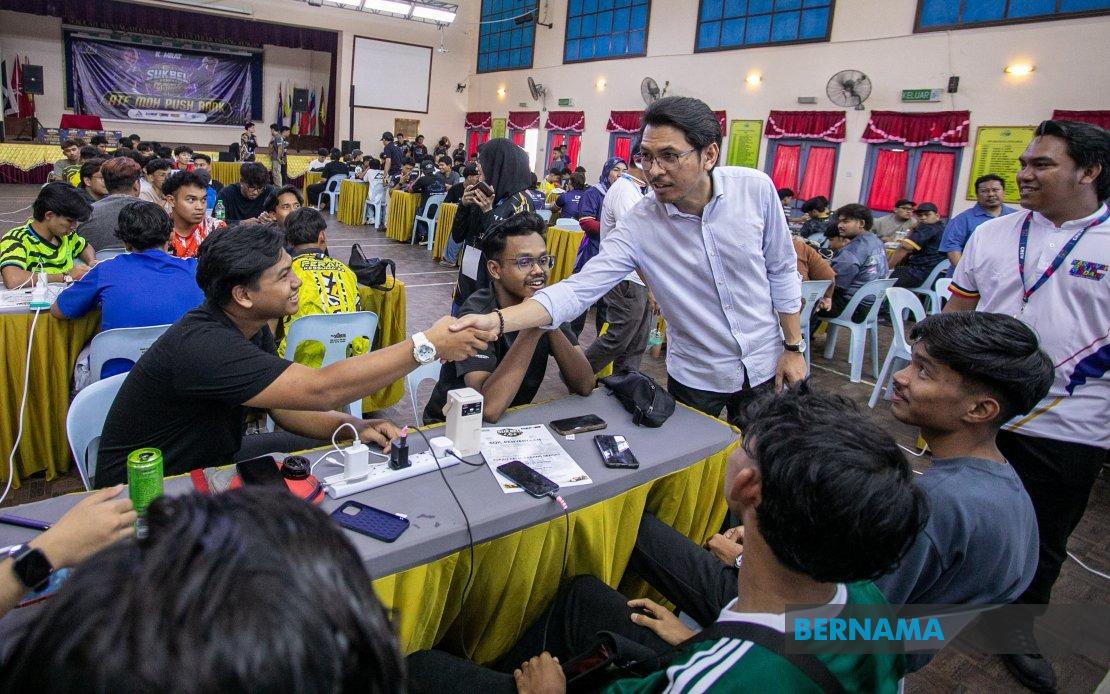
Muhammad Kamil Abdul Munim, the Finance Minister's political secretary, unveiled the funding expansion during an official roadshow in Padang Rengas parliamentary constituency at the Millennium Hall in Lubok Merbau. His announcement signals a strategic pivot towards deepening support for Malaysia's most vulnerable economic segments, particularly those micro-entrepreneurs struggling to scale operations and students from disadvantaged backgrounds pursuing tertiary education.
The programme's design deliberately transcends simple cash handouts, instead targeting specific needs within distinct beneficiary categories. For micro-entrepreneurs, the initiative provides tangible business equipment and productivity tools rather than lump-sum payments, recognising that sustainable income generation requires infrastructure investment. This approach acknowledges that many small-scale operators lack the capital to purchase essential machinery or technology that would meaningfully expand output and market reach.
Students represent another pillar of the initiative, with particular emphasis on those demonstrating academic excellence. During the Padang Rengas roadshow, 13 high-achieving students transitioning to higher education received laptops, acknowledging that educational progression increasingly depends on digital access. Five small-scale entrepreneurs received targeted business equipment on the same occasion, exemplifying the programme's dual focus on immediate welfare and long-term economic mobility.
The emphasis on merit-based student support, tied to Sijil Pelajaran Malaysia (SPM) examination performance, suggests deliberate government strategy to incentivise academic achievement while reducing financial barriers to university entry. This targeted approach contrasts with universal programmes, instead concentrating resources on individuals demonstrating capability and commitment to educational advancement. For Malaysian policymakers, this represents acknowledgment that scholarships and equipment provision can significantly influence tertiary participation rates among lower-income households.
However, Muhammad Kamil's comments also revealed structural challenges that plagued earlier iterations of similar assistance schemes. The SejaTi MADANI grant scheme, from which this initiative evolved, experienced implementation failures and mismanagement of public funds that undermined public confidence and programme effectiveness. These historical weaknesses informed current oversight mechanisms, signalling that the government has learned difficult lessons about balancing community-driven project selection with adequate supervision.
The original programme architecture allowed local communities considerable discretion in determining project priorities, theoretically ensuring interventions matched grassroots needs and preferences. Yet this decentralised approach created accountability gaps, with inadequate monitoring enabling fraud and project abandonment. Muhammad Kamil acknowledged these design flaws candidly, indicating that while such weaknesses were inevitable given the programme's complexity, systemic corrections were necessary to protect public funds and programme credibility.
The enhanced supervisory framework now mandated represents a pragmatic recalibration. Rather than abandoning the community-engagement principle entirely, officials retained consultation mechanisms while implementing tighter financial controls and project tracking systems. This balanced approach aims to preserve local ownership while preventing the resource leakage that previously compromised programme effectiveness. For Malaysian readers, this shift reflects broader governance maturation, where federal authorities accept that public trust depends on demonstrating rigorous stewardship of taxpayer money.
From a regional perspective, Malaysia's experience with targeted welfare programmes offers lessons for Southeast Asian counterparts grappling with similar implementation challenges. Nations like Thailand, Indonesia, and the Philippines operate comparable schemes attempting to reach vulnerable populations, yet frequently encounter comparable problems of monitoring, corruption, and project abandonment. Malaysia's willingness to publicly acknowledge these failures and implement corrective measures distinguishes it among regional peers.
The Padang Rengas roadshow exemplified the programme's practical engagement model, bringing government services directly to constituencies rather than requiring beneficiaries to navigate complex application bureaucracies. This mobile approach reduces access barriers for those lacking digital literacy or time to attend distant government offices. For low-income Malaysians in semi-rural constituencies like Padang Rengas, such accessibility significantly influences programme utilisation rates.
Looking forward, the RM3 million expansion establishes a precedent for ongoing programme investment, contingent on demonstrated impact and reduced leakage. This conditional approach incentivises local implementation teams to prioritise effective delivery, knowing that future resource allocation depends on current performance metrics. For Malaysian micro-entrepreneurs and students in Perak, this funding certainty enables medium-term planning, whether purchasing equipment or pursuing educational aspirations.
The Sejahtera MADANI initiative ultimately reflects a government attempting to operationalise inclusive growth rhetoric through targeted, structure-sensitive interventions. Its combination of cash transfers, equipment provision, and educational support acknowledges that poverty reduction requires multifaceted approaches addressing immediate welfare while building human and productive capital. As implementation progresses and oversight systems mature, the programme's trajectory will significantly influence Malaysian policymakers' confidence in designing similarly ambitious assistance schemes across other states and demographic groups.

