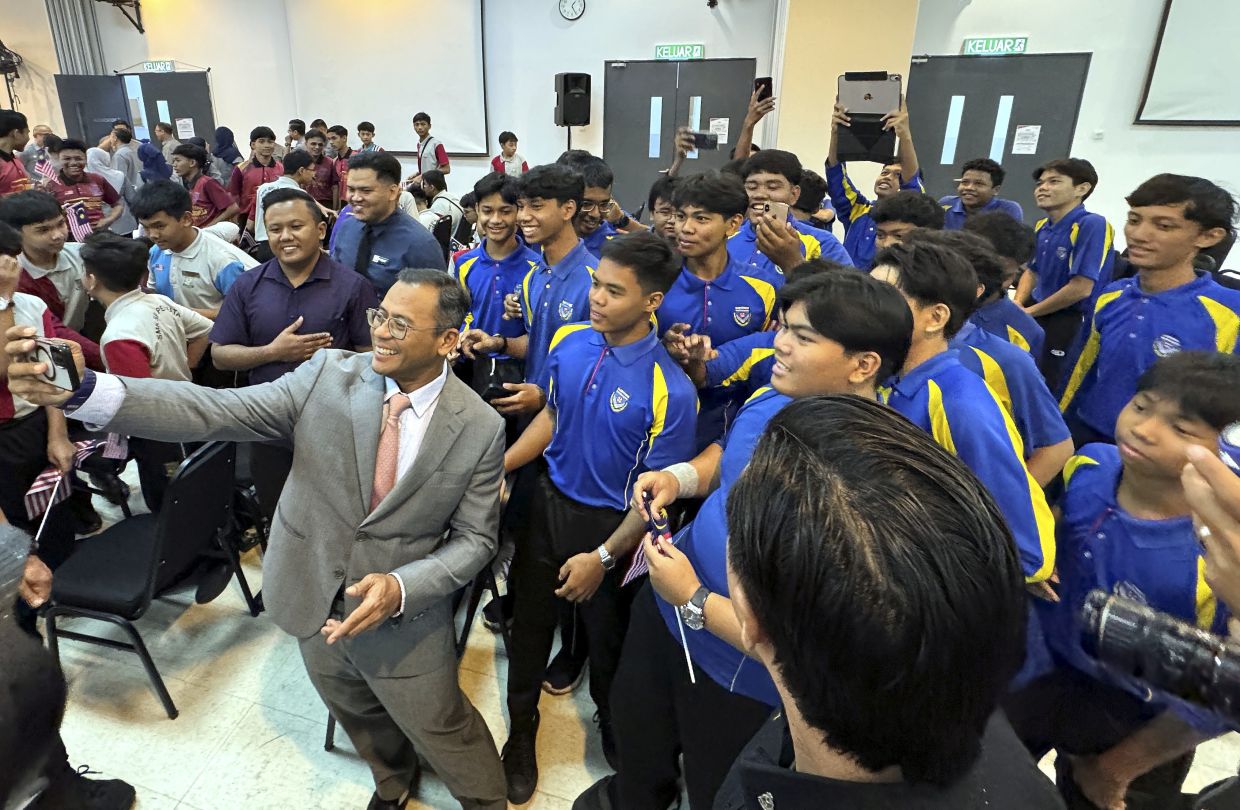
Selangor has identified rail transportation as a cornerstone industry for its economic future, capitalising on the state's dominance in the sector. With between 63 and 67 percent of the nation's rail operations and corporate headquarters concentrated within its borders, the state government recognises both the immediate employment opportunities and the long-term strategic importance of building a robust domestic talent base to sustain this competitive advantage. Mentri Besar Datuk Seri Amirudin Shari unveiled this vision at an official event at Universiti Tun Hussein Onn Malaysia in Sungai Buloh, signalling Selangor's intention to move beyond merely hosting rail infrastructure towards developing the human capital that will drive innovation and operational excellence across the entire sector.
The state's commitment extends beyond rhetoric into concrete institutional structures and funding mechanisms. Amirudin emphasised that Selangor will continue channelling investment into training and education programmes specifically designed to cultivate local expertise capable of advancing the industry's technical and management functions. This approach reflects a broader strategic recognition that Southeast Asia's rapid urbanisation is creating unprecedented demand for skilled rail professionals, from engineers and technicians to systems administrators and safety specialists. By front-loading investment in education, Selangor positions itself to capture a disproportionate share of high-skilled, well-remunerated employment opportunities as the region's transport networks expand over the coming decade.
Central to this initiative is the establishment of the Selangor State Rail Council, a body tasked with mapping the industry's ecosystem and anticipating workforce requirements before skills shortages become acute. This proactive approach contrasts with reactive hiring practices that many sectors employ once labour gaps emerge. The council will serve as a coordination mechanism between educational institutions, employers, and government agencies, ensuring that curriculum development remains aligned with real-world industry needs. For Malaysian policymakers watching Selangor's experiment, this model offers a replicable framework for skills forecasting in other strategic sectors where regional competition for talent is intensifying.
A significant milestone in this strategy came with the rebranding of Metro System Academy at UTHM to RailX, representing both a symbolic and substantive shift in institutional identity. The academy, operating as a partnership between UTHM and Mass Rapid Transit Corporation, trains workers and students across modern rail, public transport, and broader mobility systems. This collaboration between a leading technical university and Malaysia's primary rapid transit operator creates a unique ecosystem where academic rigour meets practical industry experience. Students gain exposure to cutting-edge technologies and operational standards while providing employers with early visibility into emerging talent, facilitating smoother transitions from education to employment.
To engage younger cohorts and build interest in rail careers from the secondary school level, RailX has launched an ambitious treasure hunt programme spanning ten districts across Selangor. The initiative will see secondary school students undertake interactive experiences across MRT stations in Gombak, Petaling, Hulu Langat, Sepang, Klang, Sabak Bernam, and Kuala Selangor. This experiential approach to career awareness serves multiple objectives simultaneously: it demystifies rail operations for students, showcases the sophistication of modern transport systems, and creates memorable touchpoints that may influence career decisions during formative years. For Malaysian educators, this model demonstrates how infrastructure itself can become a classroom, turning daily commutes into learning opportunities.
Amirudin explicitly framed these initiatives as extensions of the Malaysia Education Plan 2026–2035, demonstrating alignment between state-level rail workforce development and national education strategy. The plan's emphasis on technical and vocational education finds concrete expression in Selangor's rail sector approach. By positioning rail careers within the broader national education framework, the state government signals that technical expertise in transport systems commands societal prestige and economic rewards comparable to traditional professional pathways. This cultural shift is essential for attracting top-tier talent into vocational and technical fields where Malaysia currently faces significant shortages.
The Selangor Technical Skill Development Centre functions as a strategic feeder institution within this layered education ecosystem. Operating at the foundation level, it provides basic and intermediate technical training while maintaining articulation pathways allowing graduates to progress toward diploma and bachelor's degrees through UTHM. This vertical integration of the technical education system—spanning foundational skills training through advanced university qualifications—addresses a persistent weakness in many Southeast Asian education systems: the fragmentation between vocational and academic pathways. By creating seamless transitions, Selangor enables individuals to advance their qualifications over time, reducing barriers to upward mobility and encouraging sustained investment in human capital development.
The triple helix collaboration that Amirudin highlighted—involving government, universities, and industry partners such as MRT Corp and Rapid Rail—represents best-practice governance in sectoral economic development. Government provides strategic direction and funding; universities contribute research capacity and educational infrastructure; industry ensures relevance and provides employment pathways. This alignment reduces the typical mismatches between skills taught and skills needed, accelerates the commercialisation of new training methodologies, and creates feedback loops where industry practitioners inform curriculum design. For Malaysia's broader economic diversification agenda, such collaborative models offer templates for developing competitive advantage in emerging sectors.
The expansion of Selangor's public transport network, including the Light Rail Transit 3 (LRT3), East Coast Rail Link (ECRL), and Mass Rapid Transit extensions, creates both urgency and opportunity. These massive infrastructure projects will require thousands of technically skilled workers over the coming years, presenting a genuine challenge: can domestic workforce development keep pace with construction and operational demands, or will contractors resort to importing foreign expertise at higher costs? Selangor's educational strategy directly addresses this question by frontloading training and certification programmes. Successful execution could yield a model where Malaysian workers dominate even senior technical and management positions in rail operations, rather than occupying entry-level roles while expatriates capture the high-value positions.
For regional observers, Selangor's approach carries implications beyond its borders. Singapore's long-standing excellence in rail systems management derives partly from sustained investment in technical education and workforce development. Thailand, Indonesia, and Vietnam are increasingly competing for rail sector talent as their own transport networks expand. Selangor's strategy to cultivate local expertise before acute shortages materialise reflects sophisticated economic thinking about how Southeast Asian states can capture value from infrastructure development. Rather than treating rail as merely a service to be procured from international vendors, Selangor is positioning itself as a hub where rail transport knowledge accumulates, creating potential for technology transfer and future exports of expertise across the region.
The initiative also addresses a subtle but important dimension of Malaysia's economic future: ensuring that rapidly expanding infrastructure does not become an enclave employing primarily foreign workers while domestic populations fill peripheral roles. By systematically developing a pipeline of certified rail professionals beginning at the secondary school level, Selangor creates pathways for inclusive economic participation. Young Malaysians from all backgrounds gain access to information about rail careers, exposure to role models working in the sector, and practical training that leads to meaningful employment. This approach recognises that sustainable economic growth depends not merely on building more infrastructure, but on ensuring that ordinary citizens benefit materially from infrastructure expansion and can envision themselves contributing expertise within these sectors.
The rebranding to RailX and the broader institutional evolution suggest Selangor views rail not as mature, static infrastructure but as a dynamic, innovation-oriented sector requiring continuous renewal. This mindset is critical as emerging technologies—autonomous systems, artificial intelligence for predictive maintenance, advanced data analytics for passenger management—transform what rail professionals must know. By positioning UTHM as the focal point for this ongoing technical evolution, coupled with the Selangor State Rail Council's ecosystem mapping function, the state creates adaptive capacity. Rather than facing periodic crises when skills become obsolete, continuous curriculum updating ensures the workforce remains current with technological change.

