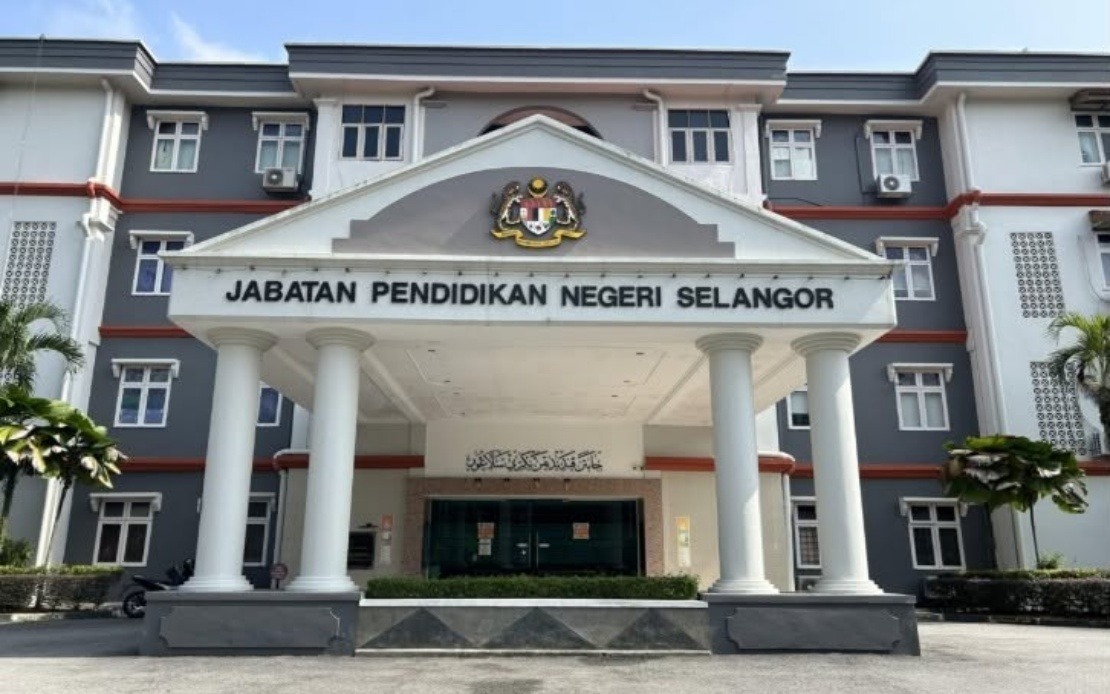
The Selangor State Education Department has stepped forward with a pledge of unwavering support for the ongoing police investigation into a bullying allegation involving multiple students at a secondary school in Rawang, an incident that rapidly gained prominence after video footage circulated widely across social media platforms.
Authorities in Selangor have made clear their position on the matter through an official statement, emphasizing that institutional standing will not shield any individual from accountability. The department's leadership underscored its commitment to applying the full weight of regulatory enforcement against those determined to bear responsibility for the alleged misconduct, signalling that procedural fairness would be observed throughout the investigative process while maintaining strict standards.
The incident, which captured public attention precisely because of its digital dissemination, represents a broader concern within Malaysia's education system about student safety and institutional cultures within schools. The Selangor JPN's response reflects growing pressure on educational authorities nationwide to address behaviour that undermines the physical and emotional wellbeing of the student population. By framing the matter as a serious breach demanding rigorous institutional response, education officials are attempting to reassure parents and communities that schools remain spaces where such violations will not be tolerated.
The involvement of police in the investigation signals that authorities are treating the allegations with sufficient gravity to warrant law enforcement scrutiny, suggesting the incident may involve conduct that crosses into potential criminal territory rather than remaining purely a disciplinary school matter. This dual approach—coordinating between education administrators and police—reflects contemporary practice in Malaysia where serious student misconduct increasingly receives multi-agency attention. The separation of roles allows education departments to focus on institutional discipline and safeguarding procedures while law enforcement examines whether criminal statutes have been breached.
Social media's amplification of the incident illustrates how digital technology has transformed the landscape of institutional accountability in contemporary Malaysia. What might previously have remained confined to school corridors and parent networks now reaches thousands within hours, compelling authorities to respond swiftly and publicly. This dynamic creates both pressure and opportunity for education officials to demonstrate responsiveness to public concern about student welfare, though it also complicates investigative processes that require confidentiality to protect all parties involved.
The Selangor JPN's explicit rejection of any protective measures for the implicated individuals represents a calculated statement of institutional principle, distinguishing this approach from perceptions that Malaysian authorities sometimes shield connected parties. By preemptively declaring that no special consideration will apply, the department attempts to build public confidence that the investigation will follow evidence rather than social position or institutional relationships. This framing matters particularly in Malaysian contexts where patronage networks and connections have historically influenced outcomes in sensitive matters.
The department's appeal to the public to respect the investigative process strikes a delicate balance between transparency and procedural integrity. Authorities recognize that ongoing social media attention could prejudice fair investigation or compromise the ability to establish facts impartially. By requesting public restraint while simultaneously demonstrating institutional seriousness, education officials seek to manage the reputational dimensions of the case alongside substantive justice concerns. This positioning assumes that demonstrating respect for due process itself constitutes an important confidence-building measure.
The incident raises questions about supervision, intervention protocols, and bullying prevention mechanisms within Malaysian schools. Whether the alleged conduct represents an isolated incident or reflects systemic inadequacies in student oversight remains central to understanding its significance. Education administrators' willingness to engage fully with investigations suggests openness to examining institutional practices, though deeper questions about whether schools possess adequate training, resources, and awareness programmes to prevent such incidents in the first place remain largely unaddressed in official statements.
For Malaysian parents and educators, this case exemplifies broader concerns about student safety in an environment where digital documentation means that behaviour once confined to closed settings now becomes subject to public scrutiny and judgment. The speed with which incidents can escalate from private occurrences to national controversies has forced institutions to recalibrate their response protocols, moving away from purely internal handling toward greater transparency and inter-agency cooperation. This shift reflects evolving expectations about institutional accountability across Malaysian society.
The Selangor JPN's statement ultimately signals a commitment to proportionate and evidence-based responses to misconduct rather than either dismissive minimization or punitive overreach. Whether this approach translates into outcomes that address both individual accountability and systemic improvement will become apparent as investigations progress. The case will likely serve as a benchmark against which Malaysian public evaluates education authorities' sincerity in protecting student welfare and their willingness to enforce standards fairly across the entire student population.

