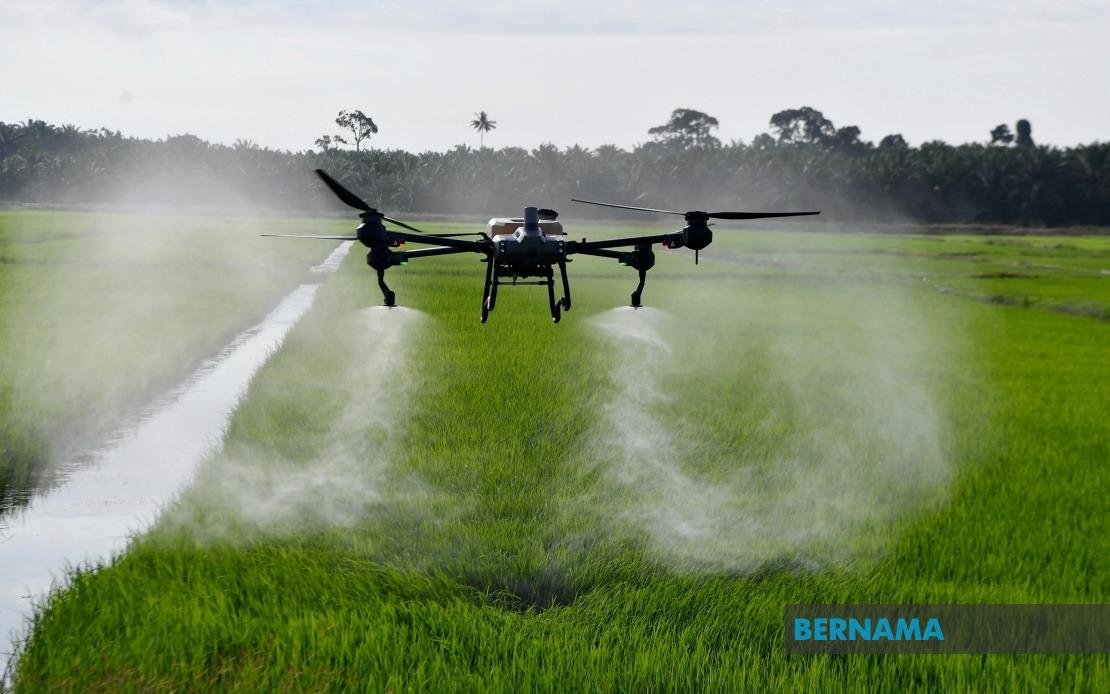
Selangor's state government has committed RM500,000 toward establishing itself as a centre for drone technology innovation, marking a deliberate pivot toward high-growth sectors that regional economies are racing to capture. The funding, announced at the pre-launch of the Droneport-1000 facility at Universiti Selangor, represents an expansion of the government's previous investments and signals confidence in the commercial viability of unmanned systems across multiple industries.
Dr Mohammad Fahmi Ngah, the state's Islamic Affairs and Innovation Culture Committee chairman, framed the allocation as part of a broader roadmap to position Selangor as a drone technology hub by 2027. Beyond the headline figure, the money will fund essential infrastructure upgrades at the Droneport-1000 facility and seed strategic collaborative programmes designed to lure both domestic and international enterprises into the sector. This two-pronged approach—infrastructure plus talent attraction—reflects lessons learned across Southeast Asia, where competing nations have struggled to bridge the gap between research capability and commercial deployment.
The Droneport-1000 itself represents an ambitious infrastructure play. Spanning 24 square kilometres with operational altitude clearance up to 1,000 metres, it constitutes Malaysia's largest designated airspace for drone operations, though it remains pending full certification from the Civil Aviation Authority of Malaysia. For context, the facility's monitored area is roughly ten times larger than Singapore's entire territory, creating a testing ground that could theoretically support everything from agricultural monitoring to infrastructure inspection at scales unavailable in neighbouring city-states. This geographical advantage is critical; regional competition for drone talent and investment has intensified as countries recognise the technology's application across defence, logistics, and environmental management.
The investment strategy extends beyond hardware into adjacent value chains that regional policymakers increasingly recognise as essential. Software development, artificial intelligence systems, and semiconductor chip production form interconnected pillars of the drone economy, and Selangor's approach—anchored in partnerships with firms like Aerodyne and the state subsidiary Geospatial SmartSel—suggests an understanding that competitive advantage requires ecosystem depth rather than isolated manufacturing capacity. The semiconductor component is particularly significant; Puchong's emerging chip supply chain could eventually reduce regional dependence on global semiconductor markets while supporting local drone assembly operations.
Zannifa Azura Ahmad, chief executive of Selangor Aviation & Technology Innovation, articulated the deeper logic behind the Droneport-1000 initiative: bridging research with commercialisation and academic talent with industry demand. Malaysian universities have produced solid drone research, yet countless projects languish in laboratories because pathways to market remain underdeveloped. By co-locating academic institutions, testing infrastructure, and commercial players on the Droneport-1000 campus, Selangor is attempting to compress the typical innovation cycle and reduce the risk premium that deters entrepreneurs from drone ventures. This model parallels successful technology clusters elsewhere, though its Malaysian application will depend on whether incentive structures—such as the matching grants mentioned—prove sufficient to retain talent in a region where Singapore's salaries and Hong Kong's venture capital remain formidable competitors.
The practical applications Fahmi outlined reveal why Southeast Asian governments are willing to spend political capital on drone development. Forest encroachment, coastal erosion, and embankment failures are endemic challenges across the region, often invisible or difficult to monitor at scale using conventional methods. Drone-based remote sensing equipped with artificial intelligence can flag degradation in near-real time, potentially saving lives and reducing environmental damage. For Selangor specifically, where rapid urbanisation has created acute land-use pressures, such monitoring tools offer measurable governance benefits alongside commercial opportunity—a combination that justifies sustained public investment in the eyes of Treasury officials and environmental constituencies alike.
The Droneport-1000 project also embeds Malaysia within regional and global supply chains in ways that ground-level manufacturing has never achieved. Drone technology is not labour-arbitrage intensive; it requires skilled workforces, intellectual property management, and sophisticated regulatory compliance. Attracting multinational drone companies to establish regional hubs in Selangor would generate high-value employment and technology transfer more reliably than traditional foreign direct investment in lower-skilled sectors. The RM500,000 allocation should therefore be read as seed funding for a much larger ecosystem play, contingent on the state's ability to market Droneport-1000 internationally and sustain the regulatory clarity that operators demand.
Regulatory clarity remains a critical variable. The Civil Aviation Authority of Malaysia's pending certification of Droneport-1000 reflects ongoing standardisation of airspace management across Southeast Asia, an area where inconsistent rules have historically deterred commercial drone operators. If Malaysia achieves certification faster than regional competitors, Selangor could capture operators currently testing operations in Thailand or Vietnam, generating spillover benefits across the innovation ecosystem. Conversely, protracted approval processes would undermine the state government's credibility with potential investors and erode the advantage conferred by physical infrastructure.
The involvement of the Malaysian Communications and Multimedia Commission and other federal agencies signals that the Selangor initiative aligns with national telecommunications and aerospace strategies. Malaysia's longer-term ambition to develop indigenous aerospace capabilities, particularly in unmanned systems, suggests that Selangor's investment is not purely regional positioning but part of a coordinated national effort. This alignment reduces the risk that the state will overcommit to a sector that lacks broader policy support, though it also means that Selangor's success will partly depend on sustained federal backing that can shift with changes in administration or national priorities.
The 2027 timeline explicitly referenced by state officials sets a measurable horizon against which the initiative's success can be judged. By that date, the state expects the drone sector to have matured sufficiently to generate demonstrable economic returns, whether through enterprise valuations, export revenues, or job creation. Whether RM500,000 proves sufficient to catalyse the necessary ecosystem density remains uncertain; comparable initiatives in other jurisdictions have typically required multiyear funding commitments and adaptive management as market conditions evolve. What is clear is that Selangor is betting that drone technology represents a legitimate growth frontier for Southeast Asian economies, and that early investment in infrastructure and talent attraction could yield asymmetric returns as regional demand for drone services accelerates across the 2020s.

