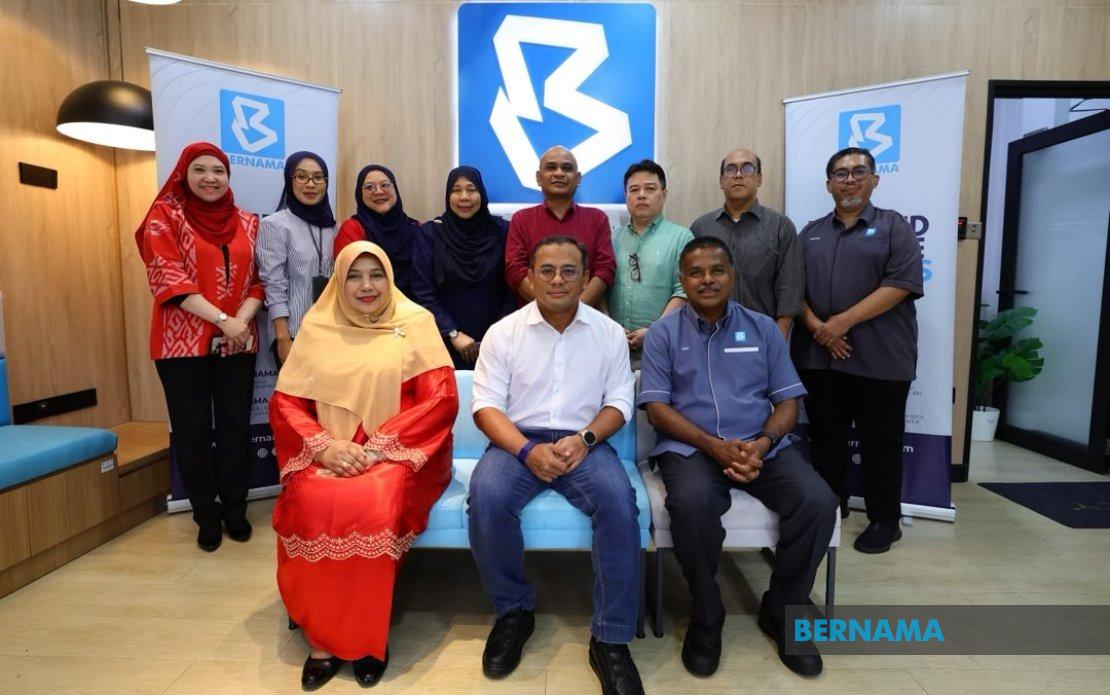
Selangor Menteri Besar Datuk Seri Amirudin Shari made an unscheduled visit to the Malaysian National News Agency's (Bernama) Negeri Sembilan bureau on July 20, where the news organisation has established its central command centre to coordinate comprehensive coverage of the 16th state election. The visit, which took place at 2 pm, underscored the importance political leaders place on media engagement during critical electoral periods, and highlighted the role national news agencies play in serving as information hubs during high-stakes campaigns.
Amirudin, who holds the additional responsibility of serving as Pakatan Harapan's election director, arrived at the Seremban office to receive a detailed briefing on Bernama's operational structure and newsgathering strategy. He was warmly received by Bernama Chief Executive Officer Datin Paduka Nur-ul Afida Kamaludin and Editor-in-Chief Arul Rajoo Durar Raj, alongside senior management figures including Deputy Editor-in-Chief of News Services Mohd Shukri Ishak and Negeri Sembilan Bureau Chief Nursyabiha Sukri. The presence of such high-ranking executives underscored the significance of the occasion and reflected Bernama's commitment to maintaining robust coverage standards throughout the election cycle.
During his time at the bureau, Amirudin received a comprehensive presentation from Mohd Hisham Abdul Rafar, who coordinates Bernama's election coverage operations. Rafar outlined the agency's newsgathering protocols, staffing arrangements, and distribution channels as the campaign entered its third day. This briefing proved particularly valuable given the intricate logistics required to monitor developments across multiple constituencies, verify candidate information, and deliver timely updates to the public. As the PH election director, Amirudin's familiarity with Bernama's operations would enable more effective communication between his campaign machinery and the news organisation's reporting apparatus.
The timing of Amirudin's visit reflects broader dynamics within Malaysia's electoral landscape, where coordination between political parties and media institutions has become increasingly sophisticated. While the relationship between government-linked news agencies and political actors sometimes attracts scrutiny regarding editorial independence, Bernama's role remains fundamentally important in providing comprehensive information about electoral developments to Malaysian audiences. The agency's ability to maintain broad access and report on multiple perspectives depends partly on maintaining constructive relationships with key political figures across the spectrum.
During his visit, Amirudin confirmed plans to participate in a recorded television interview with Bernama TV to discuss ongoing campaign developments and the PH coalition's electoral strategy. This media engagement represents a standard practice during election periods, allowing political leaders to communicate directly with voters through established news channels. For Bernama, securing such interviews with major political figures enhances the credibility and newsworthiness of its coverage, while for Amirudin, it provides a platform to articulate his coalition's positions to a state-level audience.
The Negeri Sembilan election represents a significant test for multiple political coalitions competing to govern the state. The Election Commission's scheduling established July 28 as the early voting date, providing opportunities for civil servants, police personnel, and other designated groups to cast ballots ahead of the main polling day. The main election is scheduled for August 1, giving all voters a final opportunity to participate in what political analysts view as a potentially consequential state-level contest. This compressed timeline means news organisations like Bernama face considerable pressure to maintain reporting accuracy while working within tight deadlines.
Bernama's establishment of a dedicated operations room for Negeri Sembilan coverage demonstrates the institutional commitment required to handle elections of this magnitude. Such facilities typically house teams responsible for wire service operations, news verification, photograph distribution, and video content production. Multiple coordinators work across different shifts to ensure continuous monitoring of campaign activities, candidate statements, and electoral commission announcements. By opening this operations centre to political figures like Amirudin, Bernama signals transparency in its newsgathering process while simultaneously maintaining the professional distance necessary for credible journalism.
For Malaysian readers across the peninsula, Bernama's coverage of the Negeri Sembilan election provides essential information about developments in a state that, while geographically small, occupies a significant position within Malaysia's political architecture. The state's electoral outcomes can influence broader coalition dynamics and provide insights into voter preferences across different regions. Comprehensive coverage ensures citizens can make informed decisions based on substantive information rather than rumour or partisan social media narratives.
The visit also highlights the evolving relationship between traditional media institutions and digital distribution channels. Bernama has established dedicated online platforms for election coverage, including its Prn.bernama.com portal where readers can access real-time updates, verified information, and multimedia content related to the campaign. This multi-platform approach reflects recognition that modern voters consume news through diverse channels, from traditional television and radio to mobile applications and social media integration. By maintaining robust digital operations alongside conventional newsgathering, Bernama positions itself as a reliable information source during an election period when misinformation and unverified claims proliferate rapidly.

