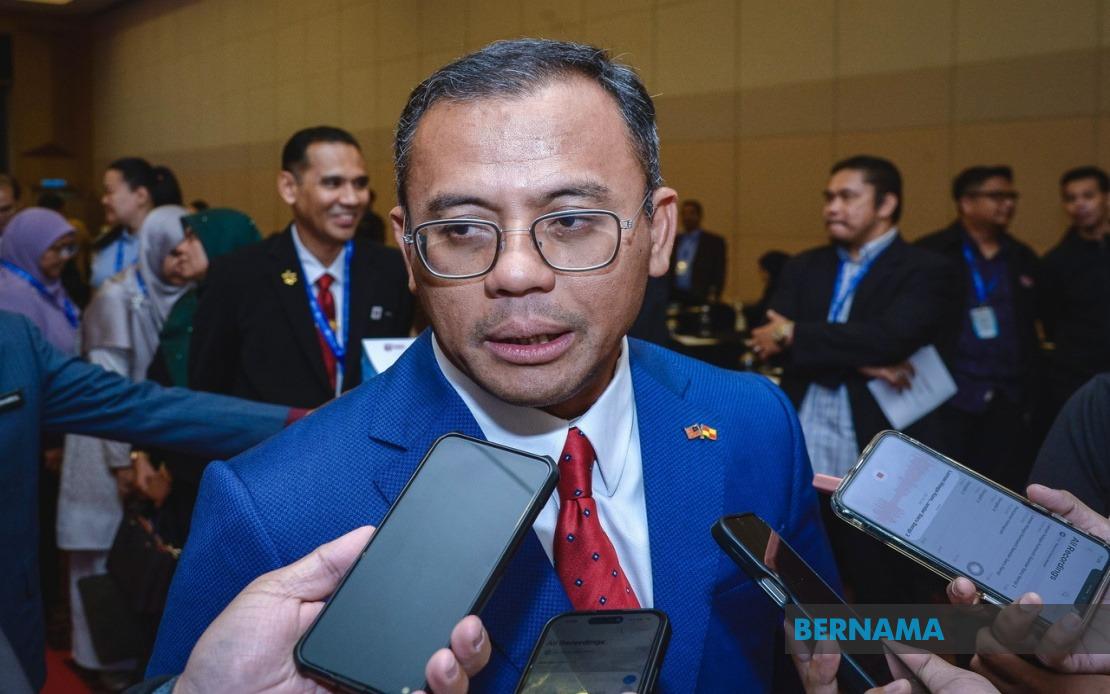
Selangor Menteri Besar Datuk Seri Amirudin Shari has called for a fundamental shift in how governments design and implement policies, arguing that the traditional approach of treating social issues in isolation fails to capture the lived experience of families grappling with multiple challenges simultaneously. Speaking at the Human Ecology International Conference II 2026 in Bangi, Amirudin articulated a vision where policymaking transcends departmental silos and instead constructs integrated environments that acknowledge the messy, interconnected nature of contemporary life.
The menteri besar's intervention addresses a persistent gap in Malaysian governance. For decades, federal and state authorities have typically structured their administrative apparatus around distinct policy domains—health, transport, employment, housing—each with its own ministry, budget allocation, and performance metrics. Yet Amirudin's observation cuts to the heart of a frustration many Malaysian families experience: the decisions made in one policy area inevitably ripple across others, and treating them separately renders government support fragmentary and inefficient. A family struggling with childcare costs, for instance, cannot compartmentalise that challenge from questions of transport access, wage adequacy, or housing affordability. These pressures accumulate and compound, creating a structural bind that no single intervention can meaningfully resolve.
Amirudin specifically highlighted the mounting pressures confronting contemporary households in Malaysia and across the region. Rising living costs, housing scarcity, lengthy commutes, caregiving responsibilities—particularly as demographic shifts create demands for elder and child care simultaneously—alongside volatile employment patterns and the disruptive pace of technological change have fundamentally altered the landscape in which families attempt to maintain stability. The menteri besar observed that these structural constraints operate in concert, making it impossible for families to address one without affecting their capacity to manage the others. This insight carries particular weight in Selangor, Malaysia's most urbanised and economically dynamic state, where housing pressures and commuting times have become defining aspects of residents' daily existence.
Central to Amirudin's thesis is a reframing of the government's fundamental obligation. Rather than measuring success solely by whether families are merely surviving, authorities should assess whether the broader environment actively enables families to thrive. This distinction matters enormously. Survival suggests passive tolerance of hardship; thriving implies dignity, opportunity, and genuine choice. For Malaysia, where middle-income households often describe themselves as squeezed despite respectable earnings, this recalibration could reshape policy priorities. It suggests that comprehensive childcare infrastructure, reliable mass transit, flexible employment protections, and housing at accessible price points are not luxuries but prerequisites for enabling families to function optimally.
The menteri besar also advocated for universities and research institutions to occupy a central role throughout the policy lifecycle, from problem definition through to rigorous evaluation. This represents a departure from conventional practice, where academic expertise is often engaged after political decisions have already been made. By institutionalising partnerships with tertiary institutions at every stage, governments could theoretically ground their interventions in evidence, test assumptions before scaling up, and measure actual outcomes rather than relying on anecdotal success. For Malaysian universities, this invitation carries significant implications, positioning research as not merely theoretical but directly instrumental to governance.
Amirudin's remarks gained additional significance through the concrete initiatives announced alongside them. The exchange of a Memorandum of Understanding between Universiti Putra Malaysia and the University of the Philippines Los Baños signals emerging institutional collaboration within Southeast Asia. More substantially, the announcement of the ASEAN Human Ecology Consortium establishes a regional framework for shared research, student and faculty exchanges, joint publications, and policy dialogue among human ecology institutions across member states. For Malaysia, this creates opportunities to benchmark policy approaches against neighbouring economies and to contribute Malaysian experience to broader regional learning.
The consortium's commitment to community engagement and policy dialogue suggests ambitions beyond purely academic circles. By bringing together practitioners, policymakers, institutional leaders, and community representatives—not merely researchers and academics—the initiative recognises that policy insights must be grounded in the perspectives of those actually experiencing these interconnected challenges. In the Malaysian context, where governance often proceeds through top-down channels, this inclusive architecture offers a potential model for more participatory approaches to policymaking.
The Human Ecology International Conference II 2026, organised under the theme "Sustaining Human Well-being," attracted participants from Malaysia, Indonesia, the Philippines, and beyond. The conference's geographical breadth reflects the reality that challenges to human well-being are not uniquely Malaysian or even Southeast Asian but global phenomena. However, the regional dimension matters because solutions must be culturally attuned and economically calibrated to specific contexts. A childcare policy appropriate for the Philippines may require substantial modification for Selangor's predominantly urban, dual-income demographic.
Amirudin's call for integrated policymaking aligns with contemporary thinking in development economics and public administration, yet remains poorly embedded in Malaysian practice. State and federal governments continue to operate largely through sectoral ministries, creating coordination challenges that ultimately burden citizens. A genuinely integrated approach would require not just rhetorical commitment but institutional redesign—perhaps through cross-ministry task forces, unified budget frameworks that account for spillover effects, or performance metrics that measure family well-being rather than departmental output. Such transformation faces obvious obstacles: bureaucratic inertia, political incentives that reward visible single-sector achievements, and the sheer complexity of measuring interconnected outcomes.
Yet Amirudin's intervention suggests growing recognition among regional leaders that incremental sectoral improvements no longer suffice. Malaysian families navigating a high-cost environment increasingly demand that their government understand and address the totality of their circumstances. The menteri besar's framing offers a vocabulary for translating that demand into policy direction. Whether Selangor can operationalise this vision through concrete institutional changes remains an open question, but articulating the necessity represents an important first step.
The establishment of the ASEAN consortium creates accountability mechanisms. By committing to shared research and policy dialogue, Malaysian institutions now face peer scrutiny from regional counterparts, potentially accelerating the adoption of integrated approaches. Indonesian, Thai, and Philippine scholars will observe whether Malaysia translates rhetoric into implementation. For Malaysian policymakers and academics, this regional dimension transforms what might otherwise remain academic discussion into a comparative exercise where performance becomes visible and measurable.
Moving forward, the challenge lies in translating Amirudin's conceptual framework into tangible governance reforms. This might involve piloting integrated policy experiments in specific Selangor districts, establishing cross-ministry coordination mechanisms focused on family well-being outcomes, or commissioning comprehensive research mapping how current policy silos create friction in residents' daily lives. The menteri besar's framing suggests that incremental improvements within existing structures are insufficient; the architecture itself requires reconceiving. For a state as economically dynamic and urbanised as Selangor, such institutional innovation could become a model for other Malaysian states grappling with similar pressures on family stability and well-being.

