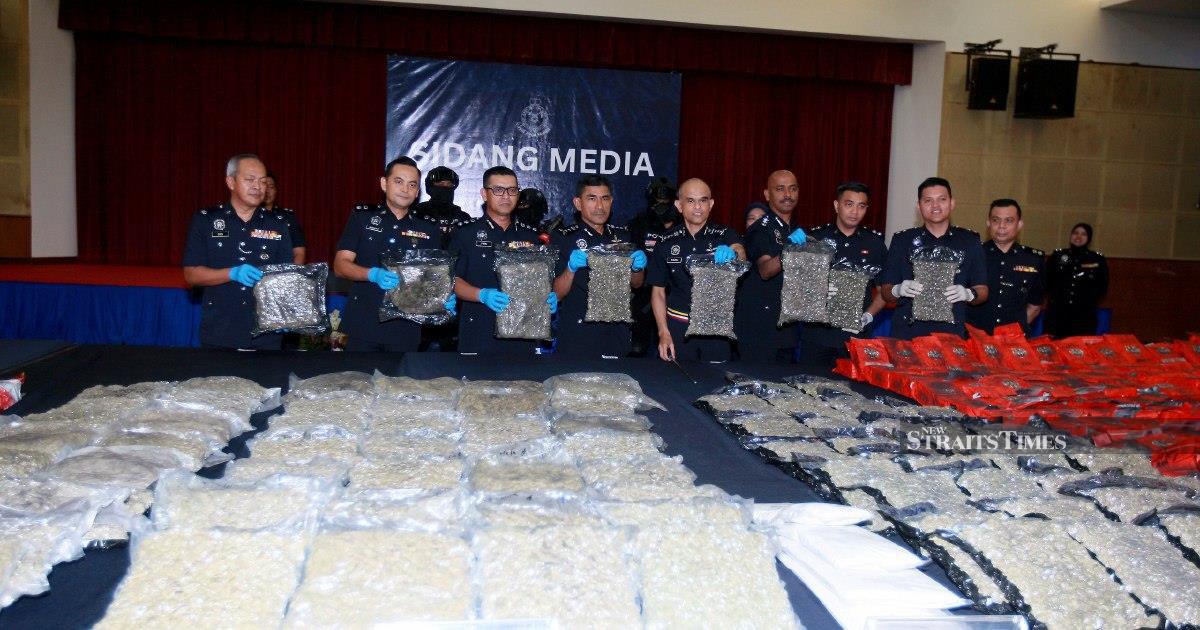
Police operations in Selangor have resulted in the seizure of approximately 600 kilograms of illicit drugs valued at RM37.5 million, marking a significant breakthrough against organised trafficking networks operating in Malaysia's most populous state. The recovery came following a series of six coordinated raids targeting distribution points and storage facilities linked to the same criminal enterprise. Twelve individuals have been detained for questioning as authorities continue to investigate the scope and reach of this particular trafficking operation, which appears to have involved multiple stages of distribution and numerous contact points across the state.
The seizure represents one of the larger drug interdictions conducted in Selangor in recent months, reflecting the persistent challenge posed by narcotics trafficking through Malaysia's central corridor. The state's strategic location, extensive transportation networks, and proximity to major population centres make it particularly vulnerable to becoming a transit and distribution hub for trafficking organisations. The ability to locate and neutralise multiple trafficking nodes suggests that law enforcement has developed improved intelligence capabilities in tracking networks that traditionally operate with sophisticated compartmentalisation to avoid detection.
The types and quantities of drugs recovered during these operations provide insight into current trafficking patterns in the region. Authorities have not yet publicly detailed the specific composition of the 600-kilogram haul, though past operations in Selangor have consistently targeted methamphetamine, heroin, and synthetic designer drugs. The variety of substances typically encountered in major seizures indicates that these networks operate along established supply chains serving diverse consumer markets, from local end-users to wholesale distributors feeding secondary markets across Southeast Asia.
The detention of twelve suspects allows investigators to map the organisational structure of what appears to be a relatively large-scale operation. The number of individuals involved suggests this was not a simple street-level distribution network but rather a more complex hierarchy encompassing transportation, storage, repackaging, and retail distribution functions. Interrogation of these individuals typically reveals crucial information about supplier networks upstream and customer bases downstream, potentially leading to additional arrests and the dismantling of supporting infrastructure.
For Malaysia, controlling drug trafficking represents an ongoing national security priority, with the costs of narcotics abuse extending far beyond law enforcement to encompass public health, social services, and economic productivity. Selangor, as the nation's economic heartland and industrial centre, faces particular pressure from trafficking organisations seeking to establish distribution networks among both urban and industrial populations. The state's role as a gateway for international trafficking also means that disrupting local operations can have cascading effects on regional supply chains.
The coordination required to execute six separate raids simultaneously or in close succession demonstrates the operational capability that the Selangor police have developed. This coordinated approach prevents suspects at different locations from alerting one another and allows authorities to secure evidence before it can be destroyed or moved. The success of such operations depends heavily on intelligence gathering, surveillance capacity, and operational planning executed across multiple police units and, potentially, with cooperation from federal agencies and international partners monitoring cross-border trafficking movements.
The RM37.5 million valuation placed on the seized drugs reflects street-level retail pricing and represents the economic scale of the operation from a criminal perspective. This figure significantly understates the actual harm inflicted by drug trafficking, as it fails to account for the social costs associated with addiction, crime, family dissolution, and the health burden on public medical services. The state's ongoing struggle against substance abuse underscores the importance of sustained law enforcement efforts combined with drug prevention and rehabilitation initiatives.
The timing and execution of these operations may indicate that Selangor authorities have increasingly refined their ability to track and anticipate trafficking movements. Organised crime networks in Malaysia are known for adapting their methods in response to law enforcement pressure, shifting routes, changing supplier relationships, and rotating personnel to minimise their exposure. The success in identifying and acting on six distinct trafficking points suggests that intelligence networks monitoring these activities have achieved meaningful penetration of criminal communications or that informant networks have proven effective in providing actionable leads.
Moving forward, these arrests and seizures will likely trigger additional investigative avenues as authorities pursue the question of where this 600-kilogram supply originated. International trafficking networks typically operate across multiple jurisdictions, with drugs transiting through neighbouring countries before reaching Malaysian distribution networks. Establishing the source and transit route of this shipment could lead to cooperation with regional law enforcement partners and potentially disrupt upstream supply arrangements that feed multiple Southeast Asian markets.
The outcome of this operation will inform ongoing strategies for combating trafficking in Selangor, where rising drug seizures over the past several years reflect both increasing trafficking volumes and the gradual improvement of police interdiction capacity. Sustained operations against these networks, combined with investment in community-based prevention and addiction treatment services, remain essential to addressing what remains one of Malaysia's most persistent public order challenges.

