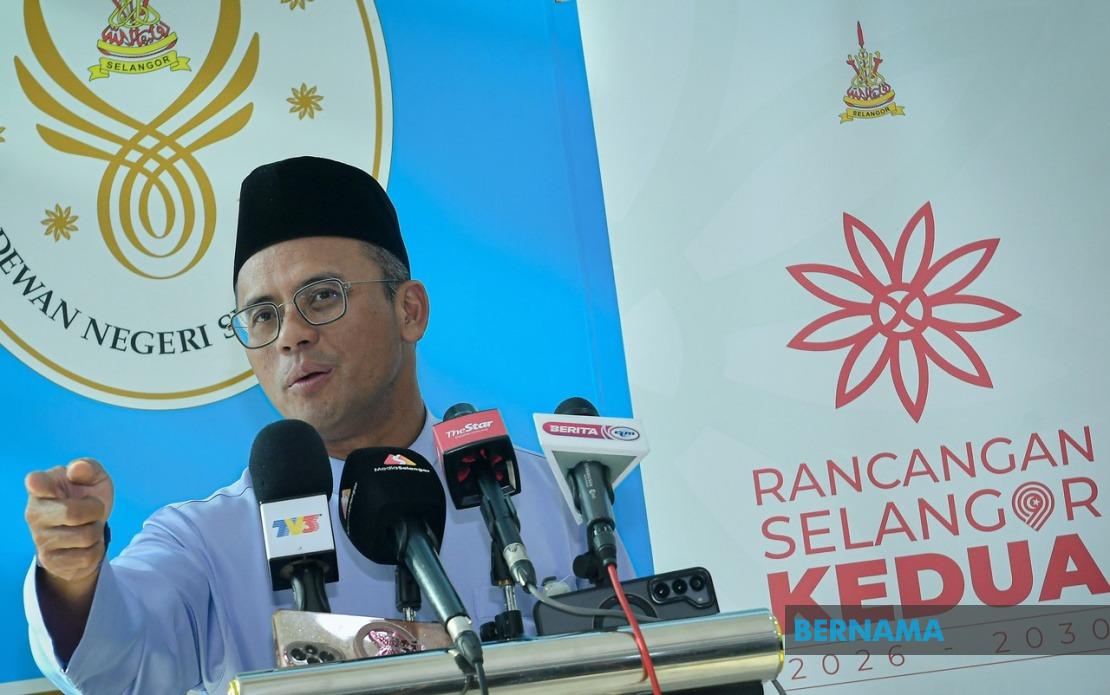
The Selangor state government has reaffirmed its commitment to building 200,000 affordable housing units as part of its comprehensive residential development strategy, addressing a persistent shortage of reasonably priced accommodation across the nation's most densely populated state. Menteri Besar Datuk Seri Amirudin Shari outlined the ambitious target when presenting the initiative to the Selangor State Legislative Assembly, emphasising that homeownership remains elusive for many residents despite decades of economic growth.
Progress on the initiative has been substantial, though challenges remain. As of the announcement, 64,188 units have been completed and made available to residents, while construction continues on a further 69,014 units, representing a combined total of 133,202 homes either finished or actively under development. This means approximately two-thirds of the target has already entered the pipeline, suggesting the state government's confidence in meeting its broader objectives within the prescribed timeframe.
Beyond mere construction numbers, the state administration has introduced innovative financing mechanisms designed to facilitate property ownership among lower-income households. Through a rental-to-ownership conversion scheme, the Selangor Housing and Property Board (LPHS) will reserve 30 per cent of monthly rental payments from tenants occupying state-provided accommodation, accumulating these funds as a future housing deposit. This approach essentially transforms rental obligations into forced savings, enabling residents to transition from tenancy to ownership once sufficient capital has accumulated, though questions about the scheme's long-term sustainability and the timeline for accumulation remain unaddressed.
The state government is simultaneously developing a comprehensive household support index designed to measure the real-world impact of its various assistance programmes. Using a framework anchored in the state's newly established statistical unit, this index will evaluate programme effectiveness through periodic assessments conducted at 12 and 24-month intervals. This data-driven approach reflects growing recognition that housing policy success cannot be measured solely by unit completion numbers, but must account for whether recipients genuinely benefit from improved living standards and social mobility.
Recognising that housing accessibility depends critically on proximity to employment and services, the state has prioritised integration between residential developments and public transportation infrastructure. Frequency of light rail transit and mass rapid transit services is being increased to improve connectivity, while the government simultaneously envisions creating genuinely walkable urban environments through systematic construction of covered walkways linking residential zones to transit hubs. These complementary investments acknowledge that affordable housing becomes a poor investment if residents spend excessive time and money commuting to employment centres.
Every new Rumah Selangorku Harapan and Rumah Selangorku Idaman housing development must incorporate bus stops within residential areas, a requirement designed to ensure first-and-last-mile connectivity for residents lacking personal vehicles. This mandatory integration represents a departure from conventional Malaysian development patterns, where housing estates are frequently planned independently of transport infrastructure, forcing residents to rely on informal transport arrangements or private vehicles.
The state administration intends to leverage advanced technology to optimise these transport networks, utilising data analytics to identify areas experiencing highest traffic volumes, major public gathering points, and residential concentrations across Selangor. This information will determine optimal small bus stop placement within housing estates, suggesting recognition that generic transport solutions fail in diverse urban environments. The approach reflects international best practices in transit-oriented development, though successful implementation depends on sustained political will and adequate ongoing funding.
For Malaysian policymakers observing Selangor's initiatives, the programme offers instructive lessons about housing policy's multidimensional nature. Delivering affordable units addresses immediate shelter needs, but genuine solutions require simultaneous attention to financing mechanisms, employment accessibility, urban walkability, and transportation connectivity. Selangor's comprehensive approach contrasts sharply with narrower housing initiatives elsewhere that focus exclusively on construction targets without addressing the surrounding ecosystem of services and infrastructure.
The programme's success will carry implications beyond Selangor's borders. As Malaysia's wealthiest and most urbanised state, Selangor functions as a testing ground for policies that other state administrations and the federal government may subsequently adopt or adapt. The rental-to-ownership model, support index methodology, and transport-integrated development standards could establish precedents for affordable housing delivery throughout the country if outcomes prove positive.
However, scepticism about ambitious housing targets remains warranted given Malaysia's track record of overstated completion predictions and extended project timelines. The gap between the 133,202 units currently in the pipeline and the 200,000-unit goal remains substantial, and regional economic volatility could disrupt construction schedules or contractor finances. Additionally, defining "affordable" requires ongoing scrutiny—housing units that remain inaccessible to target income groups represent failures regardless of completion rates.
The Selangor initiative demonstrates recognition that housing affordability constitutes not merely a development challenge but a fundamental governance obligation affecting citizen quality of life. Whether the state government achieves its numerical targets while simultaneously delivering genuinely accessible, well-serviced, and sustainably financed housing will determine whether this ambitious programme becomes a model for replication or merely another statistics-heavy initiative that fails to address ordinary Malaysians' persistent housing struggles.

