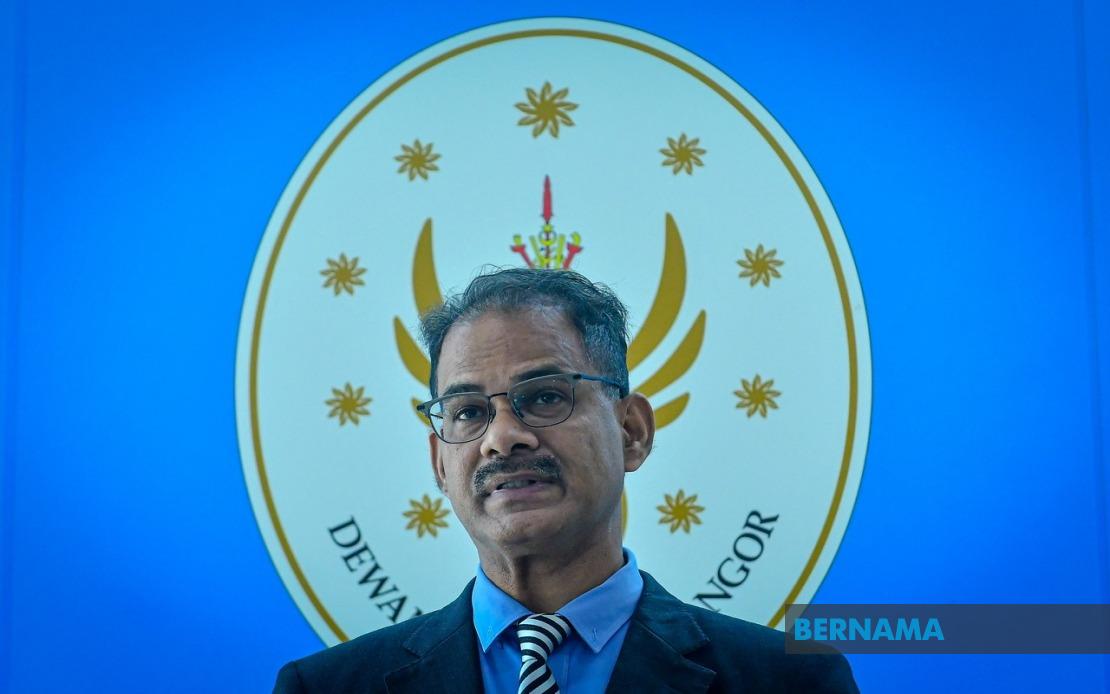
The Selangor government is ramping up efforts to reach non-pensioned Armed Forces and police veterans who remain unaware of or have not yet claimed their RM200 Warriors' Day shopping vouchers, with the deadline fast approaching on August 31. The push comes as take-up has fallen far short of expectations since the initiative began on July 29, with merely 500 claims registered among the 8,391 veterans deemed eligible for the benefit. State Human Resources and Poverty Eradication Committee chairman V. Papparaidu outlined the government's concerns during a press briefing at the Selangor State Legislative Assembly, signalling the administration's determination to ensure the scheme achieves its intended reach.
The low uptake reflects a persistent challenge facing state welfare programmes: reaching eligible recipients who may have moved, changed contact details, or remain unaware of available assistance. Papparaidu acknowledged that many veterans have shifted residence or updated their telephone numbers since their information was compiled, creating a disconnect between government records and current reality. This mismatch exemplifies the difficulties bureaucracies face when attempting to deliver targeted support to dispersed populations, particularly those who may no longer maintain the same registration details held by official departments.
To address these barriers, the Selangor government has relaxed its claiming procedures significantly. Rather than requiring eligible veterans to personally present themselves at State Legislative Assembly service centres, the authorities now permit immediate family members or appointed representatives to collect vouchers on their behalf. This modification recognises the practical constraints many older citizens face when navigating government offices and represents a pragmatic shift in service delivery that could substantially broaden participation rates in the remaining weeks.
The voucher scheme itself represents a targeted welfare intervention aimed at easing the immediate financial pressures faced by former military and police personnel who have not qualified for formal pension arrangements. Worth RM1.7 million in total allocation, the vouchers function as restricted purchasing credits redeemable exclusively at participating supermarket outlets for essential household items. Crucially, the scheme excludes cigarettes and alcoholic beverages, reflecting deliberate policy choices about what constitutes appropriate support spending and distinguishing this initiative from general cash transfers.
No formal application process exists for claiming the vouchers, as recipients were pre-selected based on comprehensive lists furnished by the Department of Veterans Affairs (JHEV) and the Royal Malaysia Police (PDRM). These rosters were subsequently cross-checked by the Selangor Economic Planning Unit (UPEN) and verified by individual State Legislative Assembly service centres, meaning eligible individuals were identified through administrative channels rather than through their own applications. This top-down identification approach, while potentially more efficient, may have contributed to awareness gaps among the target population, particularly if notification mechanisms proved inadequate.
The initiative carries symbolic weight beyond its immediate financial value, functioning as a public statement of state appreciation for military and police service. Papparaidu emphasised that the vouchers represent more than simple welfare provision; they demonstrate the Selangor government's recognition of contributions made by these individuals to national security and order. For a state government seeking to bolster its legitimacy and relationship with security sector personnel, such gestures carry political significance alongside practical assistance, particularly in an environment where pension adequacy remains contested.
For Malaysian readers and the broader Southeast Asian context, this programme illustrates recurring tensions in post-service support systems across the region. Many countries struggle to provide comprehensive welfare coverage to all former military and police personnel, particularly those who served in earlier periods or under different contractual arrangements. The gap between pensioned and non-pensioned veterans creates an underclass of former service members whose contributions are acknowledged but inadequately compensated, a pattern replicated across multiple jurisdictions.
The August 31 deadline creates urgency, yet the remaining window may prove insufficient for the government to reach all eligible but unaware veterans through conventional publicity channels. The decision to permit third-party claiming suggests recognition that direct outreach may fail to capture all intended beneficiaries, but this flexibility simultaneously introduces potential complications around verification and fraud prevention. Government service centres will need to balance accessibility against proper documentation of eligibility.
Selangor's approach also reflects broader state-level welfare innovation in Malaysia, where individual states have increasingly designed their own targeted assistance programmes rather than relying exclusively on federal initiatives. This devolution of welfare responsibility creates opportunities for customised, locally-sensitive programming but simultaneously generates inconsistencies across state lines that may disadvantage citizens residing in less resourced jurisdictions. The Warriors' Day voucher scheme demonstrates Selangor's capacity to mobilise resources for specific population groups, a capability not uniformly distributed across Malaysia's constituent states.
The relatively modest claim rate—roughly six percent of eligible recipients—raises questions about whether the voucher amount, claiming procedures, or programme publicity require fundamental recalibration. Understanding why nearly 94 percent of eligible veterans have not yet claimed would provide valuable insights for future welfare initiatives. Possible factors include competing priorities for limited time or mobility, mistrust of government processes, insufficient publicity, or lack of awareness that the scheme applied to their circumstances.
Looking forward, the Selangor government appears committed to maximising claims before the August 31 expiration, though the trajectory suggests many eligible individuals will miss the deadline regardless of enhanced outreach. This episode underscores the persistent challenge of ensuring that means-tested or eligibility-based welfare programmes actually reach their intended beneficiaries, a problem that extends well beyond this specific initiative to affect the broader architecture of social support across Malaysia and the region.

