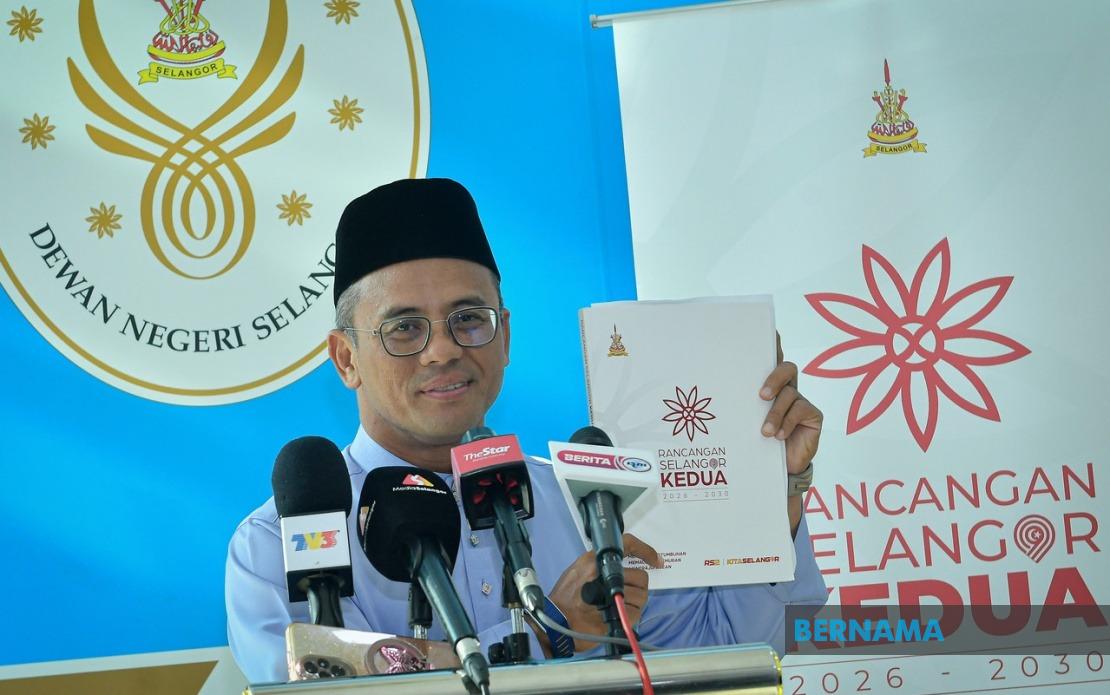
Selangor's state government has committed to raising the performance bar for all municipal and local authorities across the state, with Menteri Besar Datuk Seri Amirudin Shari announcing an ambitious benchmark requiring every single PBT to achieve a 95 per cent score under the PBT Star Rating System by 2030. Unveiled during the tabling of the Second Selangor Plan (RS-2) at the state legislative assembly, this directive signals a departure from allowing service quality to vary across different municipalities, instead establishing uniform standards that must be met across the entire state. The threshold represents not merely an aspirational goal but a structural reform aimed at ensuring that residents in every corner of Selangor receive consistent, high-calibre municipal services regardless of their postcode.
The rationale underpinning this target extends beyond simple performance metrics. Amirudin emphasized that the initiative reflects the state government's fundamental commitment to democratising excellence in public service delivery. Rather than accepting a scenario where certain well-managed areas enjoy superior facilities and responsiveness whilst others lag behind, the RS-2 framework seeks to eliminate such disparities. This approach recognizes that uneven service quality across local authorities can perpetuate spatial inequalities and undermine public confidence in government institutions. By setting a single benchmark applicable to all PBTs, the state signals its intention to strengthen municipal governance uniformly and ensure that the quality-of-life improvements associated with efficient local administration benefit all constituents equally.
Complementing the service performance target is an equally significant push toward digital transformation. The state has set its sights on achieving 85 per cent End-to-End Digital Government Service Sharing by 2030, a metric that extends beyond mere website functionality to encompass integrated, seamless digital interactions between residents and local authorities. This digitalization drive responds to citizen expectations shaped by private-sector digital experiences and reflects recognition that efficient public services increasingly depend on robust digital infrastructure. The emphasis on data sharing across government agencies speaks to a modernization agenda that prioritizes responsiveness and eliminates the friction residents typically encounter when navigating fragmented municipal systems. For Malaysian readers accustomed to bureaucratic delays, the promise of integrated digital government services carries tangible implications for routine transactions, from permit applications to service complaints.
Amirudin's directive that all complaints and concerns raised through social media or direct channels must receive prompt attention underscores a shift in how local authorities are expected to engage with constituents. This emphasis acknowledges the reality that citizens increasingly voice grievances through digital platforms and expect institutional responsiveness proportionate to the visibility such channels provide. By explicitly mandating that PBTs address all complaints systematically, the state creates accountability mechanisms that complement formal performance ratings. Social media has become an informal but powerful tool for airing municipal dissatisfaction, and institutionalizing responses to such complaints effectively extends the reach of municipal accountability beyond traditional bureaucratic channels.
Beyond operational directives aimed at individual PBTs lies a broader fiscal challenge that contextualizes these ambitions. Selangor's current revenue structure reveals a structural vulnerability: approximately 75 per cent of state income derives from land premiums and rental income, a dependency that leaves fiscal planning vulnerable to property market fluctuations and limits long-term budgetary predictability. This concentration risk has prompted the state to pursue deliberate diversification through innovative financing mechanisms and enhanced private-sector participation. The establishment of a fully integrated State Investment Holding company represents an institutional response to this fiscal challenge, designed to improve capital efficiency and generate additional revenue streams that could eventually reduce reliance on property-based income.
The strategic realignment of government-linked companies constitutes another pillar of the RS-2 framework. Rather than allowing GLCs to operate in silos or duplicate functions across subsidiary structures, the state intends to harness these entities as coherent instruments of economic policy. This approach recognizes that fragmented GLC operations waste public resources through redundancy and fail to leverage the combined capabilities these organizations could mobilize if properly coordinated. By aligning GLCs with state development priorities and eliminating functional overlap, Selangor aims to enhance both the efficiency of public investment and the return that public enterprises generate for the state treasury. For Malaysian observers, this institutional restructuring reflects lessons learned from decades of GLC management and represents an attempt to make state-owned enterprises serve development objectives more effectively.
The emphasis on technology and service-based economic sectors within the GLC realignment strategy reflects broader national trends and positioning Selangor's economy for structural shifts likely to define Malaysia's future competitiveness. As manufacturing-dependent economies face pressure from automation and supply-chain reconfiguration, states that successfully develop knowledge-intensive, service-oriented sectors are likely to generate more resilient employment and attract higher-value investment. By directing GLC resources toward these emerging sectors, Selangor seeks to diversify its economic base and reduce dependency on traditional manufacturing and property development. This strategic pivot carries implications for workforce development, talent attraction, and the types of infrastructure investments the state will prioritize during the RS-2 implementation period.
The Second Selangor Plan represents a comprehensive governance agenda that integrates operational performance targets with fiscal reform and economic restructuring. The 95 per cent PBT performance target, the digital government services goal, and the GLC realignment initiative are not isolated initiatives but interconnected components of a strategy addressing governance quality, fiscal sustainability, and economic transformation simultaneously. Implementation will require sustained political commitment and substantial resource allocation, particularly in building digital infrastructure and training municipal workforces to operate effectively within modernized systems. Success will depend on consistent monitoring and willingness to adjust strategies as implementation challenges emerge.
For residents across Selangor, these commitments potentially presage meaningful improvements in municipal responsiveness and service accessibility. Whether PBTs can collectively achieve the 95 per cent benchmark remains uncertain, particularly given that such ambitious targets require not only state-level support but also effective local leadership and adequate resource allocation to individual municipalities. The digitalization agenda offers perhaps the most immediately consequential potential impact, as integrated digital platforms can reduce transaction costs and waiting times for ordinary citizens navigating municipal bureaucracies. The fiscal diversification strategy, though operating at a level of abstraction removed from individual experience, fundamentally shapes the resources available to fund service improvements and capital investments in local infrastructure. The success or failure of RS-2 will ultimately be measured not through policy documents and performance metrics but through the tangible experiences of millions of Selangor residents interacting with local authorities over the coming years.

