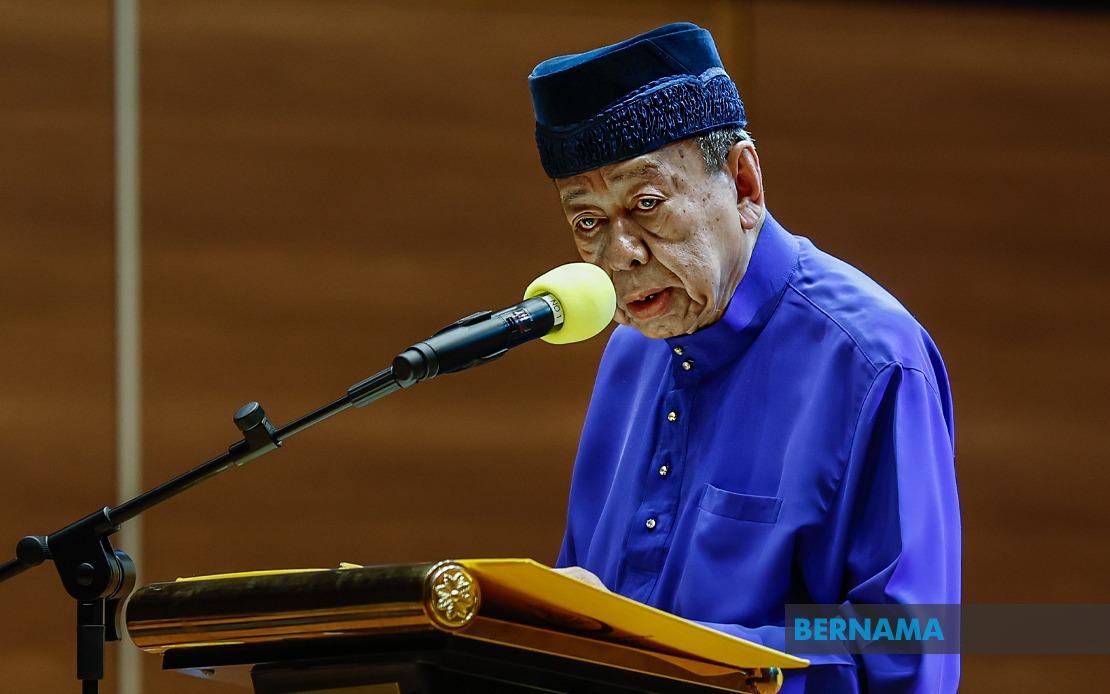
The Sultan of Selangor, Sultan Sharafuddin Idris Shah, has delivered a pointed message to Universiti Teknologi MARA, calling on the institution to continuously adapt its academic offerings to meet the demands of a rapidly transforming global economy. Speaking at the UiTM Royal Address 2026 held at the Seri Budiman Concert Hall in Shah Alam, the ruler emphasised that today's graduates face a fundamentally different landscape than their predecessors, where a university degree alone no longer guarantees career success. In an era of intense competition and technological disruption, he stressed, UiTM must ensure its students emerge equipped not merely with qualifications but with the practical capabilities demanded by international employers.
The Sultan identified several fields where academic relevance becomes critical to national economic prosperity. Digital technology, artificial intelligence, science, engineering, medicine, finance, accounting, law, and the creative industries represent areas where Malaysia's competitiveness will be tested in coming decades. His observation reflects a broader understanding that Malaysia's development trajectory depends on whether institutions can produce graduates capable of thriving in these knowledge-intensive sectors. The royal remarks also acknowledge emerging fields yet to be clearly defined, suggesting recognition that curricula must remain flexible enough to anticipate economic shifts that cannot yet be fully anticipated.
A significant shift in UiTM's mandate emerged from the Sultan's address. While acknowledging the institution's foundational role in developing the Malay and Bumiputera professional class—a mission it has executed successfully—he redirected attention toward a new imperative. UiTM must now focus on cultivating job creators, entrepreneurs, and business owners rather than merely producing graduates destined for existing employment opportunities. This represents a subtle but profound reorientation: the institution should pivot from workforce supply to economic leadership development. The Sultan noted with evident satisfaction that UiTM has demonstrably succeeded in its original mission, with alumni now occupying prominent positions across government, corporate Malaysia, and international spheres, a track record he described as transforming historical rhetoric into measurable reality.
The ruler's emphasis on language proficiency and industry-aligned skills addresses a persistent concern within Malaysian higher education circles. Graduates, he cautioned, often possess degrees without possessing the practical competencies employers seek—including language capabilities, independent thinking, and domain-specific technical knowledge. The prescription offered was concrete: every UiTM student should master at least two foreign languages to enhance employability in an interconnected economy. This multilingual imperative reflects not merely cosmetic educational enhancement but a recognition that regional economic integration and global professional mobility require communication skills extending beyond Malaysia's borders.
Strengthening university-industry partnerships emerged as another central theme in the Sultan's vision. Beyond formal cooperation agreements, he appeared to advocate for deeper integration where academic curricula genuinely reflect workplace requirements rather than existing in parallel educational tracks. The practical implication is that UiTM must engage with employers not merely to place graduates but to co-design programmes ensuring students develop capabilities the market actually values. This closer alignment between institutional learning and employment reality could reshape how UiTM develops its academic portfolio, particularly in fast-evolving sectors like technology and finance.
Significantly, the Sultan anchored UiTM's continued role in Bumiputera empowerment within Malaysia's constitutional framework, referencing the Universiti Teknologi MARA Act 1976 and Article 153 of the Federal Constitution. His framing situates UiTM's mission not as a discretionary administrative policy subject to casual modification but as a constitutionally grounded obligation. This positioning becomes relevant given periodic debates about affirmative action policies in Malaysian higher education. By invoking constitutional foundations, the Sultan provided principled defence of preferential admission policies while simultaneously arguing these need not conflict with educating graduates for global competitiveness.
The Sultan's remarks carefully distinguished between defending UiTM's institutional identity and denying educational opportunities to other communities. Malaysia's higher education landscape, he noted, accommodates diverse institutions serving all citizens. UiTM's specific focus on Malay and Bumiputera advancement addresses a historical gap that, the Sultan contended, persists despite decades of development efforts. This measured argument attempts to reconcile affirmative action principles with meritocratic aspirations, suggesting that fulfilling UiTM's original mandate and producing world-class competitors need not represent contradictory objectives.
From a regional perspective, the Sultan's address carries implications for Southeast Asian higher education competition. As countries throughout the region invest heavily in university systems to develop skilled workforces for technology-driven economies, Malaysia's success in producing competitively placed graduates becomes strategically important. UiTM, serving the largest Bumiputera student population among Malaysian universities, plays a disproportionate role in this endeavour. The institution's ability to evolve curricula while maintaining its foundational mission will significantly influence whether Malaysia can retain and attract talent capable of driving future economic development.
The Sultan's speech also implicitly addresses growing anxieties within Malaysian society about educational relevance and graduate employability. Year on year, employers report frustration with university graduates lacking practical skills, while students struggle with underemployment and wage stagnation despite holding tertiary qualifications. By articulating a vision where UiTM produces confident, multilingual, entrepreneurially minded graduates equipped with industry-demanded capabilities, the Sultan offered a forward-looking response to these persistent frustrations. The challenge now lies in translating royal vision into institutional transformation, requiring curriculum redesign, faculty development, and authentic industry engagement.
Looking forward, UiTM faces the complex task of simultaneously honouring its constitutional mandate to serve Bumiputera communities and positioning graduates for success in intensely competitive global markets. The Sultan's address suggests these objectives need not conflict but rather reinforce one another. A Bumiputera professional class equipped with digital literacy, entrepreneurial skills, and international competitiveness serves both equity and economic efficiency. Whether UiTM can achieve this dual objective while maintaining academic standards and affordability will substantially shape Malaysia's human capital development trajectory and regional competitiveness in coming years.

