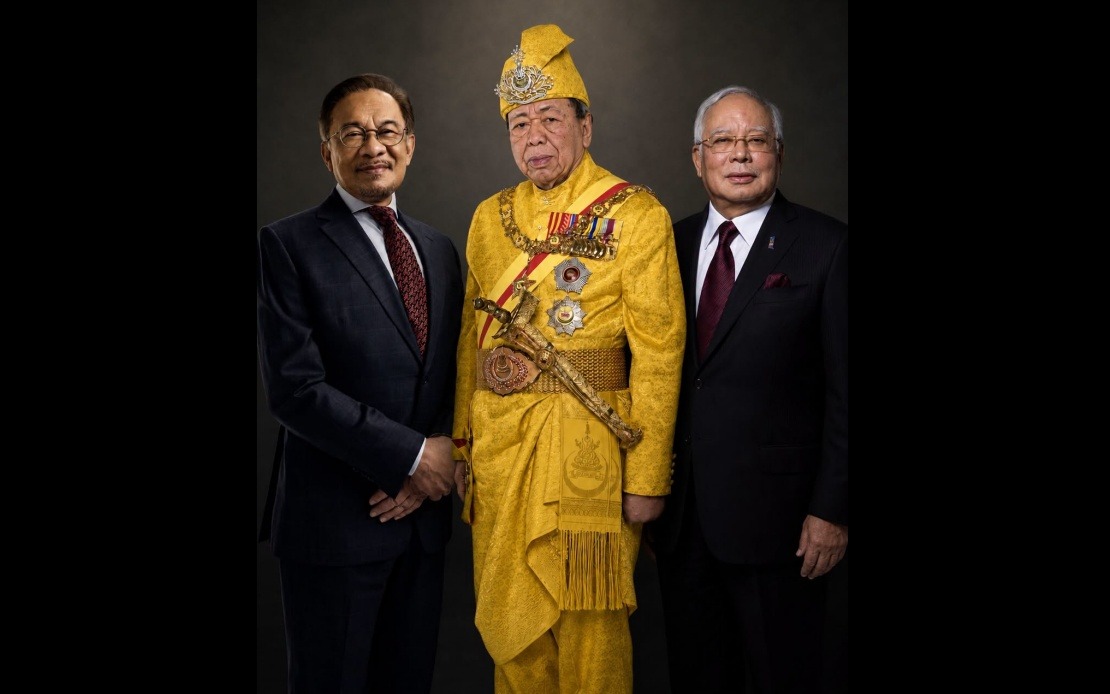
The Sultan of Selangor, Sultan Sharafuddin Idris Shah, has publicly commended Prime Minister Datuk Seri Anwar Ibrahim for delivering the Shah Alam Line LRT3, the latest addition to the Klang Valley's rapid transit network that commenced operations on Monday. In a formal statement, the Sultan acknowledged Anwar's commitment to advancing the project since becoming Prime Minister and Finance Minister in 2022, demonstrating continued support for infrastructure development in one of Malaysia's most economically vital regions.
Central to the Sultan's appreciation was Anwar's decision to restore five stations that had previously been axed from the project plan. Beyond reinstatement, the Premier also championed the development of affordable housing facilities adjacent to LRT3 stations, a thoughtful addition aimed at making the transit system more accessible to lower-income commuters and enhancing overall utility for the travelling public. The Sultan's statement underscored these moves as meaningful adjustments that strengthened the project's social impact.
The genesis of the LRT3 concept reveals the pragmatic concerns that motivated the initiative. Rather than emerging from aspirational urban planning alone, the project took shape in response to genuine grievances aired by residents, particularly housewives who lamented their husbands' inability to return home at reasonable hours due to chronic traffic gridlock plaguing the Klang Valley. This grassroots discontent reflected deeper infrastructure challenges facing the region, where population growth had outpaced transportation capacity.
The Sultan also acknowledged former Prime Minister Datuk Seri Najib Tun Razak's instrumental role in heeding the call for a rail connection linking Klang, Shah Alam, and Kuala Lumpur. At that juncture, Klang suffered from severe bottleneck conditions, with only two bridges crossing the Klang River—an inadequacy that triggered congestion during peak commuting periods. In response, Najib's administration took the interim step of abolishing the Batu Tiga and Sungai Rasau toll plazas in 2018, providing temporary relief while the longer-term rail solution progressed.
The project's journey to completion was fraught with setbacks spanning several years. Following the 2018 change of government, implementation stalled for more than eighteen months, creating uncertainty about the scheme's viability. Subsequently, the COVID-19 pandemic imposed a further nineteen-month delay that persisted until 2021. During these prolonged disruptions, the original design underwent significant reductions—station dimensions were scaled down, the fleet of train coaches was diminished, and five envisioned stations were removed from the alignment, all reflecting cost constraints and the evolving economic climate.
Critically, the Sultan stressed that the LRT3 was never conceived as a vanity project designed to showcase governmental prestige or architectural ambition. Instead, it represents an essential utility infrastructure prioritizing the practical needs and welfare of ordinary residents. This distinction carries particular resonance in Malaysia's political culture, where megaprojects sometimes attract criticism for benefiting connected elites rather than addressing genuine public transportation deficits. The Sultan's framing refocuses attention on the project's fundamental purpose: alleviating congestion and improving mobility for working families.
The Sultan articulated clear expectations for the operational phase, expressing confidence that the LRT3 would meaningfully reduce traffic congestion while providing commuters with a faster, more comfortable, and safer alternative to road travel. For residents commuting between Klang, Shah Alam, and Kuala Lumpur—a corridor encompassing millions of daily trips—this new arterial connection promises substantial quality-of-life improvements. The Sultan further urged Prasarana Malaysia Bhd, the operator, to maintain rigorous maintenance standards ensuring sustained service reliability and efficiency, signalling that political enthusiasm must translate into sustained operational excellence.
Remarkably, the Sultan emphasized that credit for the LRT3's success should not accrue to any single individual or political faction. This statement, delivered with evident deliberation, counters the tendency in Malaysian politics for administrations to monopolize credit for completed infrastructure. The Sultan framed the project as the cumulative outcome of consistent planning, sustained commitment, and intergovernmental cooperation spanning multiple electoral cycles and administrations. This principled stance underscores the notion that major infrastructure transcends partisan interests and reflects broader institutional continuity serving the public interest.
Looking forward, the Sultan articulated broader aspirations extending beyond mere transportation functionality. The LRT3 is anticipated to catalyze economic expansion throughout the corridor by improving accessibility to commercial hubs, facilitating business movement, and attracting investment to Shah Alam, Klang, Petaling Jaya, and Kuala Lumpur. Enhanced connectivity between these municipalities, each recognized as engines of national economic growth, should amplify their collective competitive advantage and strengthen the region's position within Malaysia's economic hierarchy. For Southeast Asian observers, the project exemplifies how targeted transit infrastructure can unlock regional potential and improve living standards across middle-income population segments.
The Sultan's nuanced acknowledgment of multiple contributors—from Najib's initial advocacy to Anwar's completion efforts—reflects a mature perspective on national development transcending electoral cycles. This approach implicitly encourages future administrations to sustain commitment to long-term infrastructure initiatives regardless of political transitions, a lesson relevant across Southeast Asia where infrastructure continuity often falters amid governmental change. The LRT3's opening represents not merely a transportation milestone but a case study in persistence, compromise, and the cumulative benefits of sustained institutional focus on public welfare.

